The Algorithmic Iron Curtain: How YouTube’s Demonetization Silences Serious Journalism on the Epstein Files
A YouTube video meticulously analyzing the Jeffrey Epstein files and their FBI redactions was demonetized despite overwhelming audience approval, highlighting concerns about algorithmic censorship. This incident underscores how YouTube's 'brand safety' policies, stemming from the 'Adpocalypse,' disproportionately penalize serious independent journalism, creating a chilling effect and risking the platform's role as a vital public forum for in-depth discourse.


The Algorithmic Iron Curtain: How YouTube’s Demonetization Silences Serious Journalism on the Epstein Files
In an era where independent voices increasingly challenge traditional media narratives, a recent incident on YouTube has ignited a fierce debate about the platform’s role in shaping public discourse. A video delving into the intricate inconsistencies of the Jeffrey Epstein files, which was on track to become a creator’s most successful upload, was abruptly demonetized. This action, ostensibly taken under the banner of ‘brand safety,’ has been described by the creator as an algorithmic ‘blunt instrument’ that penalizes serious journalism, raising critical questions about censorship by proxy, the future of independent reporting, and the very function of a digital public square.
The Meteoric Rise and Abrupt Fall
The video, a meticulous thirty-seven-minute analysis of the FBI’s redactions within the Epstein files and their apparent violation of the Transparency Law, quickly captivated a massive audience. Within just 24 hours of its release, it had garnered a staggering one million views, outpacing the creator’s previous record-holder by nearly 40 percent. This meteoric rise indicated a significant public appetite for in-depth, critical examination of a topic steeped in controversy and public interest. The trajectory was clear: a major hit was in the making, reflecting the video’s resonance with viewers hungry for detailed, unbiased information.
However, this success was short-lived. Two days after its upload, a yellow dollar sign appeared on the creator’s YouTube dashboard, a stark signal that the video had been demonetized. While demonetization is often perceived merely as a cessation of ad revenue, its practical consequences are far more severe. As the creator explains, when a video is deemed unsuitable for advertisements, the platform’s primary incentive to distribute that content vanishes. YouTube’s powerful recommendation engine, meticulously designed to maximize revenue, quietly shelves the offending content. For this particular video, the view count flatlined almost immediately, effectively rendering it invisible to all but the most determined searchers.
A Vague Verdict: ‘Not Advertiser Friendly’
Adding to the creator’s frustration was the complete lack of specific justification for YouTube’s decision. The platform offered only the generic statement that the video was ‘not advertiser friendly.’ In some instances, creators are provided with precise timestamps of offensive content, allowing for edits and re-monetization. Not so in this case. Following a requested human review, the creator was informed that ‘controversial issues [were] throughout the video,’ implying an inherent unacceptability that no mere clipping could resolve. This blanket condemnation left the creator with no actionable path to restore the video’s monetization or distribution.
The creator rigorously defended the video’s content against YouTube’s vague accusation. The analysis was devoid of profanity, violence, explicit descriptions of Epstein’s heinous activities, or any inappropriate imagery. It was a sober, factual examination of legal and procedural inconsistencies, focusing on the systemic failures revealed by the files. Furthermore, audience metrics overwhelmingly affirmed the video’s acceptability and value. At the time of demonetization, it boasted an impressive 90,000 likes and an exceptionally high like-to-dislike ratio of 98.9 percent. This approval rating, superior to many of the creator’s other uploads, clearly demonstrated that the audience—the very demographic advertisers purportedly seek to protect—found the content both acceptable and valuable. The unambiguous title, ‘The Epstein Files are Worse Than You Think!’, ensured that viewers clicked on it with full awareness of its subject matter, precluding any claims of ambush or misrepresentation.
The Shadow of the Adpocalypse: A Historical Context
To fully grasp the dynamics at play, one must recall the infamous ‘YouTube Adpocalypse.’ Years ago, a series of controversies, most notably Logan Paul’s insensitive vlog from a Japanese forest, triggered a mass exodus of major advertisers from the platform. Brands, wary of their advertisements appearing alongside offensive or controversial content, paused their campaigns, fearing that such proximity could be misconstrued as endorsement or simply tarnish their brand image. This commercial calculation forced YouTube to drastically tighten its creator guidelines, establishing a new paradigm where ‘brand safety’ became paramount.
From Logan Paul to Policy Overhaul
The ‘Adpocalypse’ marked a pivotal moment for YouTube. The platform, facing significant financial pressure, responded by implementing more stringent monetization policies and enhancing its automated content review systems. The goal was to reassure advertisers that their brands would be protected from association with content deemed inappropriate, hateful, or dangerous. This shift fundamentally altered the relationship between YouTube, its creators, and advertisers, creating a landscape where brand safety metrics began to heavily influence content distribution.
The Creator’s Dilemma: Business Needs vs. Journalistic Integrity
The creator acknowledges YouTube’s position as a for-profit business and the legitimate concerns of advertisers. As a creator whose work often involves sponsorships, there’s a clear understanding of the need for brand protection and the ecosystem where advertiser spending funds content creation. The argument isn’t against demonetization for genuinely hateful or dangerous content, which is seen as a logical business decision that preserves free speech while insulating advertisers. The core issue, however, is that this mechanism has evolved into a ‘blunt instrument’ that indiscriminately penalizes serious journalism under the guise of brand safety. Mainstream cable news programs routinely feature discussions on war, crime, and political corruption without facing demonetization. Yet, when an independent creator tackles these same weighty topics with equal rigor and journalistic integrity, the algorithm frequently flags it as inappropriate, creating an unequal playing field.
A Broken System, Not a Conspiracy
The creator posits that the issue is not a calculated conspiracy to silence specific controversial stories, but rather a symptom of a fundamentally ‘broken system’ within YouTube. This conclusion stems from a revealing conversation with a friend who operates a much larger YouTube channel and has produced multiple videos on the Epstein files without encountering demonetization. This friend’s experience, noting only a careful avoidance of profanity and bleeping out sensitive terms, suggests that the arbitrary nature of demonetization might hinge less on the subject matter itself and more on the algorithmic ‘status’ or ‘trust’ built by the uploader. The platform’s notorious opacity, however, prevents any definitive conclusions.
Algorithmic Arbitrariness: The Uploader’s Status
This observation aligns with a growing body of research into YouTube’s monetization practices. The idea that a channel’s size or established algorithmic trust can influence demonetization decisions points to a system that may inadvertently favor established creators over emerging or smaller independent journalists, regardless of content quality. This creates a barrier to entry for new voices and potentially stifles the growth of channels dedicated to serious, investigative reporting, as they struggle to gain the algorithmic ‘trust’ necessary to avoid penalties.
Censorship by Proxy: The Academic View
Academic research has termed this phenomenon ‘censorship by proxy.’ A 2022 study highlighted that demonetization effectively functions as a censor, establishing a significant financial disincentive for creators to cover ‘risky’ topics. The study’s machine learning models revealed that YouTube’s algorithm often favors ‘safe’ metrics, such as channel size and video duration, over the specific details and context of the content itself. Creators, in essence, must ‘build up trust’ with the algorithm, and only once this trust is established are they less likely to face demonetization. This mechanism offers a plausible explanation for why the creator’s second Epstein video was so quickly penalized, lacking the pre-existing algorithmic ‘trust’ that might protect a larger, more established channel covering the same subject.
The study also underscored how the algorithm’s ‘safety’ filter notoriously fails to grasp context. The channel ‘Vlogging Through History’ provides a vivid illustration of this flaw, reporting demonetization for educational videos on World War Two simply for displaying a two-second clip of a historical flag or for discussing sensitive historical events. The algorithm, unable to differentiate between a historian providing critical context and potentially offensive content, groups them together, applying the same revenue-crippling penalty.
The Rise of ‘Algospeak’: Muffling Discourse
This algorithmic pressure has given rise to a peculiar linguistic phenomenon known as ‘algospeak.’ Creators, desperate to evade automated filters, are increasingly forced to modify their language, replacing clinical or sensitive terms with euphemisms or nonsense words. This surreal online dialect, where ‘something’ replaces ‘something else’ or ‘PF file’ stands in for a specific term, allows creators to navigate the algorithmic minefield. However, it comes at a significant cost: serious discourse degrades into a childish code, diminishing the quality and clarity of information in exchange for algorithmic safety. The creator of the Epstein video, choosing to use accurate terminology due to the gravity of the subject, faced the direct consequence of demonetization, underscoring the platform’s preference for coded ambiguity over clear, direct communication.
The Unseen Cost: Silencing In-Depth Journalism
The suppression of such videos carries profound implications, particularly for the quality of public discourse. Online video platforms offer a unique advantage that traditional media often struggles to provide: depth. A typical cable news segment might last four minutes, and a newspaper article around 700 words. The demonetized Epstein video, at thirty-seven minutes, offered a comprehensive, balanced examination of complex timelines and systemic failures. This long-form format is crucial for dissecting intricate issues, such as the fact that Epstein was first reported to the FBI in 1996 or that his financial crimes date back to the 1970s. It allows for an exploration of the systemic failures of the FBI and DOJ across multiple administrations, moving beyond partisan soundbites to foster a deeper public understanding.
The Power of Long-Form: Beyond the Soundbite
When algorithms penalize this kind of in-depth analysis and discussion, the harm extends beyond individual creators; it directly impairs public understanding of complex, critical topics. The released Epstein files are heavily redacted, often in ways that appear to violate the Transparency Law. These redactions frequently obscure the names of potential co-conspirators while leaving victims exposed. Covering these ‘dry, procedural details’ is not sensationalism; it is essential for holding power to account. Yet, it is precisely this type of meticulous, fact-based content that can be deemed ‘non-advertiser friendly’ by the algorithm, even when it is demonstrably valued by viewers and, arguably, by advertisers themselves who seek engaged, informed audiences.
Redactions and Accountability: Why Detail Matters
The paradox is glaring: content that serves a vital democratic function—scrutinizing government actions, identifying systemic flaws, and demanding accountability—is precisely the content being stifled. This creates a chilling effect, where the pursuit of truth and detailed reporting becomes a financially untenable endeavor for independent creators. The algorithm, designed for brand safety, inadvertently becomes an arbiter of what constitutes ‘safe’ information, often at the expense of public interest and robust journalistic inquiry.
A Broader Crisis: Press Freedom in Decline
This issue is not isolated to YouTube; it reflects a broader crisis in press freedom and the evolving landscape of media. Mainstream news outlets globally are increasingly buckling under financial and regulatory pressures. The threat of regulatory action, such as the FCC stripping broadcast licenses, combined with the immense financial burden of legal settlements (e.g., networks paying millions to politicians), creates an environment where journalistic independence is constantly challenged. The shelving of a fully vetted 60 Minutes investigation into deportations, reportedly because the White House refused to comment, exemplifies how government non-participation can effectively become a ‘kill switch’ for inconvenient reporting. Similarly, corporate consolidation, as seen with the Warner Bros. Discovery merger, can be leveraged politically, with regulatory approval potentially hinging on ‘correcting’ editorial stances.
Traditional Media Under Pressure
For media conglomerates burdened by massive debt, this presents an existential dilemma: maintain journalistic independence or secure the regulatory approval necessary for survival. Increasingly, many are choosing survival, leading to a subtle but significant erosion of critical reporting. This vacuum is often filled by independent creators, bloggers, podcasters, and YouTubers who, free from corporate and governmental pressures, can pursue stories with greater autonomy.
Independent Creators: The Last Bastion?
However, if the primary platforms for independent video journalism effectively ‘tax’ serious reporting by removing its revenue and reach, this last bastion of journalistic freedom is also compromised. The United States has recently fallen to 57th out of 180 countries in press freedom rankings, a decline that could worsen if platforms continue to penalize in-depth scrutiny of power. While it may be easier for politicians to coerce a few broadcast giants than millions of independent voices, algorithmic suppression achieves a similar outcome: a narrowing of public discourse.
Global Implications: A Homogenized Internet
YouTube’s global reach magnifies these concerns. In countries with strict state censorship, citizens often rely on VPNs to access YouTube as one of their few windows into an unfiltered world. If the platform itself begins to sanitize content to appease Western politicians or advertisers, it inadvertently aligns itself with the goals of restrictive regimes. By disincentivizing the coverage of serious topics, YouTube risks shutting off a crucial ‘escape valve’ for global information, homogenizing the internet into a ‘safe,’ corporate-friendly feed that challenges no one, anywhere.
The Streisand Effect: Unintended Consequences
The digital age, however, often presents a distinct irony: the Streisand Effect. Attempts to suppress information frequently make it more popular. After the creator posted a community update explaining the demonetization, thousands of viewers flocked to watch the video specifically because it had been flagged. The like-to-dislike ratio climbed even higher, and many new viewers subscribed to the channel. This phenomenon highlights a growing public awareness that in an era of algorithmic curation, the ‘unsafe’ label can sometimes be a proxy for ‘important.’ A similar outcome was observed when the shelved 60 Minutes episode, unavailable in the US, was broadcast in Canada, uploaded online by Canadian viewers, and quickly went viral globally, as audiences rushed to see the content they had been denied.
Beyond Partisan Politics: A Moral Imperative
It is crucial to differentiate between the ‘politics’ and the ‘morality’ of this case. The critique of declining press freedom, particularly regarding the Epstein files, transcends partisan lines. The failure to prosecute Jeffrey Epstein and his co-conspirators is not a Republican or Democrat issue; it is a profound moral issue that exposes institutional rot within the justice system spanning decades and multiple administrations. History demonstrates that press freedom is vulnerable under any political leadership.
The Epstein Files: A Bipartisan Call for Justice
While attacks on the press have seen a recent increase, data from the U.S. Press Freedom Tracker reveals that the highest number of journalists arrested or assaulted occurred in 2020, largely linked to civil unrest and pandemic enforcement in cities governed by Democrats. This underscores that the impulse to suppress uncomfortable press coverage is not exclusive to one party; it is a reflex of power that manifests whenever public discourse, whether in the streets or online, becomes too challenging. The Epstein case is particularly critical because it unites the public against this oppressive reflex. The legislative push to release the Epstein files enjoyed rare bipartisan support, with Congress voting almost unanimously for their disclosure.
Unanswered Questions and Public Demand
Public frustration with the handling of the Epstein investigation is palpable and widespread. At a recent Turning Point USA event, a gathering typically associated with a specific political leaning, Laura Ingraham’s query about satisfaction with the Epstein investigation was met not with applause, but with boos. This demonstrates a shared understanding across the political spectrum that the Epstein story represents a moral scandal about a two-tier justice system, rather than a mere political football. This collective outrage makes YouTube’s ‘unsafe’ categorization even more bewildering.
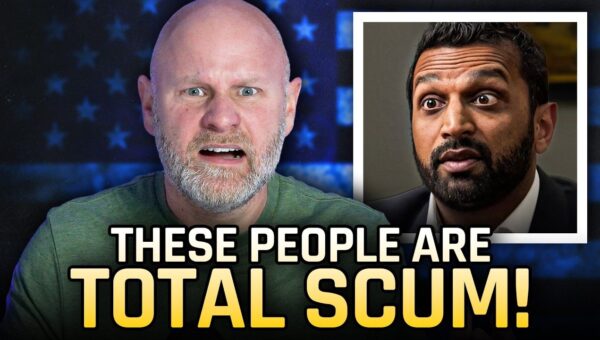
The public demands answers: why did former FBI Director Kash Patel claim there were no perpetrators other than Epstein, when the files indicated ten potential co-conspirators? Why did Patel claim to have seen footage proving nothing untoward happened in Epstein’s cell, only for a released video to be from a different part of the cell block with a critical minute conspicuously missing due to a ‘glitch’? Covering these discrepancies is not ‘hate speech’ or ‘harassment’; it is the fundamental duty of a free press.
The Chilling Effect and the Irony of Fraud
The demonetization sends a chilling message to smaller channels. For creators relying on advertising revenue to sustain their work, the signal is unequivocal: ‘Don’t touch this topic. Stick to gaming. Stick to drama. Leave the questioning of authority to the professionals at news organizations who are currently too frightened to actually do it.’ This effectively pushes independent journalism out of the monetizable ecosystem, leaving a void that traditional media is increasingly unable or unwilling to fill.
A Warning to Smaller Channels
A final, bitter irony highlights the misplaced priorities of the platform. While the algorithm swiftly flags serious journalism as ‘advertiser unfriendly,’ it often fails to police actual fraud. The creator noted instances where their likeness was used in deepfake videos promoting scams on YouTube. Despite repeated reports, YouTube was slow to remove these impersonations. This stark contrast reveals a system that penalizes journalistic rigor for being too serious, while dragging its feet on removing AI-generated fakes that actively harm viewers.
Misplaced Priorities: Scams vs. Scrutiny
This discrepancy underscores a critical flaw in YouTube’s content moderation strategy: its brand safety mechanisms appear hyper-sensitive to nuanced, critical content, yet seemingly less effective against blatant deceptive practices. The platform’s incentive structure seems to prioritize avoiding potential advertiser discomfort over protecting users from direct harm or fostering a robust environment for public accountability.
Conclusion: A Digital Public Square at Risk
The yellow demonetization icon, while frustrating, offers one small positive: transparency. Being notified of demonetization is preferable to being silently throttled, a practice known as ‘shadowbanning.’ At least the creator is informed when their content is censored, even if the reasoning remains vague. In other parts of the world, censorship is a far more overt and frightening event. Here, it manifests as a quiet algorithmic nudge, less dramatic but potentially just as effective in narrowing public discourse.
Transparency Amidst Suppression
The creator intends to continue covering topics of interest to their audience, monetized or not. However, for the broader ecosystem of independent journalism, this algorithmic censorship is deeply concerning. It forces a fundamental question about YouTube’s identity and purpose. If the platform’s incentives aggressively filter out the ‘boring’ but essential work of holding power to account—the deep dives, the legal analyses, the historical context—then it risks ceasing to be a digital public square. Instead, it could devolve into a space solely for ‘childish entertainment,’ safe for advertisers, perhaps, but ultimately useless for democracy and the informed citizenry it requires.
The Future of YouTube: Entertainment or Democracy?
The incident serves as a stark reminder that while technology offers unprecedented opportunities for independent media, it also introduces new, insidious forms of control. The battle for an open, informed public sphere now extends into the algorithms that govern our digital lives, demanding vigilance from creators, consumers, and policymakers alike to ensure that platforms remain tools for enlightenment, not instruments of suppression.
Source: YouTube Censorship: The Video They Didn't Want You to See! (YouTube)

Related Articles


MAGA Host Dodges Epstein Questions, Cites ‘Bigger Issues’
A MAGA host struggled to deflect questions about Donald Trump's extensive mentions in the unsealed Jeffrey Epstein files. The host repeatedly attempted to pivot the conversation to other topics, labeling the Epstein revelations a 'distraction' and citing 'bigger issues' for the former president to address, showcasing a clear strategy to control the narrative.

Trump FBI Accused of Halting Epstein Probe in 2019
Newly released emails from the Jeffrey Epstein files indicate that the Trump administration's FBI ordered the NYPD to halt their 2019 investigation into Epstein. Further correspondence references a "murder" investigation into Epstein's death, contradicting the official suicide ruling and fueling demands for transparency.

Trump’s Iran Actions Linked to Election Interference Claims
An analysis suggests Donald Trump's actions regarding Iran are strategically linked to his claims of election interference, aiming to justify a national emergency and assert control over voting processes. Meanwhile, ongoing scrutiny of the Epstein case highlights missing FBI documents related to allegations against Trump, raising concerns about a potential cover-up and calls for greater transparency and accountability.