The 7 Most Important Cars of the Last 30 Years
Doug DeMuro ranks the seven most important cars of the last 30 years, vehicles that profoundly impacted the automotive industry and consumer trends. From the Audi R8's brand elevation to the Tesla Model S's electric revolution, this list highlights key automotive milestones.


The Cars That Defined an Era: Ranking the Most Important Vehicles of the Past Three Decades
In the ever-evolving landscape of the automotive world, certain vehicles transcend their metal and mechanics to become cultural touchstones, shaping trends, redefining segments, and ultimately, changing the industry forever. Doug DeMuro, a prominent voice in automotive journalism, has meticulously curated a list of the seven most important cars of the last 30 years. This isn’t a ranking of the best-looking, fastest, or most luxurious, but rather a deep dive into the machines that wielded the most significant influence, from the late 1990s to the present day.
The criteria for “importance” is subjective, but DeMuro’s selections are rooted in their impact on consumer behavior, brand perception, and the very direction of automotive development. From the resurgence of a classic American segment to the dawn of a new electric era, these vehicles have left an indelible mark.
7. The Audi R8: A Resurgence in German Luxury
Kicking off the list at number seven is the Audi R8. While seemingly a niche supercar, its impact on Audi’s brand identity and the broader German automotive hierarchy is undeniable. In the early 2000s, Audi was considered a quirky, second-tier alternative to the established luxury giants like BMW and Mercedes-Benz. The R8, launched around 2008-2009, alongside a revitalized Audi lineup that included the stylish A5 and practical Q7 and Q5 SUVs, acted as a powerful halo car. It wasn’t just a car; it was a statement of intent. Audi proved that it could produce a desirable, high-performance vehicle that commanded attention and respect, effectively elevating its status to be on par with its German rivals. Its success spurred attempts by other luxury brands, like Lexus with the LFA and LC, and Mercedes-Benz with its various AMG GT models, to replicate this formula, but few achieved the R8’s transformative effect. The R8’s blend of stunning design, accessible performance, and strategic timing cemented its place as a pivotal model for Audi.
6. The Lincoln Navigator & Cadillac Escalade: Birth of the Full-Size Luxury SUV
At number six, we have a joint entry: the 1998 Lincoln Navigator and the 1999 Cadillac Escalade. These two behemoths are credited with creating and refining the full-size luxury SUV segment. While the Range Rover had existed for decades, it remained a niche, expensive product. The Navigator and Escalade, however, dropped the pretense of hardcore off-roading and focused on on-road comfort, luxury, and presence. They offered a commanding driving position and SUV practicality, appealing to a demographic that was migrating from large luxury sedans. These vehicles became status symbols, favored by athletes and entertainers, and fundamentally changed the perception of what a luxury vehicle could be. Every major manufacturer now offers a large luxury SUV, a trend that can be directly traced back to the pioneering efforts of Lincoln and Cadillac.
5. The Porsche Cayenne: Paving the Way for High-End SUVs
Taking the fifth spot is the 2003 Porsche Cayenne. While not the first midsize luxury SUV, the Cayenne was instrumental in convincing ultra-luxury brands that an SUV could be a viable and profitable product. Porsche, a brand synonymous with pure sports cars, faced significant purist backlash for its SUV venture. However, the Cayenne’s success proved that even the most revered performance marques could venture into the SUV space without alienating their core customer base. This opened the floodgates for an array of high-end SUVs from brands like Ferrari (Purosangue), Bentley (Bentayga), Rolls-Royce (Cullinan), and Lamborghini (Urus). The Cayenne demonstrated that luxury, performance, and practicality could coexist in a premium SUV package, fundamentally reshaping the luxury automotive market.
4. The 2005 Ford Mustang: The Return of the Muscle Car
Securing the fourth position is the 2005 Ford Mustang. This car marked the triumphant return of the American muscle car and ushered in a new era of retro-styled enthusiast vehicles. In the early 2000s, the muscle car segment was all but dead, with the Camaro and Firebird discontinued and Dodge offering less compelling alternatives. The Mustang, previously a car struggling to maintain its identity, was reborn with a design that perfectly blended modern engineering with nostalgic cues. Its V6 offered performance comparable to previous V8 models, while the V8 variants were truly potent. The 2005 Mustang wasn’t just a car; it was a cultural revival. It proved that retro styling could be cool and commercially successful, inspiring the return of the Dodge Challenger and Chevrolet Camaro. This Mustang became the blueprint for subsequent generations and reignited a passion for powerful, stylish American coupes.
3. The 1998 Mercedes-Benz ML320: The Midsize Luxury SUV Revolution
At number three, we find the 1998 Mercedes-Benz ML320, with an honorable mention to the 1999 Lexus RX300. These two vehicles are credited with establishing the midsize luxury SUV segment. While other attempts existed, the ML320 was the first from a major luxury brand to be purpose-built from the ground up, featuring a US-based factory for production. It offered the prestige of a Mercedes-Benz combined with the elevated driving position and practicality of an SUV, catering to a burgeoning market of affluent families. Though initially built on a body-on-frame chassis, its luxury appointments and brand cachet resonated strongly. The subsequent Lexus RX300 refined the formula with a unibody construction and a more car-like driving experience, becoming a benchmark for the segment. The success of these models led to the proliferation of midsize luxury SUVs, a segment that now dominates sales charts worldwide, with virtually every luxury manufacturer offering a contender.
2. The 2003 Toyota Prius: Hybrid Technology Goes Mainstream
The second most important car on the list is the 2003 Toyota Prius. While not the first hybrid, the second-generation Prius was the vehicle that brought hybrid technology into the mainstream. Previous hybrids, like the first-gen Prius and the Honda Insight, were considered fringe products for early adopters. The 2003 Prius, however, demonstrated that hybrids could be practical, reliable, and appealing to the average consumer without requiring significant compromises. Its impressive fuel economy (around 50 mpg) and Toyota’s legendary reliability, with many early models achieving hundreds of thousands of miles on their original batteries, dispelled fears about expensive battery replacements. The Prius became a cultural icon, proving that efficiency and environmental consciousness could go hand-in-hand with everyday usability, paving the way for the widespread adoption of hybrid and electrified powertrains across the industry.
1. The 2012 Tesla Model S: Redefining Electric Vehicles and Automaking
Unquestionably, the most important car of the last 30 years, according to DeMuro, is the 2012 Tesla Model S. This groundbreaking electric vehicle didn’t just prove that EVs could be desirable; it redefined them. The Model S showcased that electric cars could be luxurious, high-performance, and technologically advanced, shattering preconceived notions. It offered impressive range, exhilarating acceleration, and a minimalist, tech-forward interior that felt futuristic. Beyond its automotive merits, the Model S was a catalyst for change. It validated the concept of a ground-up, electric-only car company, challenging the decades-old belief that establishing a new automotive manufacturer was virtually impossible. Tesla, with the Model S as its flagship, created its own charging infrastructure, pioneered over-the-air software updates, and built a brand that resonated with a new generation of consumers. It forced established automakers to accelerate their own EV development and fundamentally altered the trajectory of the automotive industry towards electrification.
Notable Absences and Honorable Mentions
DeMuro also addressed cars that, while significant, didn’t make his top seven. The Nissan Leaf and Chevrolet Volt, while important early EVs, are noted as being too niche and lacking the mainstream appeal and impact of the Model S. The RAV4 and CR-V are acknowledged as pioneers of the small crossover segment, but the 2001 Ford Escape is highlighted for refining the formula into a universally appealing package. Finally, the Bugatti Veyron, while a monumental achievement in hypercar engineering and a cultural phenomenon for breaking the million-dollar barrier and achieving 1,000 horsepower, is excluded because its importance is seen as less about industry-wide influence and more about pushing the boundaries at the very extreme of the automotive spectrum.
This list serves as a compelling reminder of how innovation, bold design, and a keen understanding of market shifts can lead to vehicles that don’t just transport us, but also shape our world.
Source: Ranking the Most Important Cars of the Last 30 Years (YouTube)

Related Articles

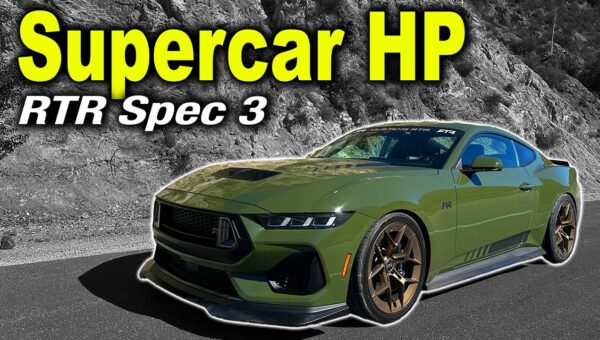
RTR Spec 3: Mustang Power Unleashed for Supercar Pursuits
The 2025 RTR Mustang Spec 3 unleashes a staggering 810 horsepower, transforming the iconic pony car into a supercar-challenging machine. With extensive modifications and a premium price tag, it's a bold statement for the ultimate Mustang enthusiast.


Ford Model T: The Unstealable Legend
The Ford Model T, a revolutionary vehicle, featured an unintentional anti-theft system due to its complex and unconventional three-pedal driving mechanism. Its unique controls made it nearly impossible for the untrained to drive, effectively deterring theft.


The Unstealable Legend: Mastering the Ford Model T
The Ford Model T, a revolutionary vehicle from the early 20th century, is famously difficult to steal due to its complex and unconventional control system. Understanding its unique pedal and lever arrangement is key to operation, making it a car that demands driver skill and knowledge.