Texas GOP Accused of ‘Weaponizing Law’ to Disrupt Democratic Primary
Texas Democrats accuse Republican officials of 'weaponizing' a 1985 law to disrupt their primary election in Dallas County. The legal challenge targets extended voting hours, with critics arguing it's a partisan tactic rather than a genuine legal concern.

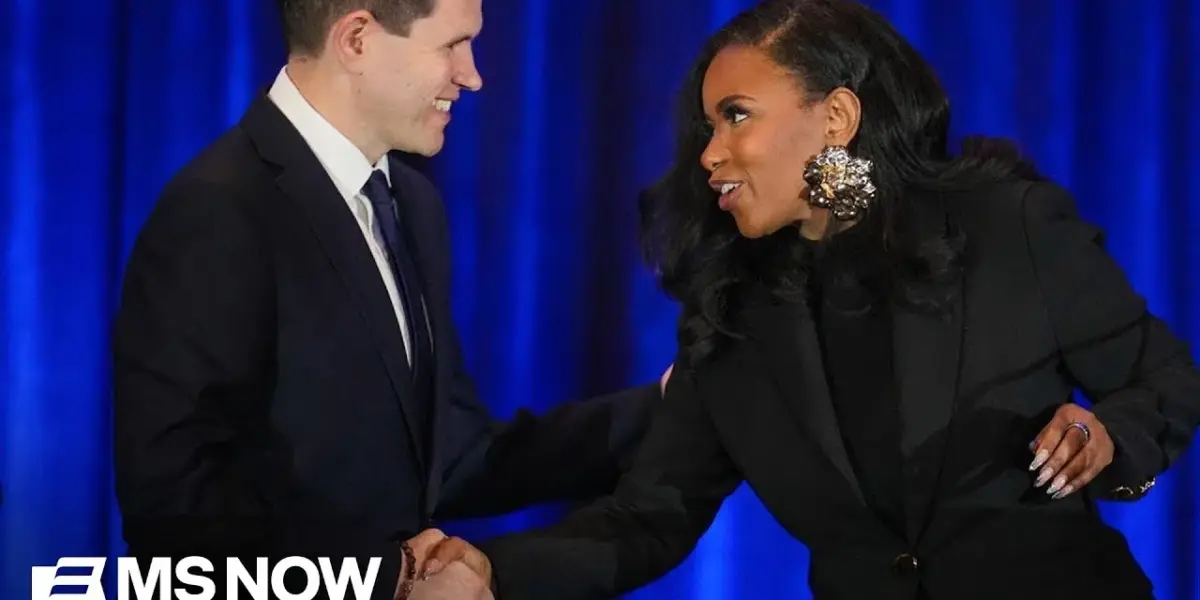
Texas GOP Accused of ‘Weaponizing Law’ to Disrupt Democratic Primary
DALLAS, TX – A controversy surrounding the Texas Democratic primary in Dallas County has erupted, with accusations that Republican officials are using a decades-old state law to inject chaos into the electoral process. Symone Sanders-Townsend, a vocal critic of the situation, highlighted on Tuesday how a lawsuit challenging extended voting hours in the Democratic primary is being perceived as a deliberate attempt to undermine the party’s electoral efforts.
The legal challenge, filed by Dallas County Democrats, centers on a 1985 Texas law that mandates voting hours to be strictly between 7 a.m. and 7 p.m. This law has rarely been invoked, with a notable exception in May 2024 when a Dallas County judge granted an extension due to widespread power outages affecting polling stations. However, the current legal action, reportedly supported by Texas Attorney General Ken Paxton, is seen by Democrats as a departure from precedent, aiming to disrupt only the Democratic primary.
A Law ‘Weaponized’ for Political Gain
Sanders-Townsend explained that the administration of primary elections in Texas falls under the purview of the political parties themselves, not the state, a distinction that does not apply to the general election. This means the current legal dispute is confined to the Democratic primary and will not impact the upcoming general election in November.
“They are weaponizing a law that has been on the books for 40 years to throw chaos into what is happening in the Democratic Party.”
The chair of the Texas Democratic Party confirmed that the judge’s order is understood to be specific to the Democratic primary because the parties did not opt for a joint primary. This isolates the impact to only the Democratic votes in Dallas County. Sanders-Townsend emphasized the unprecedented nature of this legal challenge, stating, “This is the first time that this 1985 law has been challenged directly in this way.”
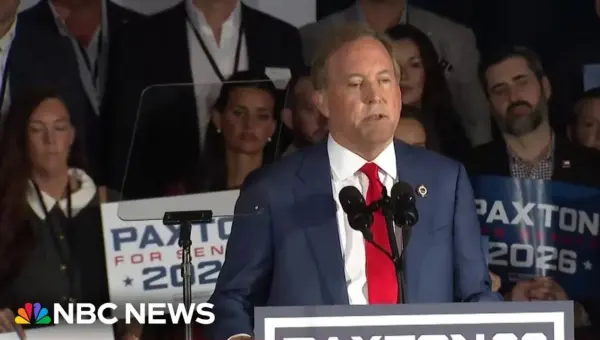
The involvement of Ken Paxton, who is himself a candidate on the Republican ballot, has raised further questions. Critics question why Paxton, whose own election is not affected, would intervene in the Democratic primary. “Why does Paxton care whether or not Democrats, given the confusion that was wrought in this situation, want to vote for an extra two hours doesn’t change his numbers, right? Doesn’t change what’s happening on the Republican side. So what do you care for?” Sanders-Townsend queried.
Broader Implications and Shifting Narratives
The controversy has the potential to influence the narrative surrounding the Democratic primary race, particularly in contests where the outcome is close. Sanders-Townsend noted that regardless of the final vote count, the dispute could be leveraged to shape public perception.
“Tomorrow, there will be some people that will say, ah, Jasmine Crockett lost this race because of what Republicans did. And then there’ll be some people that say, oh, I think she just lost this race because she didn’t run a good campaign. Either way, the narrative on this is now up in the air because of what the Republicans in Texas decided to do to play in the race,” she observed.
This situation is part of a larger trend, as Sanders-Townsend pointed out, where legal frameworks are being employed to influence political outcomes across the country. “We’ve already seen now in Texas and across this country how the law can be weaponized and used to full effect when you want to move the needle in a certain direction if you want to stop something.”
Logistical Challenges and Republican Redistricting
Adding to the complexity, reports from The Dallas Morning News suggest that some of the confusion and chaos, including voters being misdirected, may stem from recent changes to congressional district boundaries by Texas Republicans. The article implies that the logistical follow-through required to ensure voters are directed to the correct polling stations after redistricting may have been insufficient.
This alleged failure to update voter information and signage following redistricting could have compounded the issues faced by Democratic voters, further contributing to the disruption. The Dallas County Democrats’ lawsuit, while focusing on the voting hours law, comes against a backdrop of these potential logistical oversights.
Looking Ahead
As the full impact of the extended voting hours and the legal challenge unfolds, the focus will be on how the final vote counts are affected and how these events shape the broader political discourse in Texas. The actions taken by Republican officials and the legal responses from the Democratic Party will be closely watched, particularly in light of concerns about the weaponization of election laws for partisan advantage.
Source: 'Weaponizing a law!': Symone on Dallas voting controversy throwing CHAOS into TX primary (YouTube)

Related Articles

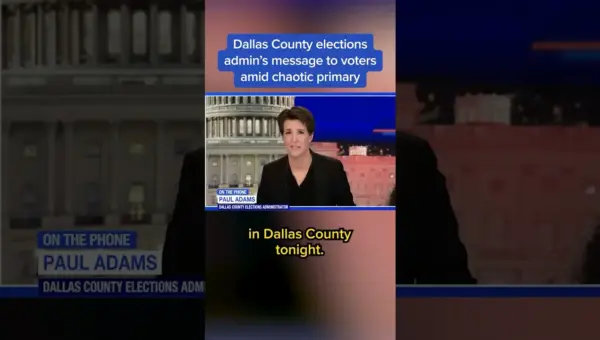
Dallas Election Chief Reassures Voters Amid Primary Chaos
Dallas County Elections Administrator Paul Adams has reassured voters amidst primary election concerns, emphasizing the vital role of volunteers in maintaining democratic integrity. His message comes after a Texas Supreme Court ruling that impacted voting hours, aiming to quell speculation and bolster public confidence in the electoral process.
Texas Supreme Court Blocks Extended Voting Hours in Dallas
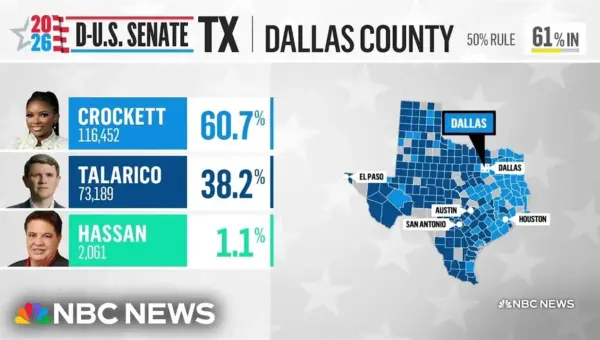
The Texas Supreme Court has blocked extended voting hours in Dallas County, impacting thousands of voters and casting uncertainty over provisional ballots. The ruling follows confusion over a shift to precinct-level polling sites, leading to a judicial battle over ballot validity.
Paxton Claims Primary Results Signal Texas’ Desire for New Leadership
Texas Attorney General Ken Paxton declared "Texans want new leadership" following primary election results that sent him into a runoff against Senator John Cornyn. Paxton highlighted the significant spending difference between the campaigns, asserting that "Texas is not for sale" and that voters rejected the incumbent despite $100 million in advertising.