Texas Democrats Surge in Primaries, Hinting at November Shift
Texas Democrats have achieved historic turnout in their Senate primaries, outvoting Republicans for the first time since 2002. This surge highlights significant Democratic enthusiasm and potential shifts in suburban and Latino voting patterns. Analysts suggest this could signal a highly competitive general election in November.


Historic Turnout Signals Democratic Enthusiasm in Texas Senate Race
Texas Democrats have demonstrated unprecedented enthusiasm in the ongoing Senate primary elections, with a historic voter turnout that has seen Democrats outvote Republicans for the first time since 2002. This surge in participation, particularly evident in early voting, suggests a significant shift in the state’s political landscape and could foreshadow a highly competitive general election in November.
Democrats Outpace Republicans in Primary Voting
The primary elections in Texas have marked a significant moment for the Democratic Party, as they have successfully outvoted their Republican counterparts. This development, a rarity not seen since 2002, is being interpreted by political analysts as a strong indicator of robust Democratic engagement and enthusiasm. The question remains whether this heightened participation is solely due to Democratic fervor or if it also points to a notable degree of crossover voting from Republicans.
“I think it tells you there’s a lot of Democratic enthusiasm.”
While the exact drivers are still being assessed, the sheer volume of Democratic voters heading to the polls underscores a palpable energy within the party. This energy is not entirely unexpected, given the party’s efforts to mobilize voters across the state.
Suburban Gains and Shifting Demographics
The current political climate in Texas bears resemblance to 2018, a year in which Democrats began to make substantial inroads into traditionally Republican suburban areas. Key races in the Dallas-Fort Worth and Houston metropolitan areas saw Democratic candidates, such as Colin Allred and Lizzie Fletcher, secure victories by appealing to suburban voters. Furthermore, areas like Williamson County, adjacent to Austin, have shown a discernible trend towards the Democratic Party.
This trend is expected to continue and play a crucial role in the upcoming November elections. The strategic focus on suburban communities and the mobilization of diverse demographic groups, particularly the state’s significant Latino population, are seen as critical factors in the Democrats’ electoral strategy.
Immigration and Foreign Policy as Key Voter Motivators
The political discourse leading up to the primaries has been influenced by a complex interplay of issues. While the economy and immigration have historically been significant concerns for voters, recent geopolitical events, specifically the escalation of tensions with Iran, have introduced a new and potent “x-factor” into the electoral calculus.
Contrary to the traditional “rallying around the flag” effect often observed during times of international crisis, there is a discernible sentiment among some voters, particularly Democrats, expressing a desire to avoid further foreign entanglements. This sentiment is amplified by the perception that the current administration had pledged to steer clear of new wars, creating a potential disconnect that could further energize Democratic turnout.
“People say we don’t want any more of these forever wars. People are saying, well, this is a president that came into office twice telling us that he was not going to get us into another war. And so I think that this might supercharge the turnout for Democrats, but we’ll see.”
Early Voting Dominance and the Latino Electorate
The voting patterns in Texas have increasingly shifted towards early voting in Democratic primaries since the 2008 election cycle. Data suggests that approximately 60% to 70% of Democratic votes are cast before Election Day. While a portion of votes are still being cast on Election Day, the majority have already been accounted for, indicating the success of early voting initiatives.
Immigration, in particular, is a salient issue, especially within the Democratic base. Many voters, including some who previously supported Donald Trump, reportedly feel that the current immigration policies and the broader situation at the border are not what they had anticipated. This dissatisfaction, coupled with the demographic reality of Texas—a state that is approximately 40% Latino, with the majority of these voters identifying with the Democratic Party—is expected to be a powerful driver of turnout.
Looking Ahead: November’s General Election
The heightened Democratic turnout in the primaries serves as a significant bellwether for the upcoming general election. The party’s ability to mobilize voters, particularly in suburban areas and among the Latino community, combined with the current political climate and voter concerns over foreign policy and immigration, suggests that the race for the Texas Senate seat could be far more competitive than initially anticipated. All eyes will be on whether this demonstrated enthusiasm translates into a decisive victory in November.
Source: 'A lot of Democratic enthusiasm': Texas Senate primary seeing historic turnout (YouTube)

Related Articles

Noem Grilled on DHS Tactics Amid Funding Lapse
Department of Homeland Security Secretary Kristi Noem faced intense questioning from the Senate Judiciary Committee regarding the department's immigration tactics and an impending funding lapse. Senators from both parties raised concerns about enforcement operations and the potential impact of a funding shortfall.
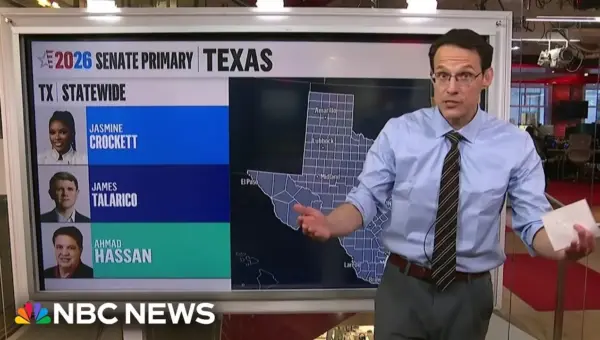
Texas Senate Primaries: Trump’s Influence and Key Races Unfold
Texas voters conclude their primaries Tuesday amid intense competition in key Senate races. The Republican contest is shaped by former President Trump's undecided stance, while Democrats see a late endorsement boost for Jasmine Crockett. Economy and immigration remain top voter concerns.

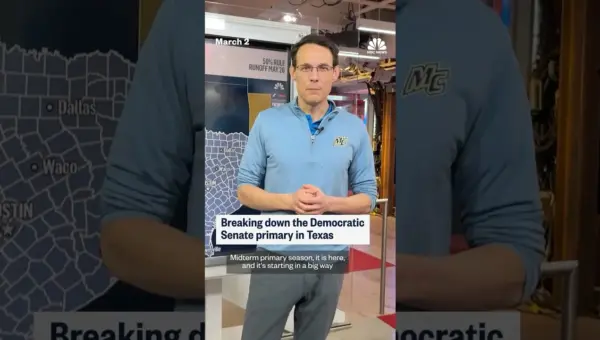
Texas Senate Showdown: Crockett, Talerico Vie for Democratic Nod
Texas Democrats are heading to the polls for a critical U.S. Senate primary, with Congresswoman Jasmine Crockett and State Legislator James Talerico vying for the nomination. Key battlegrounds include the Dallas-Fort Worth metroplex and Harris County, while the voting patterns of Hispanic residents are expected to be a decisive factor.