Tesla Customer Service: A Costly Hold?
An hour-long wait and an unaddressed $20 Supercharger charge highlight potential customer service issues at Tesla. This raises questions about operational efficiency and its impact on brand loyalty and investor confidence.


Tesla’s Customer Service Under Fire Amidst Accidental Charging Complaints
Recent user experiences highlight significant challenges in reaching Tesla’s customer support, leading to frustration and potential financial implications for owners. One customer detailed an ordeal involving an accidental $20 Supercharger charge that resulted in an hour-long wait time, ultimately leading them to abandon the call and accept the erroneous charge. This incident raises questions about Tesla’s customer service staffing and its impact on customer satisfaction and retention.
The core of the issue appears to stem from the difficulty in connecting with a live representative. According to the account, the process involved extended hold times, suggesting a potential understaffing of customer support channels. The implication is that this inefficiency may inadvertently discourage customers from pursuing refunds for minor discrepancies, such as accidental Supercharger fees. The customer’s theory posits that Tesla might be leveraging this operational bottleneck, anticipating that a significant number of customers will eventually give up, thereby saving the company the cost of processing refunds for these smaller amounts.
The $20 Supercharger Incident
The specific case involved a $20 charge at a Tesla Supercharger station that the customer claims was made in error. Upon attempting to rectify the situation through Tesla’s customer service, the individual was placed on hold for an extensive period, reportedly an hour. During this time, the customer was unable to speak with a human agent. Faced with the prolonged wait and the apparent lack of accessible support, the customer ultimately decided to forgo pursuing the refund, effectively accepting the $20 charge. The experience was described as “awful,” with the customer lamenting the wasted hour and the unresolved issue.
Potential Operational Strategy or Inefficiency?
While the customer’s theory suggests a deliberate strategy of understaffing to deter refund requests, it is also possible that the observed difficulties are a symptom of rapid growth outpacing customer support infrastructure. Tesla has experienced significant expansion in its vehicle fleet and Supercharger network. Managing customer service for such a large and growing user base presents a considerable operational challenge. However, the perception of a deliberate barrier to customer service can erode brand loyalty and create negative word-of-mouth, which can be detrimental in the long run.
Market Impact and Investor Considerations
For investors, the operational efficiency and customer satisfaction levels of a company like Tesla are crucial metrics. While Tesla’s stock performance has historically been driven by innovation, production numbers, and market share in the electric vehicle sector, customer service quality plays a vital role in brand perception and long-term sustainability. Poor customer service can lead to increased customer churn, negative reviews, and a potential dampening of future sales growth, especially as competition in the EV market intensifies.
The Supercharger network is a key differentiator for Tesla, offering a significant advantage in charging convenience. Any issues that undermine the reliability or ease of use of this network, including problematic billing and customer support, can impact its value proposition. Investors may want to monitor customer service metrics and reviews as an indicator of the company’s operational health beyond its core manufacturing and technology advancements.
What Investors Should Know
- Brand Reputation: Customer service experiences directly influence brand perception. Persistent issues can tarnish Tesla’s image as a customer-centric company.
- Operational Efficiency: The ability to efficiently handle customer inquiries, especially regarding billing and service, is a sign of robust operational management.
- Competitive Landscape: As more automakers roll out EVs and build out their charging infrastructure, superior customer service could become a competitive advantage.
- Customer Retention: Satisfied customers are more likely to remain loyal and recommend the brand. Poor service can lead to lost customers and revenue.
While a single $20 charge and an hour-long wait might seem minor in the context of a multi-billion dollar corporation, the aggregation of such experiences can have a substantial impact. It speaks to the overall customer journey and the support systems in place to back the product. As Tesla continues to scale, addressing these customer service bottlenecks will be critical to maintaining its market leadership and positive brand image.
Source: Exposing Tesla's Customer Service "Scam" (YouTube)

Related Articles


Used EVs Offer Strong Value Proposition for Consumers
Consumers are finding significant value in the used electric vehicle market, with some models like older Teslas retaining their value remarkably well. This trend offers a compelling alternative to purchasing new vehicles, highlighting the long-term cost-effectiveness of pre-owned EVs.


Tesla Slashes Prices, Making Model 3 More Accessible
Tesla has introduced a more affordable rear-wheel-drive Model 3, significantly lowering the barrier to entry for its popular EV. This move comes as European EV sales surge, highlighting the growing demand for electric mobility.

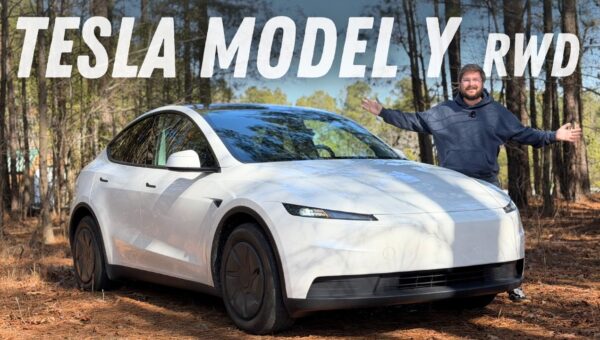
Tesla Model Y Standard: The Budget EV Compromise?
The Tesla Model Y Standard offers an affordable entry into the popular EV SUV, but significant feature deletions raise questions about its value. While efficient and technologically capable, the compromises might push buyers towards the premium trim.