Tariffs Squeeze Automakers: Price Hikes and Feature Cuts Loom
Automakers face unsustainable tariff costs, forcing difficult decisions between raising prices, cutting features, or absorbing significant profit losses. Toyota, for example, incurred nearly $8 billion in tariff costs in its 2026 fiscal year, leading to a 25% drop in profits.


Tariff Costs Imperil Automaker Profitability, Warn Industry Insiders
The escalating costs associated with tariffs are presenting an increasingly unsustainable challenge for the automotive industry, according to a stark warning issued by a major dealership group on February 18th. Automakers are now facing a critical juncture, with projections indicating they will be forced to either absorb significant financial losses, pass on higher costs to consumers through increased prices, or reduce the features offered in their vehicles.
Toyota’s Financial Strain Under Tariff Pressure
The impact of these trade policies is vividly illustrated by the financial performance of Toyota, the world’s largest automaker. Despite achieving its best year for US sales since 2017 in 2025, with an 8% increase, and its luxury brand Lexus setting a new sales record, the company’s profitability has been severely impacted. In the first nine months of its 2026 fiscal year, US tariffs cost Toyota an estimated ¥1.2 trillion, equivalent to nearly $8 billion. This has resulted in a significant 25% reduction in profits.
While approximately half of the vehicles Toyota sells in the US are manufactured domestically, with 11 factories dedicated to parts and vehicle production across the country, a substantial portion of its popular and higher-priced models, including most Lexus vehicles (excluding crossovers), are produced internationally. The Tacoma pickup truck, a perennial best-seller in the midsize segment in the US, is manufactured in Mexico. Current trade regulations impose a 25% tariff on all foreign-made parts used in vehicles assembled in Canada or Mexico, while imports from Japan face a 15% duty.
Sam Fiorani, a respected auto industry forecaster, noted that while Toyota can mitigate some tariff effects by investing in US suppliers, relocating production of high-demand models like the Tacoma to the US is not currently feasible. Toyota has indicated that its existing US factories are operating at full capacity. The company has recently embarked on a substantial investment spree in the United States, including a nearly $14 billion battery plant in North Carolina inaugurated in November 2025, an additional $900 million commitment for hybrid vehicle production, and a pledge to invest $10 billion over the next five years.
Despite these investments and its strong market position, Toyota’s profit margins have been compressed. The automaker is still targeting a full-year margin of approximately 7.6%, but without the burden of tariffs, this figure would likely exceed 10%. Toyota has publicly stated that the 25% tariff on vehicles and parts from Canada and Mexico is highly disruptive and unsustainable, warning consumers of potential price increases and a diminished selection of models.
Broader Industry Impact and Rising Vehicle Prices
The financial strain is not confined to foreign automakers; US-based manufacturers are also incurring billions of dollars in tariff-related costs. The average price of new vehicles in the US is already hovering just below the $50,000 mark. Data from Dyke’s Sonic indicated that the average retail sale price in the fourth quarter reached a record high of $62,000.
This trend has led to concerns, echoed by automotive journalist Mike Wayland, that new cars are increasingly becoming luxury goods. If this trajectory continues, consumers should not anticipate any immediate relief from high prices. While some analysts have observed that overall new car prices have remained relatively stable over the past year, suggesting automakers have been hesitant to implement drastic price hikes in direct response to tariffs, this equilibrium may be temporary.
The affordability crisis, though perhaps not fully realized in the early part of 2025, is expected to become more pronounced as the year progresses. As expressed by industry observers, with new car prices having limited room to decrease, the upward pressure is expected to intensify, particularly from May through August, as the full impact of tariffs filters through the supply chain and dealership networks.
Market Impact and Investor Considerations
The current tariff landscape poses significant challenges for automakers, potentially leading to reduced profitability, increased operational costs, and a need to adjust product offerings. For investors, this translates to a complex operating environment characterized by:
- Price Sensitivity: Consumers are already grappling with high vehicle prices. Further increases could dampen demand, particularly for non-essential vehicle purchases.
- Feature De-contenting: Automakers may resort to removing or downgrading features to offset costs, which could impact brand perception and customer satisfaction.
- Supply Chain Adjustments: Companies will likely accelerate efforts to localize production and sourcing, favoring investments in regions with more favorable trade agreements or domestic manufacturing capabilities.
- Sector Volatility: The automotive sector, already subject to cyclical demand and technological disruption, could experience increased volatility as trade policies remain uncertain.
The long-term implications hinge on the duration and nature of these trade policies. A sustained period of high tariffs could fundamentally alter global automotive supply chains and manufacturing strategies. Investors should monitor corporate earnings calls, management commentary on cost pressures, and consumer demand trends for signals on how effectively automakers are navigating this challenging environment.
Source: Why Tariffs Are Becoming Unsustainable For Automakers (YouTube)

Related Articles


Trump’s Tariffs Linked to Stagnant Job Growth in First Year Back
The U.S. economy saw minimal job growth in 2025, adding just 181,000 jobs, a figure attributed to business uncertainty fueled by Donald Trump's volatile tariff policies. While January 2026 showed gains, they were heavily concentrated in healthcare, masking broader economic weakness and significant layoffs.

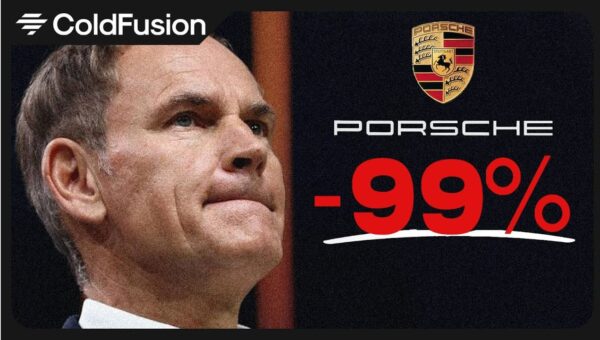
Porsche’s Profit Plunge: A Business Model in Crisis
Porsche's operating profit has plummeted by 99%, signaling a crisis for its long-standing business model. The luxury automaker faces challenges from shifting market demands, intense EV competition, and the high costs of electrification, forcing a strategic recalibration.


US Launches Iran Operation Alone as Allies Distance Themselves
The United States has launched a major military operation in Iran, "Operation Epic Fury," without the backing of NATO allies, who have publicly distanced themselves. Critics argue this unilateral action highlights America's growing international isolation and economic instability, while ordinary citizens face increasing domestic hardship.