Tariff Reversal Sparks Economic Ripples
The Supreme Court's decision to strike down key Trump-era tariffs as unconstitutional has significant implications for trade and inflation. While expected to ease some cost pressures, the ruling leaves questions about tariff refunds unresolved.

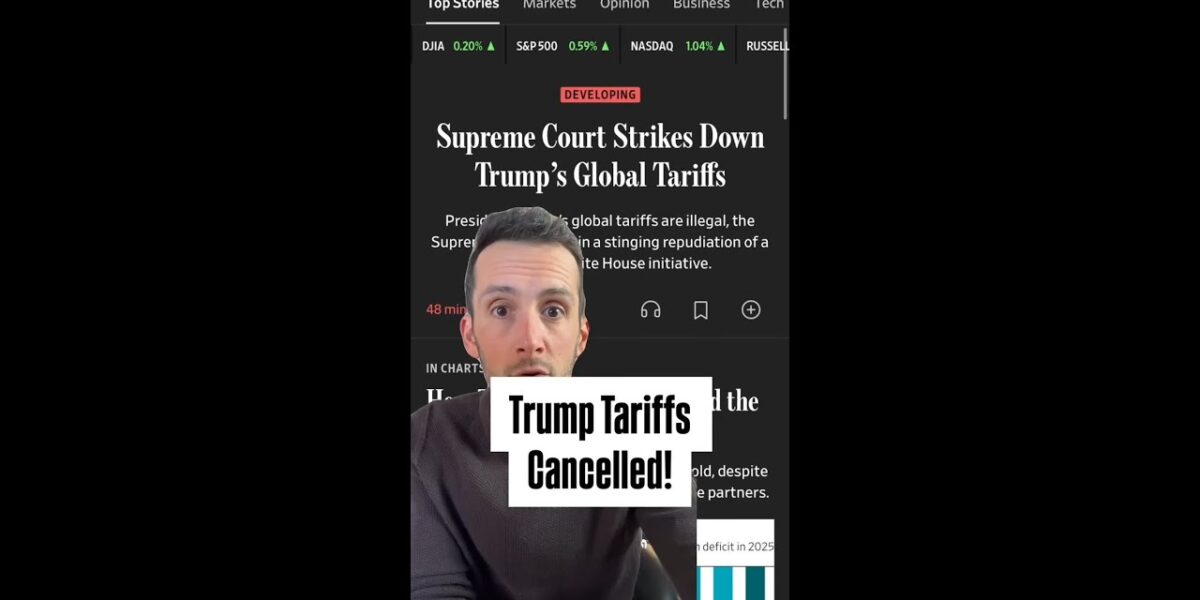
Supreme Court Strikes Down Key Tariffs, Impacting Trade and Inflation
In a landmark 6-3 decision, the Supreme Court has declared a significant portion of former President Trump’s sweeping global tariffs unconstitutional. The ruling, which centered on the executive branch’s use of the Emergency Powers Act to implement these tariffs, asserts that the power to levy taxes, including tariffs, rests solely with Congress. This decision represents a considerable setback for a key element of Trump’s economic agenda, potentially reshaping international trade dynamics and influencing inflationary pressures across various sectors.
The Constitutional Clash Over Tariffs
The Supreme Court’s ruling fundamentally challenged the executive branch’s authority to unilaterally impose broad tariffs. By leveraging the Emergency Powers Act, the former administration bypassed congressional approval, a move the highest court deemed unconstitutional. The court’s majority opinion emphasized that the imposition of taxes is a legislative power, not an executive one, requiring explicit authorization from Congress. While the White House may explore alternative legal justifications for future tariffs, the scope and effectiveness of such avenues are expected to be significantly more constrained.
Economic Implications: Inflation and Consumer Costs
The immediate economic consequence of this ruling is the potential reduction of inflationary pressures. Tariffs, in essence, function as taxes on imported goods, ultimately increasing costs for domestic businesses and consumers. Recent studies indicate that American companies and consumers have been shouldering a substantial burden, absorbing 90% to 96% of the costs associated with these tariffs. The reversal or reduction of these tariffs could therefore translate into lower prices for certain commodities, such as timber and aluminum. However, the impact on broader consumer goods and services is likely to be less pronounced.
Uncertainty Over Refunded Tariffs
A significant point of contention left unaddressed by the Supreme Court ruling is the question of whether previously collected tariffs will be subject to refunds. This ambiguity is expected to trigger a wave of legal challenges in the coming months, as businesses and individuals seek to recoup payments made under the now-invalidated tariffs. The outcome of these potential lawsuits remains uncertain, leaving a lingering question mark over the financial implications for those who bore the brunt of these import taxes.
Broader Economic Context and Real Estate
While this ruling directly addresses trade policy, its ripple effects could indirectly influence the broader economic landscape, including the housing market. Inflationary pressures, if eased by lower commodity prices, could contribute to a more stable economic environment, potentially influencing interest rate decisions by the Federal Reserve. Lower interest rates, in turn, can stimulate housing demand by making mortgages more affordable. Conversely, any disruption to global supply chains caused by trade policy shifts, even if positive in the long run, can create short-term volatility.
Regional and Stakeholder Impact
The impact of this tariff reversal will likely be felt unevenly across different regions and industries. Sectors heavily reliant on imported materials or exporting goods subject to retaliatory tariffs will experience the most direct effects. For buyers, a potential decrease in prices for certain goods could offer some relief from inflationary pressures, indirectly benefiting household budgets. Sellers might see a more stable market if broader economic conditions improve. Investors, particularly those in industries affected by trade policy, will need to carefully assess the evolving landscape, considering factors like supply chain resilience and international market access. The ultimate beneficiaries will depend on how swiftly and effectively businesses can adapt to the new trade environment and how monetary policy responds to any shifts in inflation.
Source: Trump Tariffs Cancelled! (YouTube)

Related Articles

Bondi’s Court Blunder Could Cost US Billions
A court filing from Pam Bondi's Department of Justice may have committed the U.S. to refunding $170 billion in tariffs. This legal promise was made during challenges to Trump-era tariffs, with the DOJ assuring the court that collected funds would be repaid if the tariffs were overturned.

Trump’s Tariffs Linked to Stagnant Job Growth in First Year Back
The U.S. economy saw minimal job growth in 2025, adding just 181,000 jobs, a figure attributed to business uncertainty fueled by Donald Trump's volatile tariff policies. While January 2026 showed gains, they were heavily concentrated in healthcare, masking broader economic weakness and significant layoffs.


Russia’s Hidden Debt Crisis: A Silent Drain on Citizens
Russia is reportedly accumulating significant debt through complex financial schemes, which critics argue are subtly draining resources from its citizens. The government's reliance on borrowing, coupled with inflation and rising interest rates, is placing a growing burden on ordinary Russians.