Taliban Detainee’s Release Highlights US-Afghan Tensions
The release of American Dennis Coyle from Taliban detention highlights the complex US-Afghan relationship. His freedom, secured through diplomatic and family efforts, underscores ongoing challenges in the region and the Taliban's strategic use of such cases for international legitimacy.

Taliban Detainee’s Release Highlights US-Afghan Tensions
The recent release of American Dennis Coyle from Taliban detention, facilitated by international efforts, brings into focus the complex and often strained relationship between the United States and Afghanistan’s ruling power. Coyle’s freedom, after an unspecified period of detention, underscores the ongoing challenges of diplomacy and security in the region, particularly for foreign nationals operating in Afghanistan.
A Difficult Release
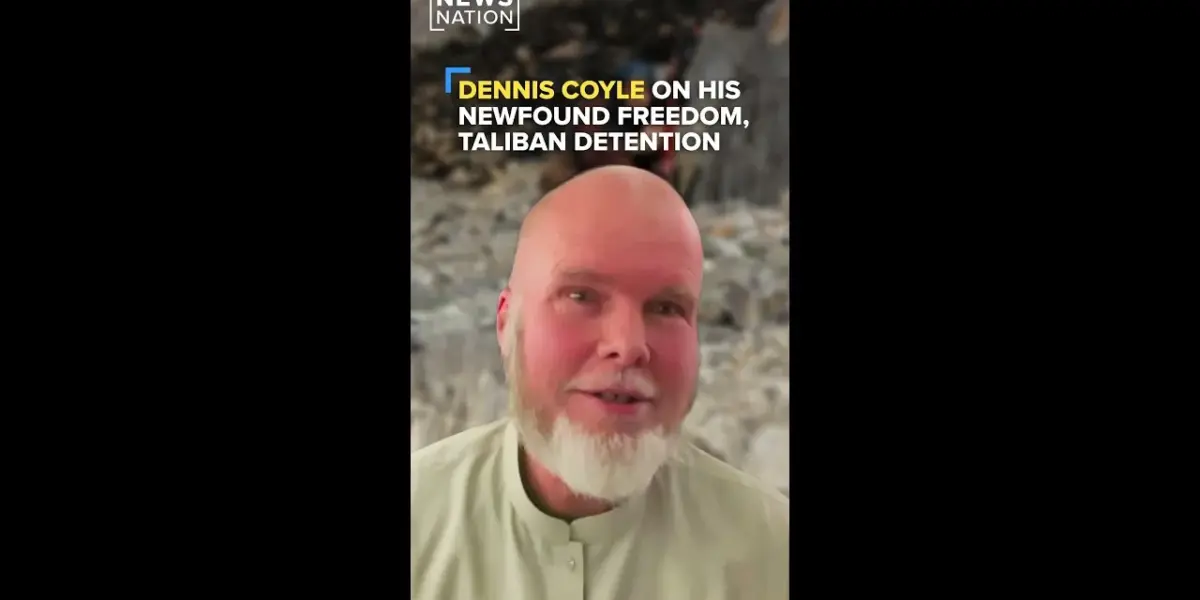
Dennis Coyle, speaking shortly after his release, expressed deep gratitude for the individuals and efforts that secured his freedom. He described feeling a surge of adrenaline rather than sleepiness, indicating the intense nature of his recent experience. Coyle specifically mentioned U.S. Envoy Adam and his own sisters, highlighting the critical role of both official diplomatic channels and personal family advocacy in his case. He acknowledged the visibility brought to his situation by media networks, which he found deeply touching.
Chris Cuomo, the interviewer, emphasized that Coyle deserved his freedom, stating that Coyle was doing the right thing while his captors were not. The profound love and concern from Coyle’s family were also highlighted, with Cuomo noting that their efforts to secure his release moved even the President of the United States. This personal story, while central to Coyle’s experience, also serves as a microcosm of broader geopolitical dynamics.
Motivations and Interests
The Taliban’s decision to release Coyle, while seemingly a humanitarian act, is likely driven by a mix of strategic considerations. For the Taliban, maintaining international legitimacy and seeking economic aid are paramount goals. By releasing foreign nationals, they can attempt to portray themselves as a more responsible governing body, potentially easing international sanctions and opening doors for much-needed financial assistance. However, their internal security apparatus also monitors foreign presence, and detentions can be used as bargaining chips or to enforce perceived rules.
The United States, on the other hand, has a clear interest in securing the safety of its citizens abroad. The involvement of a U.S. Envoy signals the high priority placed on such cases. Beyond the individual’s well-being, these situations test the U.S. commitment to its citizens and its ability to engage with, or exert pressure on, the de facto authorities in Afghanistan. The family’s active role underscores the importance of citizen diplomacy and the pressure it can place on governments to act.
Historical Context and Shifting Power
The current situation in Afghanistan is deeply rooted in decades of conflict and shifting international involvement. Following the U.S. withdrawal in August 2021, the Taliban quickly regained control of the country. Since then, the international community has grappled with how to engage with the Taliban government, balancing humanitarian concerns and counter-terrorism interests against the desire to avoid formal recognition or legitimization of the regime. Previous detentions of foreign nationals by the Taliban have often been linked to demands for sanctions relief or financial resources.
This incident echoes past diplomatic challenges faced by foreign powers operating in unstable regions. The use of detention as a tool by non-state or de facto governments is a recurring theme in international relations. The U.S. response, involving diplomatic envoys and family advocacy, reflects established protocols for citizen welfare, but the effectiveness of these methods is continually tested by the unique circumstances of each detention and the political climate in the detaining country.
Economic and Regional Implications
While this specific case may not directly involve major economic sanctions or trade figures, the broader context of international engagement with Afghanistan is heavily influenced by economics. The Taliban government is largely isolated, with international aid being a critical lifeline. Sanctions imposed after their takeover continue to impact the Afghan economy. By releasing individuals like Coyle, the Taliban might hope to foster a more positive international perception, which could indirectly lead to discussions about easing economic restrictions or increasing development aid. The control of resources and trade routes within Afghanistan also remains a significant factor for regional stability.
Global Impact: Why This Reshapes the World Order
The release of Dennis Coyle, while a personal victory, is part of a larger narrative about state sovereignty, international law, and the challenges of governing in post-conflict zones. It highlights the persistent difficulties in establishing stable, internationally recognized governance in Afghanistan. The Taliban’s actions, including detentions and subsequent releases, influence how other nations perceive their reliability and willingness to adhere to international norms. This, in turn, affects the flow of aid, investment, and diplomatic engagement, shaping Afghanistan’s trajectory and its place within the global community. The incident underscores the ongoing need for careful diplomatic maneuvering and the critical role of human rights in international relations, even in the most challenging environments.
Future Scenarios
One future scenario involves continued sporadic detentions of foreign nationals by the Taliban, used as leverage in ongoing diplomatic and economic negotiations. This approach could lead to a cycle of tense standoffs and eventual releases, preventing normalized relations. Another possibility is a gradual shift towards more predictable legal frameworks by the Taliban, driven by a strong desire for international engagement and economic recovery. However, internal political dynamics within Afghanistan could also lead to increased hardline policies, potentially resulting in more frequent or prolonged detentions. The U.S. and its allies will likely continue to prioritize citizen safety while navigating the complex reality of engaging with a government that lacks broad international recognition.
Source: Dennis Coyle on his newfound freedom, Taliban detention | CUOMO (YouTube)

Related Articles


US Allies Rethink Ties as Washington Sows Global Discord
Allegations of geopolitical confusion and disregard for allies from the White House are straining international relationships. This perceived unpredictability is forcing nations to reconsider alliances and forge new economic partnerships, potentially reshaping the global order.

Russia’s TV Dreams of Dividing Europe
Russian state television broadcasts increasingly aggressive rhetoric, discussing the division of Europe and dismissing Ukraine's statehood. This contrasts with battlefield realities and official diplomatic stances, highlighting a dual strategy of projecting strength and seeking geopolitical advantage. Analysts warn that these televised fantasies ignore the ongoing war and Ukraine's fight for sovereignty.

Ukraine Strikes Russian Oil Hubs, Straining War Funding
Ukraine's repeated strikes on Russian oil export terminals are targeting the financial backbone of Moscow's war machine. These attacks aim to cripple Russia's revenue streams and force a costly defense of its energy infrastructure, creating significant economic and political pressure on the Kremlin.