Taiwan’s Opposition Chief Visits China Amid Rising Tensions
Taiwan's opposition leader is visiting China for a peace mission amid rising tensions. The trip comes as Beijing increases military pressure and imposes unusual airspace restrictions, raising questions about Taiwan's future and regional stability.


Taiwan’s Opposition Chief Visits China Amid Rising Tensions
Taiwan’s main opposition leader, Chenli Wu, is making a significant trip to China this week. She calls it a mission for peace. This visit raises important questions about Taiwan’s future. Tensions between Taiwan and China have been growing steadily.
Wu, the head of Taiwan’s Kuomintang (KMT) party, is set to meet with Chinese leader Xi Jinping. This would be the first time a KMT leader has visited China in almost ten years. Wu states the trip aims to ease tensions. However, it occurs at a very sensitive moment.
Beijing’s Pressure and Taiwan’s Defense
China’s Communist Party has been increasing its military pressure on Taiwan. Beijing claims the island as its own territory, even though it has never ruled Taiwan. Meanwhile, Taiwan’s government wants to spend billions on new defense. A big part of this plan is buying weapons from the United States. But this defense spending plan is currently stalled in Taiwan’s parliament. The KMT party has raised objections.
Taiwan’s ruling party has accused the KMT of being too close to Beijing. Taiwanese officials have urged Wu to press China to stop its military threats. They also want China to respect Taiwan’s right to decide its own future. China, however, continues to refuse direct talks with Taiwan’s president. This visit also happens just weeks before a planned summit involving former US President Trump.
Unusual Airspace Restrictions Raise Concerns
Adding to the growing unease, Beijing has restricted a large section of airspace near Taiwan, South Korea, and Japan. These restrictions will last for 40 days. This area is a key region where both Chinese and US military forces often operate. Experts find China’s move unusual. Some believe it could signal increased military activity in the region.
According to a report in The Wall Street Journal, China reserved airspace over parts of the Yellow Sea and East China Sea. These restrictions began in late March and will continue through early May. China has not provided a reason for these long-term closures. Such extended restrictions are not typical.
Analysis of China’s Military Signaling
Analysts point out that military drills usually last only a few days, not weeks. Some experts suggest that if these restrictions are linked to military exercises, it could represent a new way Beijing signals its military presence. This could mean a shift in how China displays its military strength in the region.
Why This Matters
This visit by Taiwan’s opposition leader to China is significant for several reasons. It highlights the complex relationship between Taiwan and mainland China. Beijing views Taiwan as a breakaway province that must be reunified, by force if necessary. Taiwan, a self-governing democracy, sees itself as distinct from China.
The KMT party traditionally favors closer ties with China compared to the current ruling party. Wu’s visit could be seen as an attempt to open dialogue and reduce friction. However, it also risks being interpreted as the KMT acting independently of the Taiwanese government’s concerns. This could create internal political divisions within Taiwan.
Furthermore, China’s actions, like the extended airspace restrictions, create uncertainty and potential for miscalculation. These actions put pressure on Taiwan and its allies. They also affect international shipping and air travel in a crucial part of the world. The timing, close to a potential US election year development and before a planned summit, adds another layer of complexity.
Historical Context
The relationship between Taiwan and China has been tense since 1949. After losing the Chinese Civil War, the Nationalist government retreated to Taiwan. They continued to claim to be the legitimate government of all China. The Communist Party established the People’s Republic of China on the mainland. Since then, China has sought unification with Taiwan. This has involved diplomatic pressure, economic measures, and military intimidation.
The KMT party, which once ruled Taiwan, has a history of seeking closer ties with the mainland. However, public opinion in Taiwan has increasingly favored maintaining the status quo or seeking independence. The current ruling party, the Democratic Progressive Party (DPP), generally advocates for Taiwan’s sovereignty. The KMT’s approach represents a different path, one focused on dialogue and economic ties, but often criticized for potentially appeasing Beijing.
Trends and Future Outlook
The trend of increasing military activity around Taiwan shows no sign of slowing down. China’s assertiveness in the region is a major concern for Taiwan and its international partners, especially the United States. Taiwan’s efforts to bolster its defenses, including acquiring US weapons, are a direct response to this pressure.
Wu’s visit could be a small step towards de-escalation, or it could be seen as a sign of growing internal political pressure on Taiwan’s defense policies. The long-term airspace restrictions are particularly worrying. They could be a test of international resolve or a prelude to more significant military actions. The future will likely see continued diplomatic maneuvering, military posturing, and efforts by Taiwan to maintain its autonomy in the face of immense pressure from Beijing.
The visit highlights the delicate balance Taiwan must strike between maintaining its democratic identity and managing the assertive actions of its powerful neighbor.
Source: Taiwan Opposition Leader Heads to China for Rare Visit; Beijing Restricts Airspace for 40 Days (YouTube)

Related Articles
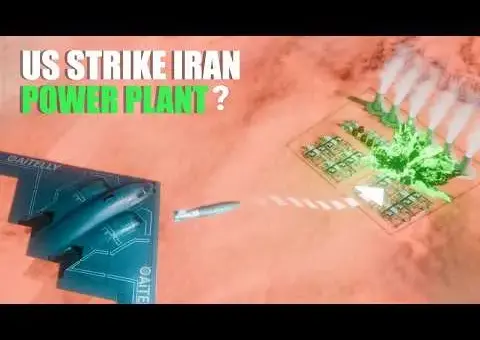
US Aims to Cripple Iran’s Power Grid to Secure Strait of Hormuz
A new US strategy reportedly targets Iran's power grid, including major plants like Damavand, to force open the Strait of Hormuz. The plan involves multi-stage air attacks using advanced bombers and precision munitions to cripple energy infrastructure and cause cascading failures.

Trump’s Iran Ultimatum: Civilization on the Brink?
President Trump issued a dire warning to Iran with a Tuesday deadline for a deal, fearing "a whole civilization will die." U.S. strikes on Kharg Island occurred, but officials state U.S. strategy remains unchanged. This escalation highlights ongoing tensions and their global implications.

Iran and US Trade Blows as Tensions Spike
The U.S. and Iran are engaged in a dangerous exchange of strikes, with a critical deadline set by President Trump looming over the Strait of Hormuz. Both nations, along with Israel, are escalating military actions, while diplomatic channels remain open but strained.