Taiwan’s Chip Dominance Creates Global Economic ‘Chokepoint’
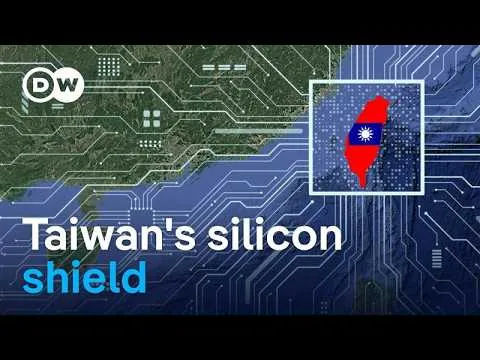
Taiwan's crucial role in manufacturing advanced semiconductors makes it a global economic 'chokepoint,' vital for industries from AI to automotive. While this dominance fuels Taiwan's impressive economic growth, it also raises concerns about global supply chain stability and the island's own economic vulnerability.

Taiwan’s Chip Dominance Creates Global Economic ‘Chokepoint’
Taiwan’s economy is experiencing a significant boom, largely driven by its crucial role in manufacturing the world’s most advanced computer chips. Last year, the economy grew by nearly 9%, with projections for 2026 being revised upward. This surge is fueled by an artificial intelligence (AI) driven export boom. However, this heavy reliance on semiconductor exports is raising concerns about Taiwan’s economic stability and its impact on the global economy.
The ‘Silicon Shield’ Powering Taiwan’s Growth
Taiwan acts as a vital link in the global semiconductor supply chain, a position that has allowed its economy to thrive despite ongoing political tensions with China. The semiconductor sector is the island’s main engine for growth, supporting a wide range of industries including logistics, financial services, technical consulting, and infrastructure investment. When the chip industry is strong, Taiwan’s economy generally prospers.
Global Semiconductor Leadership
Taiwan is the undisputed world leader in semiconductor manufacturing, producing over two-thirds of all global semiconductors. South Korea and the United States each hold about 12% of the market, while China produces 8%. Crucially, Taiwan completely dominates the production of the most advanced, leading-edge chips. Taiwan Semiconductor Manufacturing Company (TSMC) alone produces over 90% of the highly sophisticated semiconductors essential for AI technologies.
AI Boom Fuels Demand
The current growth in Taiwan’s economy is directly linked to the massive global AI boom, which has dramatically increased demand for semiconductors. A significant portion of this demand originates from the United States, where major tech companies like Microsoft and Amazon are heavily investing in AI infrastructure. This surge in investment is the primary reason behind Taiwan’s exceptional economic performance last year.
Economic Strength and Overdependence Concerns
Since 2020, Taiwan’s GDP per capita has consistently exceeded the average of developed G20 nations. The island has spent decades building a sophisticated semiconductor industry. The advanced chips made in Taiwan are vital for everything from electric vehicles and smartphones to sophisticated weaponry. These semiconductor exports have sustained Taiwan’s impressive economic growth in recent years, with GDP growth last year exceeding 8.5% and projected to be over 7% this year.
Despite this success, some experts worry about Taiwan’s overdependence on microchips. The industry accounts for about one-fifth of Taiwan’s GDP. While services make up 60% of the economy, this sector is deeply intertwined with the microchip industry. This concentration has led to Taiwan being described as an economic ‘chokepoint’ for the world.
A Global ‘Chokepoint’
The heavy concentration of semiconductor manufacturing in Taiwan makes it a critical global chokepoint. Any disruption to chip production, even for days or weeks, could significantly affect the supply and price of numerous products worldwide, including AI systems, electronics, and automobiles. This situation is often compared to the disruption of oil shipments through the Strait of Hormuz, a key oil chokepoint, and its impact on the global economy.
U.S. Treasury Secretary Scott Bessant highlighted this vulnerability, stating in January that the biggest threat to the world economy is that 97% of high-end chips are made in Taiwan. He warned that a blockade or destruction of this capacity in Taiwan could lead to an ‘economic apocalypse.’ The Trump administration has been attempting to revive microchip manufacturing in the United States, but this is a challenging and costly endeavor.
Challenges of Reshoring Chip Manufacturing
Bringing chip manufacturing back to countries like the United States is incredibly difficult. Building new semiconductor plants can cost up to $40 billion each and take many years to complete. Replicating Taiwan’s complex manufacturing ecosystem requires more than just capital and equipment; it needs a highly skilled workforce, sophisticated supplier networks, and the ability to navigate complex environmental regulations.
Taiwan’s Strategy: ‘Made by Taiwan’
To address global demand and geopolitical realities, companies like TSMC are investing in overseas facilities. This shift represents a move from ‘Made in Taiwan’ to ‘Made by Taiwan,’ where the technology and expertise are exported. The key challenge for Taiwan is to maintain its leadership in research and development while expanding production capabilities globally. While a significant portion of production will likely remain in Taiwan, its global share may decrease.
China’s Growing Ambitions
China has significantly accelerated its efforts to develop its own domestic chip-making capabilities. Since 2022, the U.S. has imposed export restrictions on advanced chip manufacturing equipment to China, prompting China to increase investment in its own semiconductor industry. China aims to achieve 80% self-sufficiency in semiconductors by 2030, up from its current level of around 33%.
Short-Term Outlook and Adaptability
The short-term economic outlook for Taiwan faces challenges due to global uncertainties, including potential energy shortages and high inflation, which could affect demand for semiconductor exports. In such scenarios, Taiwan’s growth in 2026 might slow down, possibly to around 5% even with a prolonged conflict, though this would still be supported by AI demand. This represents a slower pace compared to last year’s performance.
Taiwan’s manufacturing sector has proven remarkably adaptable. During the COVID-19 pandemic, its factories quickly shifted to producing essential personal protective equipment (PPE) when other countries struggled. More recently, Taiwan’s economy has begun focusing on producing defense and security-related equipment. This ability to pivot and adapt quickly may be Taiwan’s greatest strength, allowing it to reinvent itself in response to evolving global challenges.
Future Prospects
Taiwan faces significant threats, including the risk of Chinese invasion, global supply chain pressures, and increasing international competition. However, its strength may lie not only in its dominance of the chip industry but also in its proven capacity to evolve and adapt beyond it, securing its economic future in a complex world.
Source: Why Taiwan is an economic chokepoint – for better or worse | DW News (YouTube)

Related Articles


Gas Prices Soar as War Looms; Trump Attends UFC
Americans are struggling as inflation rises and gas prices surge past $100 a barrel. With many resorting to debt for groceries, the economic outlook is grim. Meanwhile, political figures are drawing attention for their public activities amidst the crisis.


Trump’s Fox Interview Reveals Reckless Global Threats, Economic Risks
Donald Trump's recent Fox interview revealed alarming threats against Iran and questionable economic predictions. He discussed potentially destroying Iran's infrastructure and acknowledged the economic risks, yet also claimed current economic success. The interview highlights concerns about his foreign policy and economic judgment.


Canada Charts New Course, Challenges US Economic Ties
Canada is actively strengthening its economy and forging new global partnerships, signaling a potential shift in its relationship with the United States. This move challenges US economic ties and highlights Canada's unified approach to national development. The US may face consequences from reduced resource exports and increased costs for key materials.