
Science & Space
Earth’s Planetary Status Questioned, Figure-8 Orbits Debunked
Exploring Earth's planetary status, the impossibility of figure-8 orbits, the ongoing debate about dark matter's composition, and the future of human spaceflight.
9 articles
Exploring Earth's planetary status, the impossibility of figure-8 orbits, the ongoing debate about dark matter's composition, and the future of human spaceflight.
New research proposes that Sagittarius A*, the supermassive object at the Milky Way's center, might not be a black hole but a dense concentration of dark matter. Future observations of its photon ring could reveal the truth.
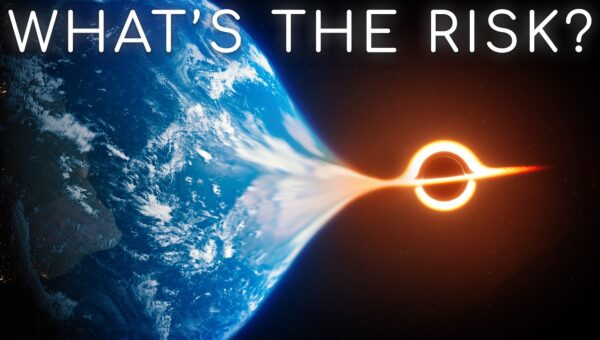
Could CERN's Large Hadron Collider create a doomsday black hole? While theoretically possible under certain speculative physics, the scientific consensus and evidence suggest the risks are vanishingly small, with microscopic black holes likely evaporating instantly or having negligible gravitational impact.
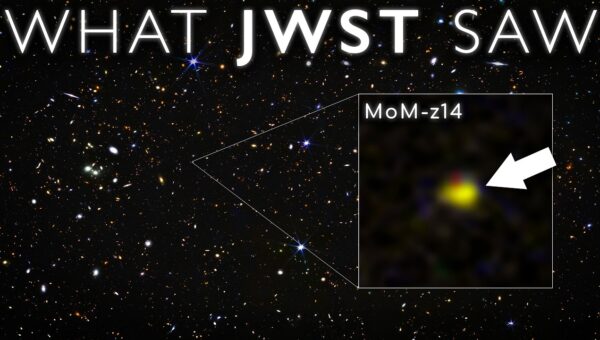
The James Webb Space Telescope is revealing an early universe that defies expectations, presenting puzzles about galaxy and black hole formation, and the abundance of elements like lithium. These findings challenge current cosmological models, prompting a re-evaluation of our understanding of cosmic origins.
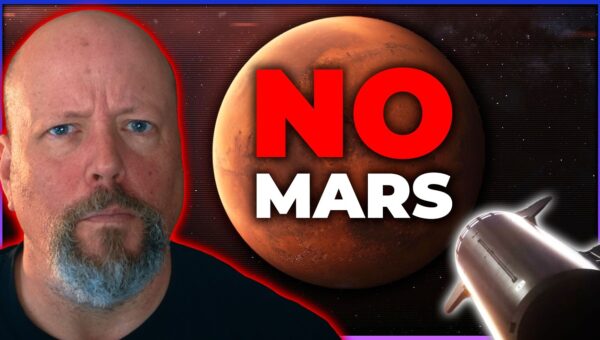
New findings reveal a potential lava tube on Venus, China's lunar mission hardware advances, and SpaceX shifts its primary focus from Mars to the Moon. The Event Horizon Telescope also sheds light on the origin of black hole jets.
The Moon offers a pragmatic stepping stone for deep space exploration, providing a crucial training ground before ambitious journeys to Mars. Innovative technologies like sand batteries and a deeper understanding of cosmic phenomena like rogue black holes and galactic redshift are shaping our future in space.
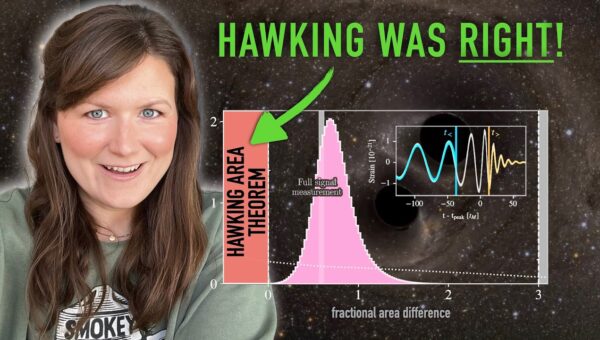
LIGO's latest observations of a black hole merger, GW250114, provide the strongest evidence yet for Stephen Hawking's 1971 area theorem. The data confirms that the surface area of the resulting black hole was greater than the sum of the areas of the merging black holes, validating a key prediction about these cosmic enigmas.
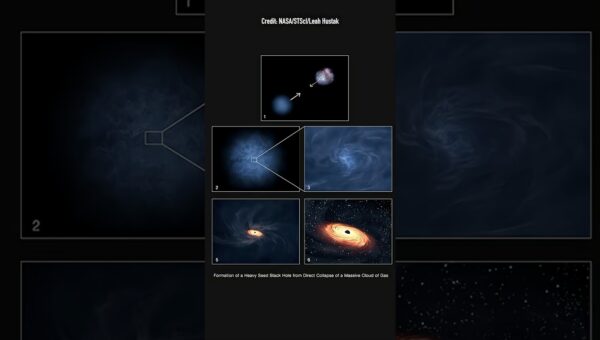
New simulations suggest that direct collapse black holes, a theorized rapid formation pathway, may explain the existence of supermassive black holes in the early universe. Evidence comes from matching JWST spectral data.
Black holes, formed from the collapse of massive stars or potentially from the early universe, serve as extreme cosmic laboratories. They challenge our understanding of physics, pushing general relativity and quantum mechanics to their limits, especially concerning the nature of singularities.