Syed Questions Trump’s Iran Strategy Amidst Global Instability
Journalist Matthew Syed voiced strong concerns about the lack of a clear aftermath plan for potential US military action against Iran under President Trump. He argued that such a move, without strategic foresight, risks engulfing the Middle East in chaos and creating unintended consequences for the Western alliance.

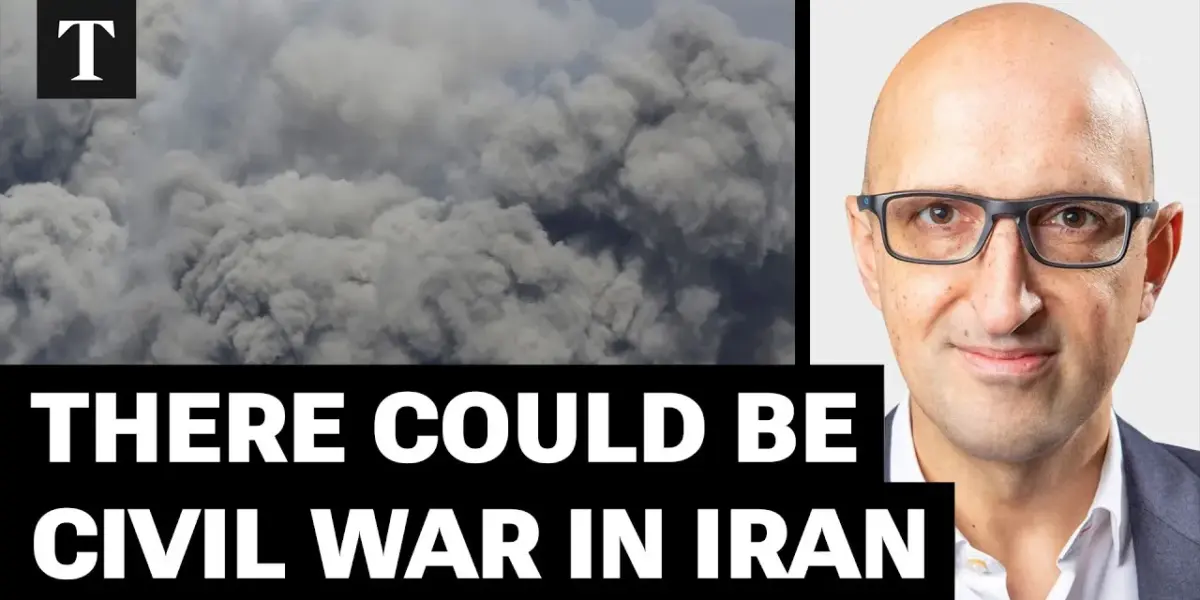
Syed Questions Trump’s Iran Strategy Amidst Global Instability
In a recent discussion, journalist Matthew Syed expressed significant doubts regarding the strategic planning and potential ramifications of any US-led military action against Iran under the Trump administration. While acknowledging the reprehensible nature of the Iranian regime, Syed argued that the lack of a clear plan for the aftermath and the potential for unintended consequences make such a move deeply concerning for both the Middle East and the Western alliance.
Skepticism Over Trump’s Strategic Vision
Syed, writing for The Times, voiced his reservations about President Trump’s approach to foreign policy, particularly concerning Iran. He stated, “It would be lovely to have a simple and definitive view on trying to rid the world of one of the most iniquitous and evil regimes in the world. And I’d love to be able to say I support it wholeheartedly.” However, he elaborated on the complexities, drawing a parallel to historical conflicts like the Iran-Iraq War, where he recalled the regime “persuading young children to run into machine gun fire and to walk across minefields so that they would martyrdom themselves to the cause.”
“It’s easy, John, to start a war. It’s very difficult to end it without it engulfing the region into chaos. I have no sense that there is a strategic plan for what happens after this carnage ends.”
Syed highlighted the lessons learned from the Iraq War, where a turning point was only achieved when a coherent strategy for unity was developed post-invasion. He expressed concern that Trump’s calls for the Iranian people to rise up could lead to internal strife, such as a civil war among various ethnic and political factions within Iran, including Kurds, Persians, and Arabs. This could potentially result in millions of refugees moving towards Europe, further destabilizing the region.
Concerns Over Unintended Consequences
The potential for widespread chaos and a refugee crisis are central to Syed’s argument. He questioned what would happen if the Revolutionary Guard retained a hold on power, potentially leading to more bloodshed. “If somebody can explain to me clearly what the planning is for the aftermath and how a whole set of unintended consequences might then ensue of great damage both to the Middle East, but also the Western Alliance, then I would support it. But I don’t have that confidence,” he asserted.
Critique of Trump’s Personalistic Foreign Policy
Beyond the specific Iran strategy, Syed critiqued President Trump’s broader foreign policy, suggesting it is often driven by personalistic interests rather than a commitment to global freedom and justice. He contrasted this with previous administrations, which, despite their own hypocrisies and national interests (citing examples like the Bay of Pigs and Vietnam), also aimed to “bend the arc of history in the direction of freedom and prosperity.” Syed pointed to the post-1945 rules-based international order, which he credited with unprecedented global economic growth, as an example of a system that valued norms and the greater good.
Syed specifically mentioned Trump’s actions regarding Venezuela and Ukraine as examples of foreign policy driven by personal or narrow national interests. He suggested that Trump’s rhetoric on Venezuela was an opportunity to replace one regime member with another favorable to his interests, and that his withdrawal of aid and intelligence sharing in Ukraine, a critical geopolitical contestation, demonstrated a lack of urgency in supporting democratic allies.
Navigating Alliances and Principled Stances
The discussion also touched upon the challenges faced by European leaders, particularly Prime Minister Starmer’s government, in responding to US actions under Trump. Syed acknowledged the difficulty of the situation, stating, “You give Trump what he wishes, he interprets it as weakness and comes back for more. You show strength and he has you under his thumb.” He sympathized with the predicament of European leaders trying to navigate relations with a US president whose actions can be unpredictable.
Regarding the UK’s initial hesitation and subsequent agreement to allow the use of British bases for potential American attacks on Iran, Syed believed that public support from the outset would have been the more principled stance, despite legal concerns raised by the Attorney General. He emphasized the UK’s profound reliance on the US for defense, particularly against adversaries like Russia, and argued that full-throated public support, while simultaneously pushing for more coherent planning from the US, would have been the correct approach.
Broader Implications for Global Order
Syed’s commentary underscores a growing concern about the erosion of established international norms and the potential for unilateral actions driven by individual leaders. His analysis suggests that a lack of foresight and a focus on short-term political gains over long-term stability can have devastating consequences, particularly in volatile regions like the Middle East. The implications extend to the very foundations of the Western alliance and the effectiveness of international cooperation in addressing global challenges.
Looking Ahead
As the geopolitical landscape continues to evolve, the focus remains on whether any coherent long-term strategy will emerge from the US regarding Iran and other global flashpoints. The ability of allied nations to influence US policy and ensure a coordinated, stable approach will be critical in preventing further regional destabilization and safeguarding international security. Observers will be watching closely for any signs of a more strategic and less reactive foreign policy from the current US administration.
Source: Matthew Syed: I Can’t Trust Trump To Free Iran (YouTube)

Related Articles

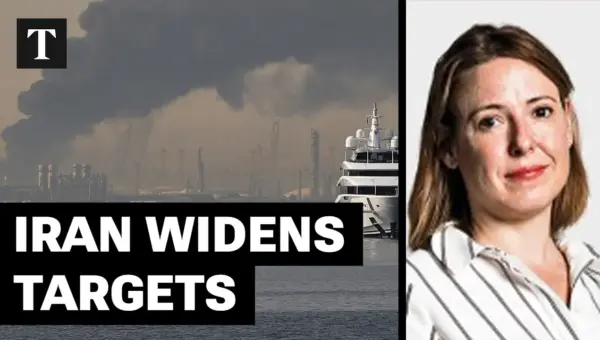
Iran Escalates Regional Attacks, Feeling ‘Nothing to Lose’
Iran is widening its regional attacks, driven by a "nothing to lose" mentality, according to Catherine Philp of The Times. The escalating conflict has seen Hezbollah engage in hostilities, drawing retaliatory strikes and increasing global oil prices. The U.S. and Israel are targeting Iranian leadership and military sites, while the response of Gulf nations remains a key uncertainty.
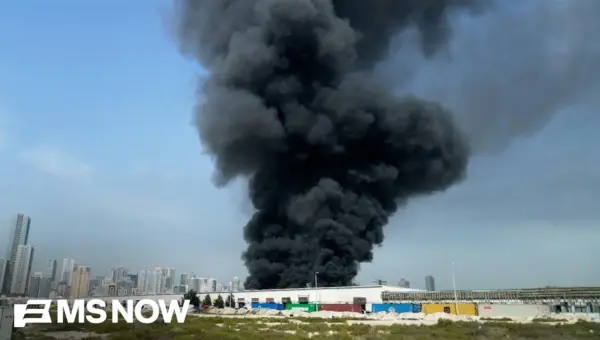
American Stranded in Dubai Fears for Safety Amid Iran Tensions
An American tourist celebrating her 30th birthday in Dubai was left stranded and anxious amid escalating U.S.-Iran tensions. Facing disrupted flights and intense fear, she detailed her ordeal and struggles to secure a direct flight home, highlighting the personal impact of geopolitical instability.

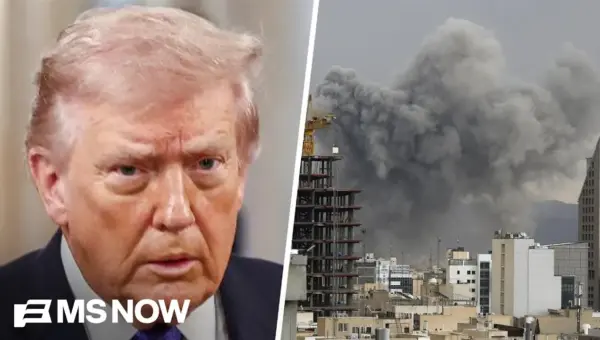
Retired General Slams Trump’s Iran Policy as ‘Political Mess’
Retired General Barry McCaffrey has condemned President Trump's approach to Iran as a "political mess," citing a lack of congressional authorization and diplomatic engagement. While commending the effectiveness of recent military strikes, McCaffrey emphasized the critical need for de-escalation and a return to nuclear talks.