Supreme Court’s Tariff Ruling Ignites Constitutional Battle, Threatens Republican Unity
The Supreme Court has reportedly ruled former President Trump's tariffs unconstitutional, asserting that only Congress holds prolonged tariff authority. This decision challenges executive power, sparking an anticipated defiance from the administration and threatening a 'civil war' within the Republican party ahead of midterm elections, highlighting a critical test for America's constitutional checks and balances.


Introduction: A Landmark Constitutional Clash Over Trade
In a development poised to reshape the landscape of American economic policy and ignite a fervent constitutional debate, the United States Supreme Court has reportedly issued a pivotal ruling declaring former President Donald Trump’s extensive tariff policies unconstitutional. This decision, as described by expert Peter Zeihan on February 20th, 2020, asserts that the authority to impose tariffs over a prolonged period rests solely with Congress, with any executive delegation of such power being strictly limited and subject to legislative review. The implications of this ruling are vast, threatening to unravel a cornerstone of the Trump administration’s economic agenda and setting the stage for an unprecedented confrontation between the executive and judicial branches, with profound repercussions for the legislative branch and the upcoming midterm elections.
The ruling directly challenges the executive branch’s broad interpretation of its trade powers, particularly those employed by the Trump administration to levy duties on goods from various countries, most notably China. These tariffs, which became a hallmark of Trump’s ‘America First’ economic strategy, aimed to protect domestic industries, renegotiate trade deals, and exert economic pressure on geopolitical rivals. However, the Supreme Court’s decision, characterized as a 6-3 split with even a majority of Trump’s own appointees siding with the majority, underscores a fundamental reassertion of congressional authority as enshrined in the U.S. Constitution. This judicial intervention is not merely a legal technicality; it represents a significant rebalancing of power that could force Congress to reclaim its long-dormant role in shaping national trade policy and compel a re-evaluation of the executive’s capacity to unilaterally dictate economic foreign relations.
The Supreme Court’s Unprecedented Ruling: Reasserting Congressional Prerogative
The core of the Supreme Court’s decision, as outlined in the analysis, hinges on a strict interpretation of the U.S. Constitution’s distribution of powers, particularly concerning taxation and commerce. Article I, Section 8, Clause 1 grants Congress the power to "lay and collect Taxes, Duties, Imposts and Excises." Furthermore, Clause 3 of the same section empowers Congress "To regulate Commerce with foreign Nations." These clauses have historically been understood to place the primary authority for setting tariffs and regulating international trade firmly within the legislative domain.
The ruling explicitly clarifies that while Congress may, under specific circumstances, delegate certain powers to the executive branch, such delegation for imposing tariffs cannot be for "a prolonged period of time." Crucially, any such limited delegation must always remain "subject to congressional review." This stipulation effectively erects a constitutional fence around executive overreach in trade policy, demanding legislative oversight and potential intervention. This judicial pronouncement serves as a stark reminder of the separation of powers doctrine, a foundational principle of American governance designed to prevent any single branch from accumulating excessive authority.
Historically, presidents have utilized various statutes, such as Section 232 of the Trade Expansion Act of 1962 (allowing tariffs based on national security concerns) or Section 301 of the Trade Act of 1974 (addressing unfair trade practices), to impose tariffs. The Supreme Court’s ruling, however, suggests that the application of these statutes for prolonged, broad-based tariffs, without explicit and continuous congressional endorsement, constitutes an overstep. It implies that the executive’s interpretation of "national security" or "unfair trade practices" cannot unilaterally justify an indefinite imposition of duties that fundamentally alter the nation’s trade posture.
The 6-3 nature of the decision further amplifies its significance. The fact that only one of Trump’s own Supreme Court appointees sided with the minority underscores the judiciary’s commitment to constitutional principles, even when it challenges the policies of the president who appointed them. This outcome refutes any notion that the Court would simply rubber-stamp executive actions, particularly those pushing the boundaries of presidential power. It sends a clear message about the independence of the judiciary and its role as the ultimate arbiter of constitutional interpretation, regardless of political affiliations or appointing authorities. This judicial independence, often tested in times of political polarization, appears to have held firm in this crucial constitutional interpretation.
The Trump Administration’s Anticipated Response: Defiance and Escalation
Given the Trump administration’s historical pattern of confronting institutions perceived as obstacles to its agenda, the anticipated response to this Supreme Court ruling is expected to be one of outright rejection and defiance. As predicted, the administration is unlikely to meekly accept a decision that dismantles a core pillar of its economic policy. Instead, it will likely seek alternative avenues to maintain its tariff regime, even if it means engaging in further legal and political battles.
One immediate strategy, as suggested, would be to "find justification in other laws that are actually fuzzier." This approach would involve searching for ambiguous statutes or executive authorities that could be reinterpreted to justify the continued imposition of tariffs, albeit under different legal pretexts. However, the analysis notes that "all of those explicitly sunset unless Congress acts," implying that such alternative legal bases would likely be temporary and subject to expiration without legislative renewal. This would merely kick the can down the road, initiating new rounds of legal challenges and prolonging the uncertainty for businesses and consumers.
Beyond legal maneuvering, a more aggressive response is anticipated: directly attacking the Supreme Court itself. The Trump administration has, throughout its tenure, demonstrated a "gleeful" willingness to challenge and criticize almost every institution in the United States. This includes, but is not limited to, federal regulatory bodies like the Securities and Exchange Commission (SEC), the independent Federal Reserve, various intelligence agencies, the Department of Justice, the FBI, the lower courts, and even the U.S. military. The idea that the high court would be immune to such criticism is, therefore, considered "ridiculous." Such attacks would aim to delegitimize the Court’s authority, sow doubt about its impartiality, and rally political support against the ruling.
A more drastic, albeit speculative, possibility raised is the concept of "court packing." This involves increasing the number of Supreme Court justices to allow the president to appoint new judges who are ideologically aligned and presumed to be more amenable to the administration’s policies. While the transcript mentions picking judges "he thinks he can control and force them through Congress where the Republicans still hold a majority," it’s important to note that the number of Supreme Court justices is set by Congress, not the President. Any attempt to alter the size of the Court would require legislative action, likely facing immense political and constitutional hurdles. Historically, President Franklin D. Roosevelt famously attempted a similar maneuver in 1937, which ultimately failed due to widespread opposition across the political spectrum, highlighting the deep-seated resistance to perceived attempts to politicize the judiciary.
The anticipated executive defiance sets the stage for a profound constitutional crisis, testing the boundaries of presidential power and the resilience of America’s system of checks and balances. It underscores a fundamental tension between an executive branch keen on unilateral action and a judiciary committed to upholding the constitutional framework.
Congress at a Crossroads: Reclaiming Constitutional Authority
The Supreme Court’s ruling places Congress in an undeniable spotlight, compelling it to confront its constitutional responsibilities regarding trade policy. The founding fathers, in their wisdom, meticulously designed a system where legislative power, particularly in areas like taxation and commerce, resided primarily with the elected representatives of the people. This design was intended to ensure accountability, prevent unchecked executive power, and allow for broad public deliberation on matters of national economic consequence. However, over decades, Congress has often ceded significant authority to the executive branch, particularly in foreign policy and trade, through broadly worded statutes that have allowed presidents considerable discretion.
The current ruling serves as an urgent call for Congress to "start legislating in a way that the body was designed by the Constitution." This means actively engaging in the formulation and oversight of trade policy, rather than passively allowing the executive to dictate terms. For this to happen, Congress must be willing to "stand up to the president," a task made immensely challenging by the prevailing political climate.
The political arithmetic for asserting congressional authority is daunting. To effectively counter presidential actions, particularly those that might persist under new legal justifications, Congress would need to pass legislation that explicitly curtails executive trade powers or overturns specific tariff decisions. Such legislation, if vetoed by the president, would then require a "two-thirds supermajority" in both the House and the Senate to override. This threshold is incredibly difficult to achieve, especially in a deeply polarized political environment.
The internal dynamics within the Republican party pose a significant obstacle. For Congress to stand up to the president, a substantial number of Republican lawmakers would need to break ranks with the administration. The expert suggests that "at least 20 Republican senators and a lot more Republican reps" would need to be willing to side "opposite of Donald Trump." This requires a level of political courage and independence that has been largely absent among many Republican members, who often prioritize party unity and loyalty to the president over challenging executive actions.
The dilemma for Republican lawmakers is acute: align with the president and his base, potentially at the expense of constitutional principles and legislative authority, or assert congressional independence and risk severe political repercussions. This crossroads demands a re-evaluation of the balance of power, forcing legislators to weigh their constitutional duties against the immediate political costs. The future of American trade policy, and indeed the integrity of the constitutional framework, now largely depends on Congress’s willingness and ability to reclaim its rightful role.
The Midterm Election Crucible: A Republican Civil War Looms
The timing of the Supreme Court’s ruling, approximately seven to seven and a half months before the midterm elections, guarantees that "American politics are about to get a lot spicier." The decision injects a highly contentious issue directly into the heart of the electoral cycle, transforming the debate over trade policy into a litmus test for Republican loyalty and a potential catalyst for profound internal party strife.
Former President Trump has consistently demonstrated a strategy of aggressively challenging any Republican who deviates from his agenda. His explicit threat is that "any Republican who sides against him on any issue is going to face a primary challenge." Furthermore, he has made it clear that he would "support somebody who is functionally brain dead but will do anything that he says." This tactic effectively stifles dissent within the party, creating an environment where loyalty to the president often supersedes policy disagreements, constitutional principles, or even a legislator’s own judgment.
The "MAGA core," the fervent base of support for the president, has historically been "broadly approving of his policies." This unwavering support empowers Trump to enforce party discipline through the threat of primary challenges. A Republican lawmaker who votes against the president on tariffs, or supports congressional action to curb executive power, risks alienating this powerful voting bloc and facing a well-funded, Trump-backed challenger in their next primary election. This fear of retribution has been a powerful force in shaping Republican legislative behavior.
The consequence of this dynamic, particularly in the wake of a Supreme Court ruling that directly challenges the president’s authority, is the likely eruption of a "civil war within the Republican party." This internal conflict would pit traditional conservatives, who might prioritize constitutional checks and balances and free-market principles, against the populist wing of the party, which aligns with Trump’s nationalist economic policies and executive-first approach. Such a civil war, while potentially weakening the party in the short term, is considered the "best case scenario" by the analyst, implying that even greater instability could follow.
The midterm elections will therefore become a critical battleground, not just between Republicans and Democrats, but within the Republican party itself. The outcome will determine not only the balance of power in Congress but also the future ideological direction of the Republican party, potentially reshaping its platform and leadership for years to come. The tariff ruling, by forcing Republicans to choose between loyalty to the president and adherence to constitutional principles, has created an inescapable political crucible.
Beyond Tariffs: Broader Implications for Governance and Democracy
The ramifications of the Supreme Court’s ruling extend far beyond the immediate debate over tariffs, touching upon fundamental questions of governance, executive power, and the future of American democracy. The expert’s analysis hints at a potentially unsettling future, warning that the "best case scenario" of a Republican civil war assumes that Trump "doesn’t try to do something like he’s done with immigration customs enforcements and militarized parts of the federal government, which we cannot rule out." This alludes to concerns about the potential for executive overreach to extend into other domains, potentially by leveraging federal agencies or even military assets in ways that blur constitutional lines, as seen in some controversial uses of federal agents during protests or deployments of the National Guard.
Even if such extreme measures are avoided, the immediate consequence of the ruling is expected to be a prolonged period of legal and political contention. The prediction that Trump "is not going to abandon the tariffs" but will "just going to rename them" suggests a cat-and-mouse game between the executive and judicial branches. This would involve the administration attempting to circumvent the ruling by reclassifying or relabeling its duties under different legal pretexts, thereby initiating "a new legal fight, which will take months." This cycle of executive action, legal challenge, and judicial review would create significant uncertainty for businesses, investors, and international partners, hindering economic planning and potentially damaging America’s credibility on the global stage.
The long-term implications for the separation of powers are profound. If the executive branch is perceived to be actively defying or creatively circumventing Supreme Court rulings, it erodes public trust in the judiciary and undermines the rule of law. The Court’s authority relies heavily on the willingness of other branches to respect and implement its decisions. A protracted battle over tariff authority could set a dangerous precedent for future administrations, encouraging a culture of executive unilateralism and a disregard for constitutional limits.
Furthermore, the ruling forces a crucial examination of the balance between efficiency in governance and the adherence to constitutional principles. Proponents of strong executive power often argue that a president needs flexibility and speed, especially in foreign policy and trade, to respond effectively to rapidly changing global dynamics. However, the Supreme Court’s decision reaffirms that such efficiency cannot come at the expense of the deliberative and representative processes enshrined in the Constitution, particularly when it comes to fundamental economic decisions that impact every American. The ruling thus serves as a powerful reminder that the constitutional framework is designed to protect against the concentration of power, even if it sometimes means a slower, more deliberate approach to policy-making.
Conclusion: A Defining Moment for American Governance
The Supreme Court’s reported ruling on the unconstitutionality of prolonged executive tariffs marks a critical juncture in American governance. It is a powerful reassertion of congressional authority and the principle of separation of powers, underscoring the judiciary’s role as the ultimate guardian of the Constitution. However, the path forward is fraught with challenges, as the ruling sets the stage for a likely confrontation with an executive branch known for its defiance and a Republican party grappling with deep internal divisions.
The immediate future promises a period of intense political and legal wrangling, with the administration seeking new justifications for its trade policies and potentially launching attacks against the judiciary. Simultaneously, Congress faces the formidable task of reclaiming its constitutional mandate, requiring an unprecedented level of bipartisan cooperation or, more likely, an internal struggle within the Republican ranks. The looming midterm elections will serve as a crucial test, determining the extent to which loyalty to the president will continue to override constitutional principles and the long-term health of the Republican party.
Ultimately, this moment transcends the specific issue of tariffs. It is a defining test of America’s system of checks and balances, the independence of its judiciary, and the resilience of its democratic institutions. The outcome will not only shape the nation’s trade policy for years to come but will also set a significant precedent for the balance of power between the branches of government, with profound implications for the rule of law and the future trajectory of American democracy.
Source: The Supreme Court Just Ruled Trump's Tariffs Unconstitutional || Free Patreon Preview (YouTube)

Related Articles

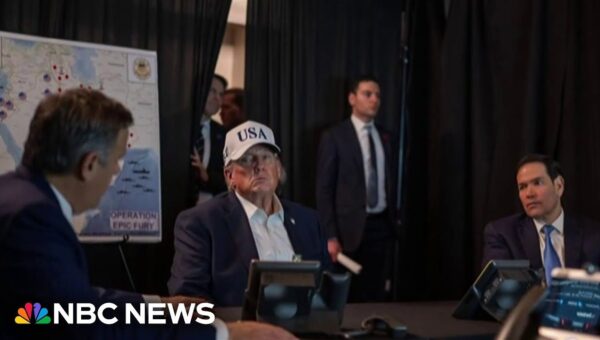
Trump: Iran Strikes Ahead of Schedule, Expects ‘Great Deal for World’
Three U.S. service members have been killed amid escalating conflict with Iran, President Trump confirmed. He stated that strikes are ahead of schedule, with senior Iranian leaders killed, and expressed optimism for a "great deal for the world" despite ongoing talks with Iranian officials.
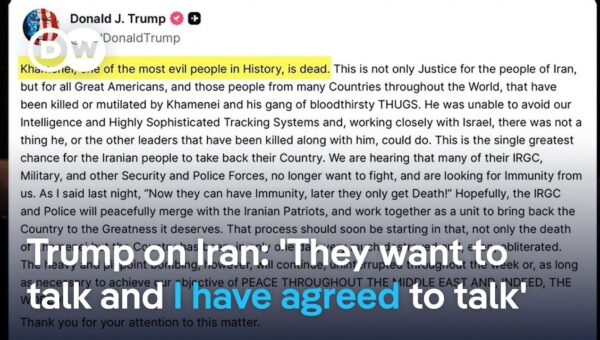
Trump Agrees to Talks with Iran After Major Strikes
President Donald Trump has agreed to talks with Iran's leadership following coordinated strikes that reportedly killed key figures, including the Supreme Leader. While Trump claims significant military successes, U.S. strategy remains unclear, and public opinion shows limited support for the actions amid rising American casualties.

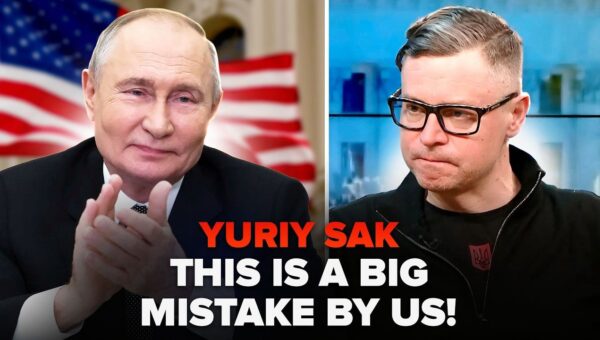
Trump’s Putin Stance: US Strategy and Global Implications
Analysis suggests Donald Trump's approach to the Ukraine war involves pressuring Kyiv, but US involvement is crucial for resolution. China's influence and the 'MAGA' agenda's geopolitical implications are key factors.