Supreme Court’s Delay Tactics Could Derail Trump’s Election Ambitions
The Supreme Court's prolonged deliberation on a key voting rights case may have inadvertently thwarted Donald Trump's strategy to reshape congressional maps for electoral advantage. The calendar's constraints and potential voter backlash add further complexity.

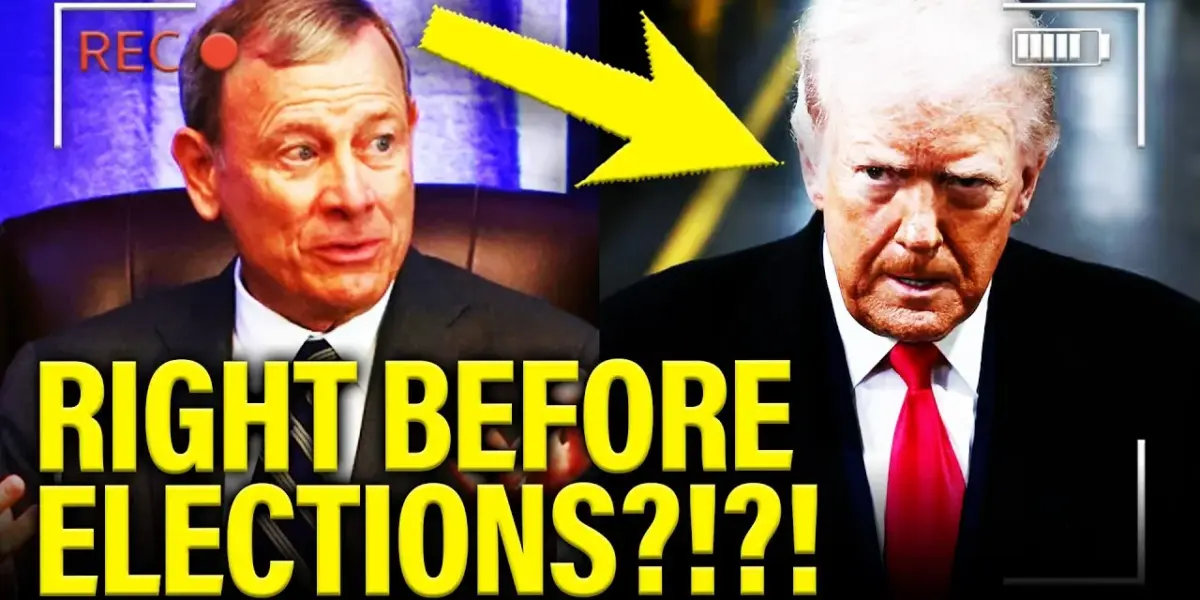
Supreme Court’s Calculated Delay Could Undermine Trump’s Electoral Strategy
In a move that has sent ripples through the political landscape, the United States Supreme Court appears to be sending a deliberate message to former President Donald Trump. After facing intense criticism from Trump following an unfavorable ruling on tariffs, the Court has seemingly taken its time in adjudicating a critical voting rights case. This delay, stretching for nearly five months, has significant implications for Trump’s potential electoral gains in the upcoming midterm elections.
The Voting Rights Act Under Scrutiny
At the heart of the matter is a case concerning the Voting Rights Act, specifically Section 2, and its application to redistricting. Many within the MAGA movement had anticipated a decision from the Supreme Court by October 2025. However, as of March 2026, with less than three months remaining in the Supreme Court’s term, a decision remains elusive. This prolonged deliberation suggests a potential shift in strategy, possibly aimed at preventing states from manipulating electoral maps to their advantage so close to an election.
The Purcell Doctrine and its Ramifications
The Supreme Court’s past decisions, particularly the application of the Purcell doctrine, play a crucial role here. The Purcell doctrine generally advises federal courts to avoid altering state election laws or procedures close to an election. A recent modification of this doctrine, stemming from a New York redistricting case, has further complicated the landscape. The speaker posits that this modification, rather than being an expansion of the Court’s non-interference stance, actually serves as an exception, allowing intervention in cases of blatant racial gerrymandering.
The core of the legal challenge appears to be whether Section 2 of the Voting Rights Act, which prohibits racial discrimination in voting, conflicts with the 14th Amendment. Historically, Southern states with a documented history of suppressing minority votes have been compelled by federal courts to ensure proportional representation. These states, including Alabama, Louisiana, Georgia, and Florida, were reportedly prepared to convene special legislative sessions to redraw congressional maps if a favorable ruling had been issued earlier in the term. The current delay, however, makes such a swift redrawing process virtually impossible.
Calendar Constraints and Political Realities
The timing of the Supreme Court’s decision is paramount. Primaries have already taken place in states like North Carolina and Texas, and ballots are being printed for April elections in Georgia, Alabama, and Louisiana. This compressed timeline means that even if the Court were to issue a ruling that significantly alters the interpretation of the Voting Rights Act, states would likely be unable to redraw their congressional maps in time for the upcoming midterms. The speaker argues that the Court’s delay, coupled with the calendar, effectively dismantles Trump’s alleged strategy of gaining an additional 20 seats through favorable redistricting.
Beyond the Maps: The Unintended Consequences
The analysis extends beyond the immediate impact on redistricting. The speaker suggests that Trump’s alleged attempts to manipulate the electoral process could backfire. In states like Texas and California, formerly safe Republican seats are reportedly facing stronger Democratic challenges. This phenomenon is attributed to voter anger over perceived attempts to suppress their votes. Instead of securing additional seats, Trump’s strategy might inadvertently lead to the loss of existing Republican strongholds as voters turn out in protest.
The speaker also touches upon the broader economic context, noting that a struggling economy, coupled with inflation and rising gas prices, typically leads to losses for the party in power. With a slim Republican majority in the House, any significant swing could result in a substantial Democratic gain, potentially reaching 230-235 seats, far exceeding the 218 needed to govern.
Why This Matters
The implications of this Supreme Court delay are profound. It highlights the intricate interplay between judicial decisions, electoral processes, and political strategy. The ability of states to draw congressional maps is a fundamental aspect of American federalism, enshrined in the 10th Amendment. However, when these processes are perceived as being manipulated for partisan gain, particularly in ways that could disenfranchise voters or dilute representation, it erodes public trust in democratic institutions. The Supreme Court’s cautious approach, whether intentional or not, appears to be prioritizing the stability of the electoral process over allowing for last-minute political maneuvering. This scenario underscores the critical role of the judiciary in safeguarding voting rights and ensuring the integrity of elections, even when faced with political pressure or criticism.
Historical Context and Future Outlook
The Voting Rights Act of 1965 was a landmark piece of legislation aimed at overcoming legal barriers at the state and local levels that prevented African Americans from exercising their right to vote. Its subsequent amendments have sought to adapt to evolving challenges. The current legal battles over redistricting and the interpretation of Section 2 reflect a long-standing tension between states’ rights in drawing electoral maps and the federal government’s mandate to protect minority voting rights. The Supreme Court’s handling of these cases will undoubtedly shape the future of voting rights and representation in the United States for years to come. The trend suggests a judiciary that, while perhaps seeking to avoid direct electoral intervention, is increasingly being called upon to arbitrate disputes that lie at the very core of democratic fairness. The ultimate outcome of these cases could either reinforce existing protections or create new avenues for challenges, with significant consequences for the balance of power and the inclusivity of the American electorate.
Source: Trump STUNNED as Supreme Court is SET to SCREW HIM?!?! (YouTube)

Related Articles
Kharg Island: Trump’s Secret Weapon to Cripple Iran’s Economy?
Kharg Island, Iran's primary oil export hub, could be a key target for U.S. pressure, potentially crippling the nation's economy. Despite historical considerations and immense strategic value, seizing the island presents significant military risks and the possibility of sabotage by a desperate Iranian regime.

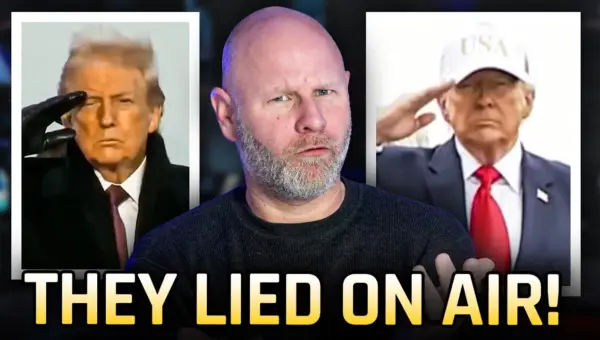
Fox News Manipulates Footage to Shield Trump’s Image
Fox News faces accusations of intentionally airing outdated footage of Donald Trump to mask his disrespectful conduct at a ceremony honoring fallen soldiers. The alleged deception and subsequent admission raise serious concerns about media integrity and public trust.


Trump Signals War End, Oil Prices Plunge to $91
Former President Donald Trump's remarks suggesting a potential end to the conflict have caused oil prices to plummet to $91 per barrel. The market is reacting to a shift in geopolitical rhetoric, with cautious optimism surrounding the implications for energy markets and the global economy.