Supreme Court Weighs Birthright Citizenship Future
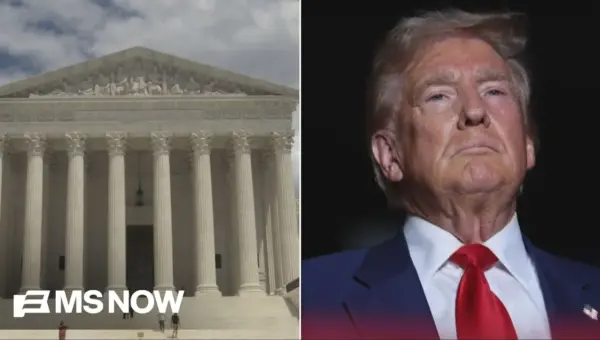
The U.S. Supreme Court is hearing arguments on a presidential order that seeks to end birthright citizenship for children of undocumented immigrants. The case challenges the 14th Amendment's guarantee of citizenship for all born in the U.S. and could impact millions of Americans.

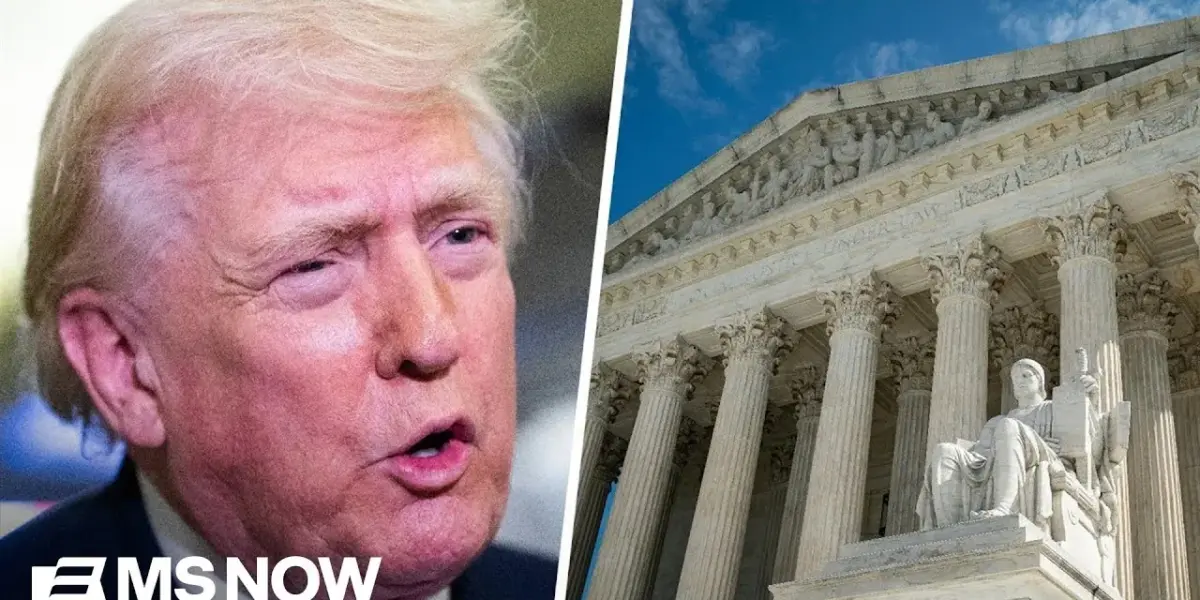
Supreme Court Hears Key Birthright Citizenship Case
The U.S. Supreme Court is set to hear arguments on a controversial executive order that could end birthright citizenship for children born in the United States to undocumented parents. The case centers on an order issued in February 2025, which aims to deny citizenship to babies born after that date if one or both parents are not documented immigrants with a permanent right to remain in the country. This legal battle raises fundamental questions about who counts as a citizen in America and the extent of the government’s power to question an individual’s belonging.
What’s at Stake?
The future of the president’s executive order is the immediate focus of the Supreme Court’s review. However, the implications reach far beyond that specific policy. At its core, the case challenges the long-held principle of birthright citizenship, a cornerstone of American identity since the nation’s founding.
The potential reasoning behind a Supreme Court decision could affect millions of people in the United States. Experts suggest that a ruling against birthright citizenship could cast a shadow over the citizenship of generations of Americans whose parents or grandparents immigrated to the country.
Legal Arguments and Precedents
The American Civil Liberties Union (ACLU), represented by Cody Woffsey, deputy director of its Immigrants’ Rights Project, is challenging the executive order. Woffsey highlighted that the ACLU has been preparing for this fight for nearly a year, honing legal arguments to defend the principle of birthright citizenship.
“Ultimately, the question here is, are we going to reject this absolutely certainly bedrock American value, that if you’re born in this country, you are a citizen, full stop. And that’s baked into the constitution.”
The ACLU’s argument hinges on the 14th Amendment of the Constitution, which states that “all persons born or naturalized in the United States, and subject to the jurisdiction thereof, are citizens of the United States.” This clause has historically been interpreted to grant citizenship to nearly everyone born on U.S. soil, regardless of their parents’ immigration status.
The Supreme Court has previously addressed birthright citizenship. In the 1898 case Wong Kim Ark, the Court affirmed that children born in the U.S. to parents who were Chinese subjects then residing in the U.S. were citizens. Justice Sonia Sotomayor, in a previous court session concerning this executive order, noted that the order appeared to violate at least four established Supreme Court precedents.
Challenging Historical Claims
President Trump has argued that birthright citizenship is an outdated concept, suggesting it was primarily intended for the children of slaves. The ACLU strongly refutes this claim.
Cody Woffsey explained that this assertion is legally inaccurate for several reasons:
- The text of the Constitution’s 14th Amendment says “all persons born,” making no distinction based on race.
- The framers of the 14th Amendment were reacting against discriminatory ideas, like the Dred Scott decision, which denied citizenship to Black Americans. They intended to establish a rule of universal birthright citizenship.
- Even the government’s current legal position acknowledges that children of immigrants born in the U.S. are citizens. Their argument focuses on parental immigration status or intent, not on a racial limitation of the 14th Amendment.
The only explicit exceptions to birthright citizenship currently recognized in U.S. law involve children born to foreign diplomats and those born to enemy combatants during an invasion.
Potential Repercussions of the Order
If the Supreme Court rules in favor of the executive order, the consequences could be severe and far-reaching.
The most immediate impact would be on tens of thousands of children born each month who would be targeted by the order. This could mean the denial of their constitutional rights, potential exposure to arrest, detention, or deportation, and lack of access to essential documents and services like passports, Social Security numbers, and even crucial early-life nutrition programs.
As these children grow older, they could face barriers to working, pursuing higher education, voting, or serving on juries. They would be denied the full rights and opportunities of U.S. society.
Beyond the targeted children, the constitutional arguments used to support the executive order could affect millions of Americans whose citizenship has been unquestioned for generations. This could create an environment where citizenship itself is open to challenge, potentially leading to a two-tiered system of citizenship.
Lisa Rubin, a senior legal reporter for MSNBC, warned that such a ruling could signal an “open season on questioning the citizenship of our fellow Americans.” She expressed concern that this could particularly target communities of color and other vulnerable populations, undermining the principle of equal citizenship.
Looking Ahead
The Supreme Court’s decision in this case will have profound implications for the definition of citizenship in the United States. The arguments heard will likely explore the historical context of the 14th Amendment, the intent of its framers, and the long-standing legal interpretation of birthright citizenship. The nation will be watching closely to see how the justices navigate these complex legal and societal questions.
Source: Supreme Court to hear arguments on Trump's efforts to end birthright citizenship tomorrow (YouTube)

Related Articles
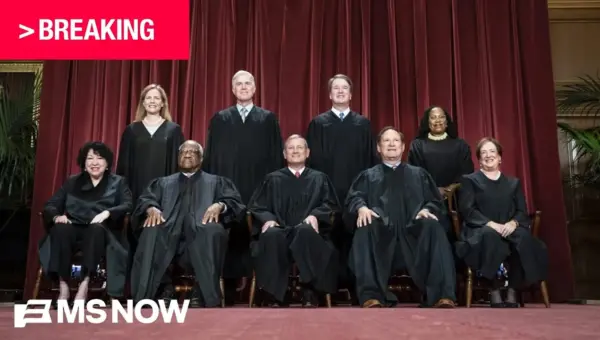
Supreme Court Strikes Down Colorado’s Conversion Therapy Ban
The Supreme Court ruled 8-1 that Colorado's ban on conversion therapy for minors violates the First Amendment's free speech protections. The decision focused on the law's regulation of specific viewpoints, rather than solely on harmful conduct. This ruling may impact similar laws in approximately 25 other states.
Supreme Court Weighs Birthright Citizenship: A 14th Amendment Showdown
The Supreme Court is hearing arguments on an executive order that seeks to end birthright citizenship, challenging the 14th Amendment. California's Attorney General Rob Bonta is leading a coalition of states arguing the Constitution's language is clear: all persons born in the U.S. are citizens. Experts are hopeful the court will uphold this long-standing principle against historical, and potentially discriminatory, interpretations.

Supreme Court Weighs Birthright Citizenship for Immigrants
The U.S. Supreme Court is reviewing a case that could alter birthright citizenship for children of undocumented immigrants. The central argument questions whether the 14th Amendment's citizenship clause applies to those whose parents are in the country illegally. This decision could have significant long-term implications for immigration policy and the nation's demographic future.