Supreme Court Weighs Birthright Citizenship for Immigrants
The U.S. Supreme Court is reviewing a case that could alter birthright citizenship for children of undocumented immigrants. The central argument questions whether the 14th Amendment's citizenship clause applies to those whose parents are in the country illegally. This decision could have significant long-term implications for immigration policy and the nation's demographic future.

Supreme Court Considers Birthright Citizenship for Children of Undocumented Immigrants
The U.S. Supreme Court is set to hear a pivotal case that could redefine birthright citizenship for children born in the United States to parents who are in the country illegally or on temporary visas. This legal challenge stems from an order issued during the Trump administration aimed at ending automatic citizenship for these children. The case brings to the forefront deep divisions over national sovereignty and immigration enforcement.
The Core Legal Argument
At the heart of the case is the interpretation of the 14th Amendment to the Constitution. This amendment states that all persons born or naturalized in the United States and subject to its jurisdiction are citizens. The argument against automatic birthright citizenship centers on the phrase “subject to the jurisdiction thereof.” Proponents of the challenge suggest this phrase implies a condition of allegiance to the United States.
Legal analysts point out that the millions of individuals in the U.S. without legal status may not be fully “subject to the jurisdiction” in the way the amendment intended. They often live in the shadows, do not pay taxes, and may not have official records, making their allegiance unclear. This contrasts with individuals who are legally present and integrated into American society.
“The mere act of setting foot on U.S. soil, that doesn’t necessarily constitute allegiance, especially the millions of illegal migrants who have remained in the shadows.”
Historical Context and Precedents
To understand the current debate, it is important to look at the historical context of the 14th Amendment. It was ratified after the Civil War primarily to grant citizenship rights to formerly enslaved people. Examining the debates from 1868 shows no clear indication that lawmakers intended to extend automatic citizenship to the children of those who were breaking immigration laws.
Past Supreme Court decisions, such as *U.S. v. Wong Kim Ark* in 1896, are often cited. However, some argue this case has been widely misinterpreted. In that instance, the parents were lawfully present in the United States, a key distinction from the current situation involving parents who are in the country illegally. The Supreme Court has, in other instances, suggested that the citizenship clause of the 14th Amendment is not absolute and has potential limits.
Concerns Over Immigration Enforcement
The case arises amid heightened concerns about border security and immigration. During the Biden administration, millions of individuals have crossed the U.S. border. This has led to significant debate about the capacity of national systems and the effectiveness of immigration enforcement policies. Some critics argue that current policies undermine national sovereignty and public safety.
The legal challenge to birthright citizenship is seen by some as an effort to strengthen immigration enforcement. It raises questions about whether the U.S. should automatically grant citizenship to children whose parents have not followed legal immigration procedures. This is a complex issue with significant social, legal, and political implications.
Market Impact and Investor Considerations
While this case directly concerns immigration law, its resolution could have broader economic and social ripple effects. A significant change to birthright citizenship could impact labor markets, consumer spending, and the long-term demographic makeup of the United States. Companies that rely on a diverse workforce or serve various demographic groups may need to monitor the outcome closely.
Investors should be aware that legal and regulatory changes related to immigration can influence sectors such as retail, construction, and hospitality, which often depend on a steady labor supply. Furthermore, the debate itself reflects ongoing political tensions that can create market uncertainty. Understanding the potential long-term implications for population growth and workforce participation is crucial for strategic investment planning.
What Investors Should Know
The Supreme Court’s decision on birthright citizenship is not expected to be immediate. The justices will hear arguments and then deliberate, with a ruling likely months away. This creates a period of uncertainty, which can sometimes lead to volatility in related sectors.
Investors should focus on the legal reasoning behind the court’s decision rather than just the immediate outcome. Understanding how the court interprets the 14th Amendment and the concept of “jurisdiction” could provide insights into future legal challenges related to immigration and citizenship. This case is a significant legal development that warrants attention from those tracking the U.S. economy and its regulatory environment.
Source: Supreme Court to hear birthright citizenship case for children of illegal immigrants (YouTube)

Related Articles


Millions Protest Trump Amidst War and Corruption Probe
Millions protested nationwide against President Trump over the weekend, with significant turnout in red states. Concerns are rising over potential corruption in detention facility contracts and the administration's challenge to birthright citizenship at the Supreme Court.

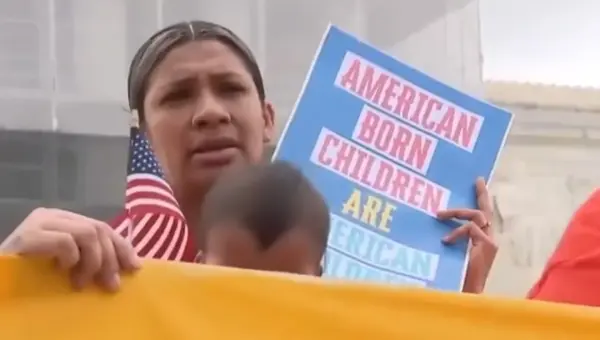
Birthright Citizenship: A System Under Strain?
Birthright citizenship, a long-standing U.S. policy, is under intense debate. Critics argue it's being exploited by foreign nationals, while supporters defend its legal foundation and historical intent. The discussion raises critical questions about immigration, national security, and national identity.


Birthright Citizenship Debate Ignites Over 14th Amendment Interpretation
The Supreme Court is examining the 14th Amendment's citizenship clause, a case that could redefine birthright citizenship. The Trump administration argues the clause was intended for freed slaves, not children of immigrants or those engaging in "birth tourism." This debate touches on national security, historical interpretation, and the very meaning of being American.