Supreme Court Weighs Birthright Citizenship Challenge
The Supreme Court is hearing a challenge to birthright citizenship, a right guaranteed by the 14th Amendment for over 150 years. The Trump administration's argument, seen by some as an "off-the-wall theory," questions whether children of immigrants not fully subject to U.S. jurisdiction should automatically be citizens. Justices expressed skepticism, highlighting potential chaos and questioning the legal basis for the administration's claims.

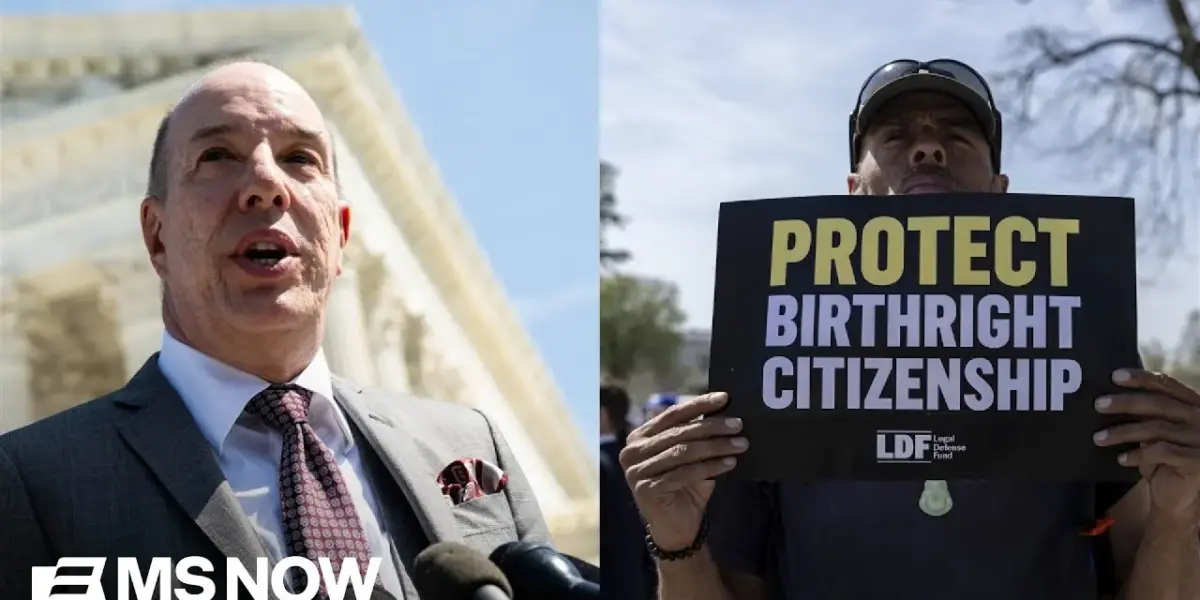
Supreme Court Hears Challenge to Birthright Citizenship
The Supreme Court is considering a significant challenge to the long-standing principle of birthright citizenship in the United States. The case stems from an executive order by President Trump that sought to end the automatic granting of citizenship to children born on U.S. soil. This right, rooted in the 14th Amendment, has been a cornerstone of American identity for over 150 years.
The 14th Amendment and Administration’s Argument
At the heart of the debate is the Citizenship Clause of the 14th Amendment, which states: “All persons born or naturalized in the United States and subject to the jurisdiction thereof are citizens of the United States and of the State wherein they reside.” The Trump administration’s argument, described by legal experts as an “off-the-wall theory,” suggests the amendment was intended solely to grant citizenship to newly freed slaves after the Civil War and not to children of immigrants not fully subject to U.S. jurisdiction.
Professor Melissa Murray of NYU Law School explained the administration’s position: “The point that they are making is that the 14th Amendment was intended to repudiate the Supreme Court’s decision in 1857’s Dred Scott versus Sandford, which said that African-Americans could never be citizens of the United States.” However, she noted, the administration goes further, arguing that because it aimed to overturn Dred Scott, it was not meant to address whether the children of immigrants, whom they categorize as not fully subject to U.S. jurisdiction, could be citizens.
Justices Express Skepticism
During the oral arguments, some Supreme Court justices appeared skeptical of the administration’s interpretation. Justice Elena Kagan questioned the textual basis for the argument, noting that the 14th Amendment’s text does not limit citizenship based on the parents’ immigration status. Justice Brett Kavanaugh pointed out that most countries do not grant birthright citizenship, but he also seemed to question the relevance of this fact from a constitutional law perspective.
Justice Amy Coney Barrett raised concerns about the practical implications of ending birthright citizenship, suggesting it could lead to “messy disputes over parental status and citizenship.” This highlights the potential for widespread legal and administrative chaos.
Historical Context of Birthright Citizenship
Birthright citizenship, or *jus soli*, is a principle with deep roots in Anglo-American legal tradition, predating the 14th Amendment. While the Dred Scott decision in 1857 denied citizenship to Black people, the 14th Amendment, ratified in 1868, was specifically designed to correct this injustice and establish birthright citizenship for all born in the U.S.
Professor Murray pointed out that during the debates surrounding the 14th Amendment, the issue of immigrants was actively discussed. “They were living with immigration and the framers of the 14th Amendment talked seriously about whether a grant of birthright citizenship would also include the children of those foreign-born nationals,” she said.
President Trump’s Involvement and Court’s Prior Decision
President Trump himself attended the oral arguments, marking the first time a sitting president had done so. Afterward, he posted on social media, “We are the only country in the world stupid enough to allow birthright citizenship,” a claim that legal experts dispute.
Legal analysts also noted that the Supreme Court had an opportunity to address this issue more than a year prior but declined. Professor Murray criticized this decision: “The court is to blame for this because it’s a pretty clear issue that’s settled by very clear text in the Constitution.” She likened the administration’s persistent effort to make the theory accepted to the character Gretchen Wieners in the movie *Mean Girls*, trying to make “fetch happen,” and the court’s prior refusal to hear the case as being like Regina George saying “it’s not going to happen.”
Broader Implications and Concerns
The discussion extended beyond the legal technicalities to the broader social and political implications. Legal scholar Basil Smikle Jr. argued that challenging birthright citizenship is part of a larger effort to redefine who is considered an “American,” potentially excluding minority groups. He connected this to broader immigration policies and rhetoric that he believes alienate certain communities.
The practical consequences of altering birthright citizenship were also highlighted. If a child’s citizenship is in doubt at birth, the parent might have to sue to establish it. During this period, the child could be left in legal limbo for months, unable to access essential services like healthcare or programs like WIC (Women, Infants, and Children). This uncertainty could create significant hardship for families.
Demographic Context
The debate also occurs against a backdrop of declining birth rates in the U.S. The current fertility rate is below the population replacement level. Some commentators expressed concern that altering birthright citizenship could have unintended demographic consequences at a time when the country is already experiencing slower population growth. This adds another layer of complexity to an already contentious issue.
What’s Next?
The Supreme Court’s decision on this case could have profound and lasting effects on immigration law and the definition of citizenship in the United States. The justices will need to weigh the text and history of the 14th Amendment against the administration’s arguments and the potential societal impacts. The nation awaits a ruling that will shape the future of who belongs and is recognized as an American.
Source: SCOTUS considers limits to birthright citizenship: 'Off the wall theory' (YouTube)

Related Articles

Birthright Citizenship: Is the 14th Amendment Outdated?
The 14th Amendment's guarantee of birthright citizenship is under intense debate. Panel guests discuss whether the long-standing interpretation is outdated and explore the practical challenges and historical context surrounding this core American principle.

AG Battles Attorney Over Trump SCOTUS Visit Impact
A Supreme Court case on birthright citizenship is sparking debate. Legal experts clash over former President Trump's attendance at oral arguments and California AG Rob Bonta's criticisms. The ruling, expected by June, could impact immigration policy and labor markets.


Trump’s White House Faces Multiple Crises: A Day of Chaos
The Trump administration faced a tumultuous day marked by the firing of Attorney General Pam Bondi, questions about military leadership, a chaotic national address concerning Iran, and a weak legal showing at the Supreme Court on birthright citizenship. These events highlight significant instability and raise concerns about the White House's strategy and competence.