Supreme Court Tariff Ruling Creates Economic Uncertainty as Trump Announces New Global Levies
The Supreme Court struck down Trump's major tariff program, but the President immediately responded by announcing new 10% global import levies, creating heightened uncertainty for international businesses. The International Chamber of Commerce warns this unpredictability is delaying corporate investment and hiring decisions worldwide.

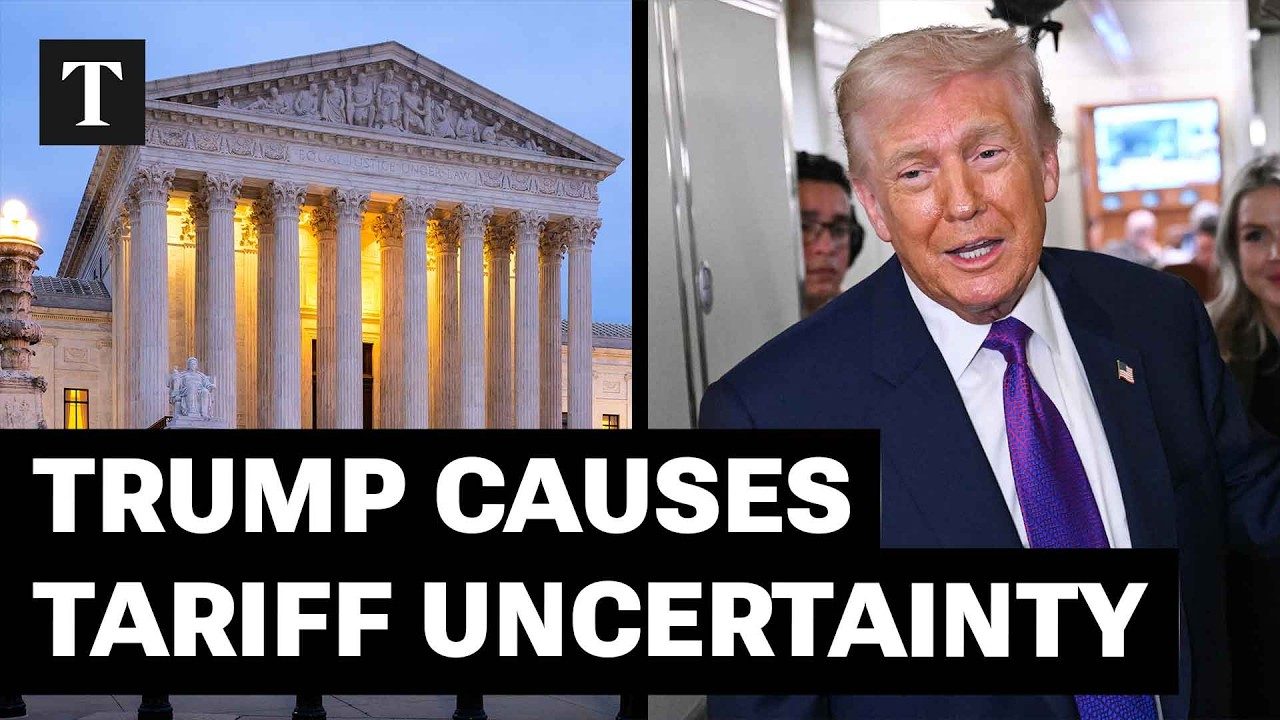
The global business community is grappling with heightened uncertainty following a Supreme Court ruling that struck down key elements of the Trump administration’s tariff regime, only to see President Trump respond with the immediate announcement of new 10% global import levies.
Supreme Court Invalidates Major Tariff Program
In a significant blow to the administration’s trade policy, the Supreme Court yesterday ruled that the so-called “Liberation Day” tariffs were illegal, effectively invalidating what had become a cornerstone of Trump’s protectionist trade approach. The court’s decision struck down the larger set of tariffs that had been imposed on various imports to the United States over the past year.
President Trump expressed his displeasure with the ruling in characteristically strong terms, stating he was “deeply disappointed” and “ashamed of certain members of the court for not having the courage to do what’s right for our country.” He added that “foreign countries that have been ripping us off for years are ecstatic. They’re dancing in the streets, but they won’t be dancing for long.”
Immediate Response: New 10% Global Tariff
Within hours of the Supreme Court decision, President Trump announced a sweeping new 10% tariff on all imports to the United States, signaling his administration’s determination to maintain its tariff-first trade policy despite the legal setback. This rapid response has sent shockwaves through international business communities and raised questions about the predictability of U.S. trade policy.
The announcement particularly affects countries like Britain, which had negotiated specific trade arrangements with the U.S. that provided some sectors with more favorable tariff treatment compared to the broader global tariff structure.
Business Community Concerns Mount
Andrew Wilson, Deputy General Secretary of the International Chamber of Commerce, which represents 40 million businesses worldwide, characterized the developments as “a very worrying sign for the global economy.” Speaking about the business community’s reaction, Wilson highlighted two key concerns that companies had hoped the Supreme Court ruling would address.
“From a business perspective, there were really two things businesses were hoping for from the Supreme Court,” Wilson explained. “First, is there a clear pathway to obtain refunds on the duties that have been paid over the past year or so? And the answer there is very clearly there isn’t. Second, there was widespread hope that this may encourage the administration to abandon or at least soft pedal on its tariff-first trade policy. What we’ve seen is the intention very clearly is to continue to apply tariffs.”
Complex Refund Challenges Ahead
The question of refunds for previously paid tariffs presents a particularly complex challenge for businesses. Wilson outlined three major points of uncertainty facing companies: whether the administration will even accept that refunds are due, what administrative procedures will be required for filing refund claims, and how quickly such claims will be processed.
Adding to the complexity, many companies that paid tariffs may not be eligible to claim refunds because they are not recorded with U.S. customs as the “importer of record.” This technical detail could lead to “a lot of difficult commercial discussions but also some potentially messy litigation,” according to Wilson.
Economic Impact and Corporate Strain
The financial impact on businesses has been substantial. Wilson noted that many companies have seen their balance sheets “severely strained by the impact of the tariffs,” many of which have been set at “pretty punitive levels.” Recent analysis by JP Morgan Chase has documented the particular impact on mid-sized U.S. companies.
For some businesses, the financial strain may be so significant that pursuing refunds becomes impractical, forcing them to write off the payments as sunk costs. However, Wilson cautioned against assuming that the future will bring a less costly tariff regime, noting that the administration has indicated plans to “rebuild this through a variety of sectoral and country-level measures.”
The Uncertainty Factor
Perhaps the most damaging aspect of the current situation, according to international business leaders, is the unpredictability itself. Wilson emphasized that while tariffs create direct costs that can be planned for, uncertainty about future policy makes strategic business planning nearly impossible.
“When we talk to business leaders across our network, the tariffs are one thing that can be difficult to navigate,” Wilson said. “What we see very clearly is the uncertainty that is being cast over international trade and the global economy more broadly is delaying hiring decisions by corporates, delaying investment decisions. If you don’t know what the effective tariff rate in the US is going to be tomorrow, let alone next month, let alone next year, it’s very difficult to forward plan.”
Investment Decisions in Limbo
The uncertainty is also affecting companies’ decisions about relocating or investing in U.S. operations to circumvent tariffs. While there have been numerous public announcements of companies planning to invest in the United States, Wilson questioned how much of this has actually materialized in the real economy.
“What businesses tell us very clearly is if there is not policy stability and clarity, if you don’t know what the tariff rate is going to be next year or under a future U.S. administration, how can you make an investment decision that’s going to take 10 years or even 20 years to pay off?” Wilson asked.
Broader Economic Implications
The current situation represents what Wilson described as “uncertainty by design,” which has become “the hallmark of this administration.” This approach, he argued, is actually counterproductive to the administration’s stated goals of rebooting U.S. manufacturing capacity, as it acts as “a clear brake on investment into the US.”
The International Chamber of Commerce’s message to the U.S. administration is clear: resolving uncertainty and bringing clarity to businesses and international trade flows would benefit the U.S. economy through improved job creation, growth, and consumer welfare.
Looking Forward
As the situation continues to evolve, the business community faces the challenge of navigating an increasingly complex and unpredictable trade environment. The Supreme Court’s ruling, rather than providing clarity, has instead opened a new chapter of uncertainty as the administration seeks to rebuild its tariff regime through alternative mechanisms.
The global economy now watches to see whether the administration will pursue the more complex, sector-by-sector approach it has indicated, potentially resulting in even higher effective tariff rates and greater complexity for international commerce. For businesses worldwide, the message is clear: prepare for continued volatility in U.S. trade policy.
Source: Trump's Response To The Supreme Court Ruling Is 'A Very Worrying Sign For The Global Economy' (YouTube)

Related Articles

Bondi’s Court Blunder Could Cost US Billions
A court filing from Pam Bondi's Department of Justice may have committed the U.S. to refunding $170 billion in tariffs. This legal promise was made during challenges to Trump-era tariffs, with the DOJ assuring the court that collected funds would be repaid if the tariffs were overturned.
Trump’s Tariffs Linked to Stagnant Job Growth in First Year Back
The U.S. economy saw minimal job growth in 2025, adding just 181,000 jobs, a figure attributed to business uncertainty fueled by Donald Trump's volatile tariff policies. While January 2026 showed gains, they were heavily concentrated in healthcare, masking broader economic weakness and significant layoffs.
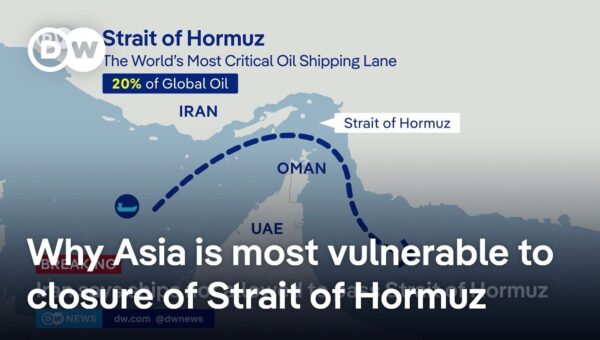
Iran Strait of Hormuz Blockade Threatens Global Oil Prices
Iran's Revolutionary Guard has issued warnings against ships passing through the Strait of Hormuz, a critical global oil chokepoint. This potential blockade threatens to disrupt 20% of the world's crude oil flow, potentially spiking energy prices and fueling global inflation. Experts warn of significant market reactions and widespread economic consequences.