Supreme Court Strikes Down Trump’s Emergency Tariffs, Citing Overreach of Presidential Power
The U.S. Supreme Court has ruled that former President Donald Trump's use of emergency powers to impose tariffs was illegal, delivering a major blow to presidential authority. The 6-3 decision, which saw conservative and liberal justices align, found the administration exceeded its statutory authority under the 1977 International Emergency Economic Powers Act. The ruling raises significant questions about the fate of an estimated $150 billion in collected tariff revenue and reinforces Congress's traditional role in trade policy.

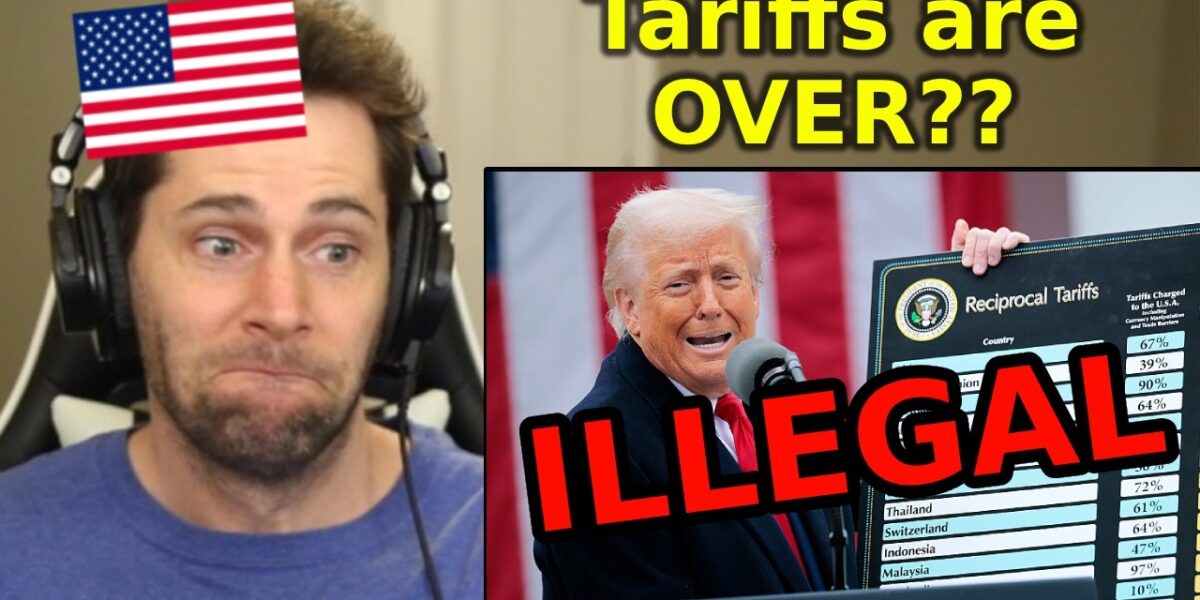
Supreme Court Delivers Landmark Ruling Against Trump’s Emergency Tariffs
In a monumental decision with far-reaching economic and political implications, the U.S. Supreme Court has ruled that former President Donald Trump’s use of emergency powers to impose sweeping tariffs was illegal. The 6-3 ruling, which saw a rare alignment of conservative and liberal justices, represents a significant curb on presidential authority and raises immediate questions about the fate of an estimated $150 billion in collected revenue.
The high court’s decision centered on the Trump administration’s reliance on the 1977 International Emergency Economic Powers Act (IEEPA) to implement tariffs on a wide array of imported goods. The majority opinion found that the administration exceeded its statutory authority under the IEEPA, concluding that no valid international economic emergency existed at the time to justify such a broad application of tariffs.
A Conservative Court’s Rebuke: The 6-3 Decision
The 6-3 vote saw an unexpected coalition of justices. Chief Justice John Roberts penned the majority opinion, joined by conservative Justices Neil Gorsuch and Amy Coney Barrett, alongside the court’s three liberal justices, Sonia Sotomayor, Elena Kagan, and Ketanji Brown Jackson. This cross-ideological alignment underscored the gravity of the constitutional questions at stake, particularly concerning the separation of powers.
The dissenters were Justices Clarence Thomas, Samuel Alito, and Brett Kavanaugh. The ruling marks a notable departure from what might have been expected from a Supreme Court with a 6-3 conservative majority, illustrating the court’s commitment to constitutional principles even when it means ruling against a president from the same political ideology.
Chief Justice Roberts, in his majority opinion, reportedly emphasized the extraordinary nature of the powers asserted by the president. He wrote, "The president asserts the extraordinary power to unilaterally impose tariffs of unlimited amount, duration, and scope. In light of the breadth, history and constitutional context of that asserted authority, he must identify clear congressional authorization to exercise it." This statement highlights the court’s insistence that such expansive actions require explicit congressional backing, reinforcing Congress’s traditional role in regulating commerce and trade.
The Economic Fallout: A $150 Billion Question Mark
One of the most pressing questions arising from the Supreme Court’s decision is the fate of the estimated $150 billion in tariff revenue already collected by the government. This substantial sum was paid by American businesses and importers over many months, impacting supply chains and ultimately leading to higher prices for consumers.
The court’s opinion, reportedly a lengthy 170 pages, did not immediately clarify whether these funds would be refunded. Legal analysts suggest this complex issue might be remanded to lower courts or require further legislative action. The uncertainty has significant implications for thousands of businesses that bore the brunt of these tariffs, many of whom were forced to absorb costs, reduce staff, or pass increased expenses onto customers.
The economic impact of these tariffs has been widely discussed. Businesses, particularly those in manufacturing and retail, reported significant financial strain. Increased costs of imported components and goods often translated into higher consumer prices, dampening economic growth and consumer spending. The ruling’s immediate effect is that these specific tariffs are now deemed illegal, meaning importers should no longer be subject to them. However, the mechanism for potential refunds remains an open and critical question.
A Check on Presidential Power and the IEEPA
The Supreme Court’s ruling serves as a powerful affirmation of the system of checks and balances inherent in the U.S. Constitution. It underscores the principle that presidential power, while extensive, is not boundless and must operate within the confines of statutory and constitutional authority.
At the heart of the case was the interpretation of the International Emergency Economic Powers Act of 1977. This law grants the president authority to regulate international commerce during times of declared national emergency. However, the court found that the Trump administration’s application of the IEEPA to impose broad tariffs did not meet the necessary criteria for an "international economic emergency." Legal analysts noted that the justices had expressed skepticism during oral arguments about the administration’s expansive interpretation of the vague federal law.
Historically, Congress holds primary authority over tariffs and trade policy. The IEEPA was designed for specific, acute emergencies, not as a general tool for comprehensive trade restructuring. The ruling reinforces this distinction, making it significantly more difficult for future presidents to unilaterally impose sweeping tariffs without explicit congressional approval or a demonstrably clear and present economic emergency.
Political Repercussions for Donald Trump
For former President Donald Trump, who often touted tariffs as a key achievement and a source of national revenue, the Supreme Court’s decision represents a "mammoth loss." Trump had previously stated that these tariffs were "the single most important thing he has done in his presidency." The ruling directly undermines a policy he championed and viewed as a cornerstone of his economic agenda.
Observers anticipate a strong reaction from Trump, potentially involving accusations of bias or political motivation, despite the conservative composition of the court’s majority. This outcome is particularly noteworthy because it marks a rare instance where the conservative-leaning Supreme Court has ruled against him on a major policy initiative since his return to power.
While the ruling strikes down tariffs imposed under this specific legal framework, it does not preclude a president from attempting to implement tariffs through other, more restrictive statutes. However, these alternative legal avenues typically involve more stringent conditions and greater congressional oversight, preventing the kind of broad, unilateral actions seen under the IEEPA. This means that any future attempts by Trump or another president to impose widespread tariffs would likely face a much higher legal and political bar.
The Future of U.S. Trade Policy
The Supreme Court’s decision is expected to have a lasting impact on U.S. trade policy and the balance of power between the executive and legislative branches. By limiting the president’s ability to impose tariffs unilaterally under emergency declarations, the ruling strengthens Congress’s role in trade matters.
This could lead to a more deliberative and bipartisan approach to trade policy, as major tariff decisions would likely require more extensive negotiation and legislative approval. For businesses, the ruling offers a degree of clarity and predictability, signaling that future trade policy shifts are less likely to come without established legal and congressional backing.
While the immediate focus is on the legality of the past tariffs and the question of refunds, the broader implication is a reassertion of constitutional norms. The decision validates the importance of checks and balances, demonstrating that even the most powerful executive actions are subject to judicial review and must align with the rule of law. As the nation grapples with the economic aftermath and legal complexities, the Supreme Court’s ruling stands as a pivotal moment in American constitutional law and trade policy.
Source: Trump's Tariffs STRUCK DOWN By US Supreme Court | American Reaction (YouTube)

Related Articles
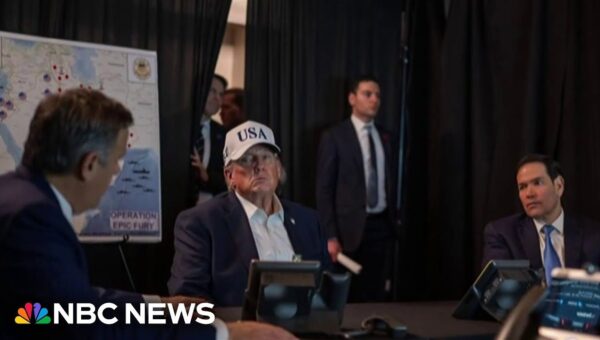
Trump: Iran Strikes Ahead of Schedule, Expects ‘Great Deal for World’
Three U.S. service members have been killed amid escalating conflict with Iran, President Trump confirmed. He stated that strikes are ahead of schedule, with senior Iranian leaders killed, and expressed optimism for a "great deal for the world" despite ongoing talks with Iranian officials.
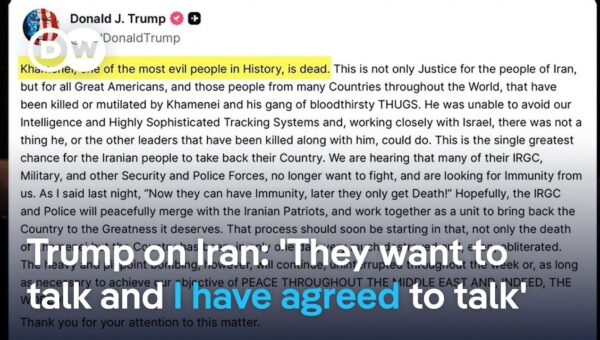
Trump Agrees to Talks with Iran After Major Strikes
President Donald Trump has agreed to talks with Iran's leadership following coordinated strikes that reportedly killed key figures, including the Supreme Leader. While Trump claims significant military successes, U.S. strategy remains unclear, and public opinion shows limited support for the actions amid rising American casualties.

Trump’s Putin Stance: US Strategy and Global Implications
Analysis suggests Donald Trump's approach to the Ukraine war involves pressuring Kyiv, but US involvement is crucial for resolution. China's influence and the 'MAGA' agenda's geopolitical implications are key factors.