Supreme Court Strikes Down Trump Tariffs: What’s Next?
The U.S. Supreme Court has struck down a significant portion of Trump-era tariffs, ruling they were unlawfully imposed under the International Economic Powers Act. The decision reaffirms Congress's exclusive power over taxation and highlights concerns about executive overreach. The ruling follows a period of economic uncertainty and a record-high trade deficit, despite protectionist measures.

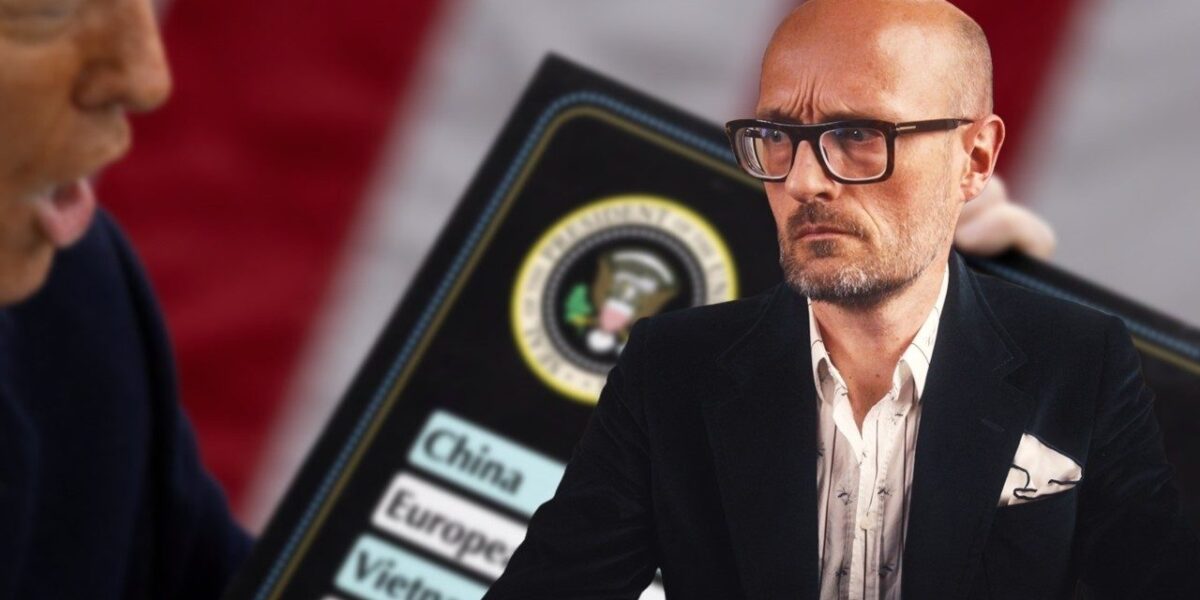
Supreme Court Deals Blow to Trump’s Trade Policy
On February 20th, the U.S. Supreme Court delivered a significant legal blow to a key component of Donald Trump’s economic agenda, invalidating approximately two-thirds of the tariffs imposed by his administration. The court ruled that the “liberation day duties” implemented under the International Economic Powers Act (IEPA) were unlawful. This decision, while impactful, was not entirely unexpected, having been previously deemed illegal by the Court of International Trade and a federal appeals court.
Congressional Power Over Taxation
The core of the legal challenge centered on the constitutional separation of powers, specifically Congress’s exclusive authority to levy taxes as outlined in Article One of the Constitution. While presidents can impose tariffs, this power is typically delegated by Congress through specific, limited legislation. The Supreme Court affirmed that the IEPA, which predates the tariffs and does not even contain the word “tariff,” was never intended to grant the executive branch unlimited authority over trade policy. This ruling reinforces the principle that broad taxing powers cannot be hidden within vaguely worded statutes related to national emergencies.
Market Reaction and Unforeseen Profiteering
Given the prolonged legal battles in lower courts, the market did not experience significant volatility upon the Supreme Court’s announcement. The outcome was widely anticipated. However, the situation was complicated by reports of potential profiteering. While Commerce Secretary Howard Lutnik publicly supported the tariffs, his sons, who manage his firm Counter Fitzgerald, were reportedly acquiring discounted rights to hundreds of millions of dollars in potential tariff refunds. Lutnik has denied any personal involvement in these trades, but a letter obtained by Wired magazine suggested the firm was willing to pay a fraction of the face value for these refund claims.
The Supreme Court essentially ruled that the act, which doesn’t even contain the word tariff, was never intended to be a blank check for trade policy.
White House Response and Constitutional Interpretation
The White House’s reaction was characteristically strong. President Trump publicly denounced the justices as “fools, lap dogs, and unpatriotic,” even alleging foreign influence on the court’s decision—a serious accusation against the nation’s highest judicial body. He specifically criticized his own appointees, Justices Amy Coney Barrett and Neil Gorsuch, deeming their literal interpretation of the Constitution an “embarrassment.” This response underscored the administration’s frustration with a ruling that constrained its executive authority.
The “Tariff Man” Adapts: A New Legislative Approach
Despite the Supreme Court’s setback, the Trump administration signaled its intent to continue pursuing protectionist trade policies. Investors anticipated that the president would seek alternative legislative avenues, albeit more complex ones, to achieve similar objectives. This strategy highlights the administration’s persistent focus on using trade policy as a primary economic tool.
Economic Realities and Trade Deficits
The ruling came amidst growing evidence that the administration’s aggressive protectionist measures were not yielding the promised economic benefits. The U.S. trade deficit reached a record high of $1.22 trillion in the preceding year, despite the tariffs. Analysis of top exporters to the U.S. showed minimal change since the election, suggesting that tariffs on imported goods like iPhones did not spontaneously create domestic manufacturing jobs. The long lead times required to build new factories, coupled with the unpredictable nature of tariff policies—often announced via presidential tweets—created significant business uncertainty, discouraging major investments and hiring.
- Moving large factories takes years, if not decades.
- Businesses are hesitant to invest heavily when regulations can change rapidly.
- Fluctuating tariffs have fostered business uncertainty rather than a manufacturing boom.
The Unlikely Challenger: VOS Selections
Contrary to expectations that a major corporation like Apple or Walmart might spearhead the legal challenge, it was a small, relatively unknown wine importer, VOS Selections, that ultimately led the charge. Alongside a few other small firms, VOS Selections contested the legality of tariffs imposed on their imported French Chardonnay, arguing that the president lacked the authority to levy such taxes under the guise of a national emergency. Their successful legal battle represented a fundamental reassertion of governmental function and constitutional principles.
The “Mouse Hole” Doctrine and Constitutional Guardrails
VOS Selections’ argument hinged on the principle that significant grants of power, particularly those involving taxation, should be explicitly stated by Congress and not hidden within unrelated legislation. They highlighted that the IEPA, enacted in the 1970s, was designed for specific national security threats, such as freezing assets of rogue states or preventing weapons proliferation, not as a broad tool for imposing tariffs. This legal strategy resonated with the Supreme Court’s conservative majority, invoking the “major questions doctrine,” famously articulated by the late Justice Antonin Scalia. This doctrine posits that Congress does not “hide elephants in mouse holes”—meaning major policy decisions requiring broad congressional authority would not be delegated through obscure statutory provisions.
As Chief Justice Roberts noted in his opinion, the Constitution gave the power to tax to Congress alone; you can’t just find a mouse hole in a 50-year-old statute and shove a 10-ton tariff elephant into it.
Broader Implications for Executive Power
The court’s reasoning extended to the potential for abuse of executive power. Had the tariffs been allowed to stand, future administrations could potentially declare national emergencies for various reasons—such as climate change or public health crises—and impose sweeping taxes on goods or activities, effectively bypassing Congress. The hypothetical scenario of a future Democratic administration imposing heavy taxes on gasoline-powered vehicles under a climate emergency illustrated the potential for such powers to be used broadly and arbitrarily. This legal principle mirrors the court’s previous decisions striking down Obama-era environmental regulations and Biden-era student loan forgiveness, emphasizing a consistent judicial stance against expansive executive actions based on ambiguous statutory authority.
Economic Data and Unintended Consequences
The economic fallout from the tariffs, even before the Supreme Court’s ruling, proved largely unimpressive. The record-high trade deficit was partly attributed to the AI boom, which necessitated substantial imports of computer components. While these were largely exempt from tariffs, the overall trade imbalance persisted. Furthermore, the tariffs contributed to a “stockpiling effect,” as businesses rushed to import goods before potential tax increases, artificially inflating import figures. The subsequent dip in the deficit was attributed by economists not to the tariffs’ effectiveness, but to businesses drawing down these accumulated inventories.
The Dollar’s Performance and Trade Theory
Contrary to standard economic theory, which suggests tariffs should strengthen a nation’s currency by reducing demand for imports and thus decreasing the supply of its currency on foreign exchange markets, the U.S. dollar weakened significantly—falling by approximately 10% over the year following the tariffs’ implementation. This divergence from theoretical expectations further complicated the narrative of the tariffs’ success.
What’s Next?
The Supreme Court’s decision serves as a crucial check on executive authority, reinforcing the constitutional balance of power regarding taxation and trade policy. While the Trump administration may seek alternative legislative strategies, the ruling establishes a significant legal precedent. Future trade actions will likely face greater scrutiny, and the administration must navigate more explicitly defined congressional authorizations. The focus now shifts to how the executive branch will adapt its trade strategy within these constitutionally defined boundaries and whether the broader economic landscape will see a reduction in the uncertainty that has plagued businesses.
Source: Supreme Court Tariff Ruling: What Next? (YouTube)

Related Articles
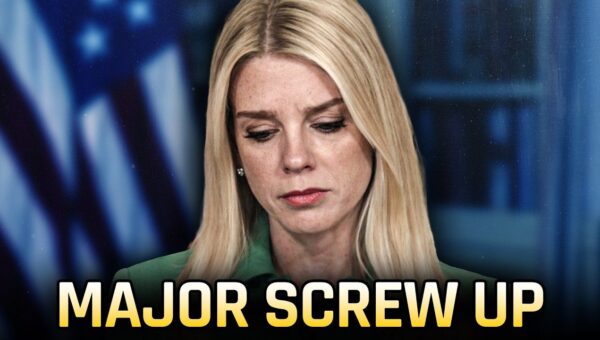
Bondi’s Court Blunder Could Cost US Billions
A court filing from Pam Bondi's Department of Justice may have committed the U.S. to refunding $170 billion in tariffs. This legal promise was made during challenges to Trump-era tariffs, with the DOJ assuring the court that collected funds would be repaid if the tariffs were overturned.
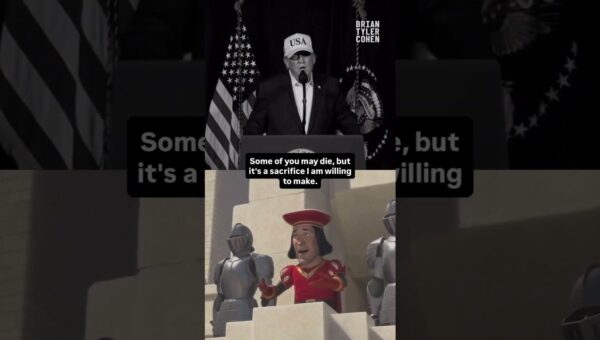
Trump’s ‘Willing Sacrifice’ Remark Sparks Outrage and Concern
President Donald Trump's recent remarks suggesting American casualties in a potential Iran conflict are "a sacrifice I am willing to make" have drawn widespread criticism. The comments, interpreted by many as insensitive, have sparked debate about presidential rhetoric and the gravity of military service.
Trump’s Tariffs Linked to Stagnant Job Growth in First Year Back
The U.S. economy saw minimal job growth in 2025, adding just 181,000 jobs, a figure attributed to business uncertainty fueled by Donald Trump's volatile tariff policies. While January 2026 showed gains, they were heavily concentrated in healthcare, masking broader economic weakness and significant layoffs.