Supreme Court Strikes Down Trump Tariffs, Setting Stage for New Trade Battle and Political Showdown

Supreme Court Strikes Down Trump Tariffs, Setting Stage for New Trade Battle and Political Showdown
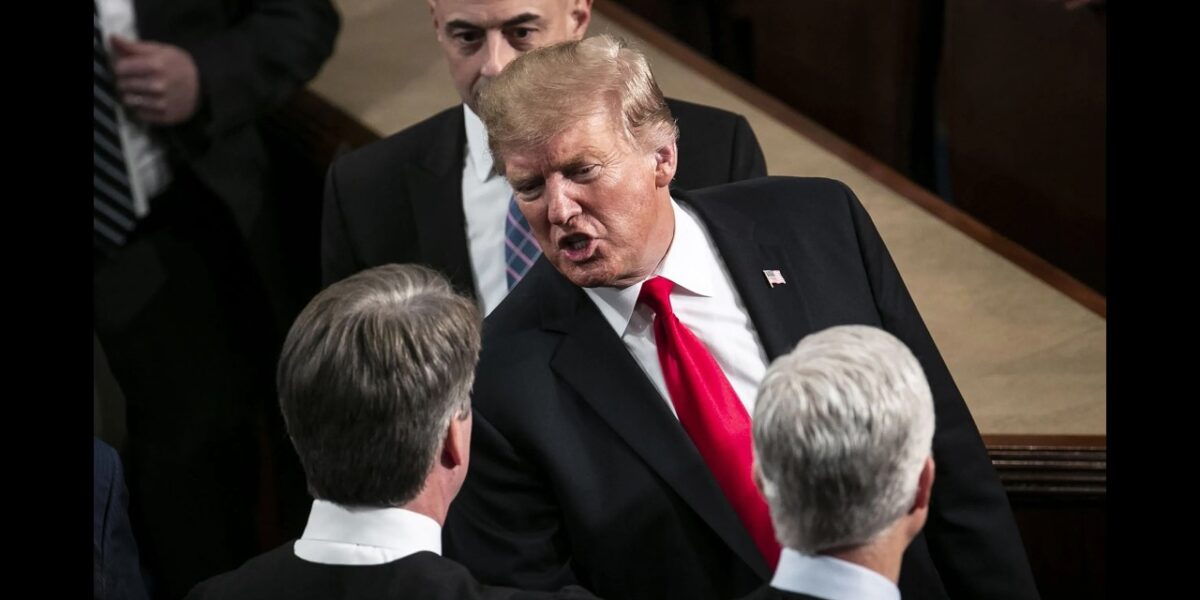
In a significant development that sent ripples through Washington and across the global economy, the U.S. Supreme Court recently delivered a decisive blow to former President Donald Trump’s sweeping tariff policies, prompting an immediate and fiery response from the former commander-in-chief. The ruling, which invalidated a broad application of tariffs under the International Emergency Economic Powers Act (IEPA), has not deterred Trump, who has vowed to double down on his protectionist agenda, threatening new, even wider-ranging levies.
Speaking on the immediate aftermath of the Supreme Court’s decision, U.S. Senator Amy Klobuchar of Minnesota, who has also announced her gubernatorial candidacy, offered a sharp critique of Trump’s reaction and his proposed next steps. Klobuchar highlighted the former president’s characteristic defiance of the highest court and his subsequent attacks on the very justices he appointed.
Trump’s Defiance: A Scathing Rebuke of the Judiciary
The Supreme Court’s decision centered on Trump’s use of the IEPA statute to impose broad, across-the-board tariffs. The court’s ruling essentially stated that the IEPA, which is typically invoked for national security or emergency situations, does not contain the word ‘tariff’ and therefore cannot be used as a blanket authority for such widespread trade restrictions. This legal setback, however, was met not with concession, but with characteristic vitriol from Trump.
Senator Klobuchar expressed little surprise at Trump’s refusal to accept the court’s decision, noting his immediate lashing out. “I know you are super surprised that he is not just accepting the decision of the highest court of the land,” Klobuchar remarked, sardonically acknowledging Trump’s predictable response. She recounted his verbal assault on the justices, including conservatives like Gorsuch, Coney Barrett, and Roberts, whom he reportedly branded as “disloyal, unpatriotic, and swayed by foreign interests.” This public denouncement of his own appointees underscores a broader pattern of challenging institutional norms and judicial independence, particularly when rulings do not align with his political objectives.
Beyond his verbal attacks, Trump also targeted the business community, including the Chamber of Commerce and small businesses that had brought the case, demonstrating a clear disregard for the economic entities directly impacted by his trade policies. This confrontational stance, Klobuchar suggested, diverts attention from the real economic issues at hand and shifts blame rather than taking responsibility for the economic consequences of his administration’s actions.
The Tariff Landscape: Old Tools, New Threats
In the wake of the Supreme Court’s ruling, Trump outlined a two-pronged approach to continue his tariff strategy. First, he declared that existing tariffs imposed under Section 232 and Section 301 would remain in place. Second, and more controversially, he announced his intention to impose a new 10% global tariff under Section 122.
Section 232 and Section 301: The Traditional, Yet Overused, Instruments
Klobuchar provided context on the existing tariff statutes Trump intends to maintain. Section 232, she explained, pertains to national security interests and has been historically used by various presidents, including for steel and aluminum imports. “Other presidents have used that before on steel and things like that, aluminum,” she noted. Section 301, on the other hand, addresses violations of tariff agreements. Klobuchar acknowledged the legitimate uses of these statutes, particularly in cases of unfair trade practices like steel dumping. “I actually have been in favor of using those statutes for some things. That’s why we have tariffs, right? Especially when steel dumping is going on and the like,” she stated. However, she quickly added a crucial caveat: “But again, he’s overused them.” This overuse, according to Klobuchar, has stretched the original intent and scope of these more narrowly defined statutes, leading to broader economic disruptions than intended.
While these sections are generally considered more traditional and require specific investigations, their application under the Trump administration often faced criticism for being overly broad and disruptive. The continuation of these tariffs, even if narrower in scope, still contributes to the overall burden on American consumers and businesses, maintaining a state of uncertainty in global trade relations.
Section 122: An Uncharted and Likely Contested Path
The more alarming aspect of Trump’s plan, according to Klobuchar, is his proposal to impose a new 10% global tariff using Section 122. This particular statute, she warned, has not been utilized in such a sweeping manner before, raising serious legal questions about its applicability and constitutionality. “This really hasn’t been used in that way. I don’t believe it’ll be upheld,” Klobuchar asserted, expressing strong doubts about its legal viability.
A critical feature of Section 122, which Klobuchar highlighted as a potential check on presidential power, is a 150-day window during which Congress can intervene. “After 150 days, Congress can step in and say, uh, no, we’re not going to extend this,” she explained. This provision could force a showdown between the executive and legislative branches, particularly given the growing bipartisan unease with the economic fallout of tariffs.
Klobuchar pointed to recent congressional action as evidence of this growing discontent. “Congress has recently shown by passing something to throw out the Canadian tariffs that even some Republicans are realizing this is horrible economic policy and voting with us to get rid of the tariffs,” she stated. This bipartisan pushback suggests that a move to implement global tariffs under Section 122 would likely face significant opposition in Congress, potentially forcing Republican lawmakers to make difficult choices in an election year.
The Economic and Political Fallout: A Looming Crisis
The economic implications of Trump’s proposed global tariffs are substantial, building upon the negative impacts already experienced by American consumers and businesses. Klobuchar underscored the tangible costs borne by ordinary Americans. “Meanwhile, we’ve got people that are going to want refunds, including every consumer in America that lost $1,700 last year,” she stated, referring to the hidden costs of tariffs passed on to consumers through higher prices on goods ranging from food to electronics. Importers in the U.S. would also face significant challenges, potentially leading to further economic instability and demands for compensation.
The political ramifications for the Republican Party, especially in an election year, are equally significant. Klobuchar argued that Trump’s insistence on implementing these tariffs, despite their unpopularity and economic burden, puts his own party in a miserable position. “Isn’t that screwing over his own party just months before voters are going to be casting their ballots?” she asked, highlighting the dilemma faced by Republican candidates who would have to defend policies that directly raise the cost of living for their constituents.
Trump’s apparent disregard for these political consequences, even going so far as to label conservative Supreme Court justices as “RINO’s” (Republicans In Name Only), suggests a prioritization of his personal agenda over party unity or electoral strategy. “But he doesn’t seem to care. He literally called the Supreme Court justices, the conservatives he had put on their rhinos at this press conference. I heard it. I couldn’t even. And that’s why I don’t think he cares,” Klobuchar observed, painting a picture of a leader driven by anger and a desire for chaos.
Beyond domestic politics, Klobuchar also warned of the long-term damage to international trade relationships. She cited Canada, a key U.S. ally, as an example. “Carney, who’s a smart prime minister, is starting to make deals with other countries. What else is he supposed to do? and we’re going to lose long-term markets because of these tariffs,” she explained. Such actions could erode trust, destabilize global supply chains, and push trading partners to seek alternatives, ultimately harming American economic interests in the long run.
Klobuchar concluded her commentary on the tariff situation by describing the White House’s current response as “anger and chaos, which is what we’re used to every day from this White House.” She emphasized the importance of checks on presidential power, citing the midterms, the courts, and the will of the people, particularly independents and moderate Republicans who are increasingly rejecting the “cost, the chaos, [and] the corruption.”
From Senate to Statehouse: Klobuchar’s Vision for Minnesota
Shifting gears from national policy, Senator Klobuchar also discussed her decision to run for governor of Minnesota and outlined her priorities for the state. Her announcement came after Governor Tim Walz decided not to seek re-election, prompting Klobuchar to make a swift decision about her political future.
“I love my job. I think you know that. Um and but I love my state more,” Klobuchar stated, articulating the personal motivation behind her gubernatorial bid. She described Minnesota as a state that has endured significant challenges and tragedies, requiring strong, transformative leadership to move forward. Her goal, she emphasized, is to be a “transformative governor” who can guide Minnesota to “higher ground.”
A Blueprint for Transformation: Priorities for a Healing State
Klobuchar’s vision for Minnesota is centered on three core principles: getting things done, bringing people together, and standing up for what’s right. She highlighted her track record of legislative success, even in a highly polarized Washington. “If I can pass a bill with Ted Cruz while Donald Trump is in office, um I can do some pretty good things for our state,” she noted, underscoring her ability to forge bipartisan consensus. This emphasis on collaboration would be a cornerstone of her approach to governance, aiming to bridge divides and foster unity within the state.
She also stressed the importance of independent leadership, making it clear that she would not be a “rubber stamp of Donald Trump.” This assertion is particularly relevant given the political landscape and the presence of seven Republican opponents in the gubernatorial race, signaling her intent to govern based on Minnesota’s needs rather than national political alignments.
Looking ahead to a potential two terms as governor, Klobuchar laid out specific policy goals aimed at improving the lives of Minnesotans. Her top priority is to bring down costs for residents, focusing on critical areas such as housing, childcare, and healthcare. She mentioned various “innovative things going around around our state” that could be leveraged to address these challenges effectively.
Beyond tangible policy outcomes, Klobuchar also expressed a desire to restore a sense of optimism and well-being among Minnesotans. “I also want to get to a point in our state um where people feel good again uh about what’s going on in our country,” she said. While acknowledging that some of this sentiment depends on national leadership, she emphasized the significant role a state governor can play in fostering a positive environment. She invoked Minnesota’s history of innovation, from the pacemaker to the Post-it Note, as a source of pride and a call to action for future progress, particularly in educating children and ensuring accessible homeownership.
Klobuchar framed her campaign as a moment of collective opportunity for Minnesota, urging citizens to “not look away, to not look down, but to look at each other and look up to the Northstar and move forward together.” Her leadership, she hopes, would instill a sense of optimism during challenging times, drawing inspiration from individuals like Alex Prey and Renee Good, whose stories she mentioned as symbols of the state’s resilience and enduring spirit.
Confronting Federal Overreach: Standing Up to ICE in Minnesota
A significant portion of Klobuchar’s discussion on Minnesota’s challenges centered on the contentious issue of federal immigration enforcement, specifically the operations of Immigration and Customs Enforcement (ICE) within the state. She described a volatile situation with “3,000 ICE agents on our street” and local communities “standing up” against what she characterized as a rogue agency acting with impunity.
Legislative Battles: Challenging ICE Funding and Accountability
As a U.S. Senator, Klobuchar has actively worked to challenge what she views as problematic ICE operations. She strongly opposed a $75 billion bill, which she controversially referred to as the “big beautiful betrayal,” arguing that this substantial funding enabled ICE to hire agents with inadequate training and implement questionable practices. She detailed several concerns:
- Lack of Training: Agents received only 47 days of training, which Klobuchar suggested was insufficient for the sensitive and often complex nature of their duties.
- Bounty System: She alleged the existence of a “bounty system,” where agents might receive incentives for each person apprehended, potentially leading to arbitrary or illegal detentions. “A lot of times when they picked up legal citizens and threw them in the car and then threw them out of the car in the freezing cold four blocks later or brought them illegally to a detention center that this is going to be because they got a bounty for each person,” she claimed.
- Lack of Transparency: Klobuchar pointed to the refusal of agents to use cameras, their wearing of masks, and the absence of warrants as critical issues undermining accountability and due process.
In response to these concerns, Klobuchar advocated for a reallocation of federal funds. Instead of channeling vast sums into ICE, she proposed redirecting that money to local law enforcement agencies to help communities enhance safety and address local needs more effectively. “One proposal is if you really want to put it into making people safe, why don’t you take the extra money that ICE got and put it into local law enforcement to help our communities,” she suggested.
State-Level Investigations and the Pursuit of Justice
Looking ahead, both as a Senator and potentially as governor, Klobuchar committed to ensuring thorough investigations into alleged misconduct by ICE agents in Minnesota. She emphasized her intent to work closely with Minnesota Attorney General Keith Ellison and other state prosecutors to pursue these cases, even in the face of federal resistance.
A major point of contention highlighted by Klobuchar is the federal government’s refusal to share information from their investigations with local prosecutors. “Pambani has already said, the Justice Department has said we’re not sharing the information from these investigations with the local prosecutors. This is unheard of in our state,” she asserted. She contrasted this with past federal-state cooperation, even during the Trump administration, citing instances like the shootings at a church and the tragic death of Melissa Hortman, where federal agents worked seamlessly with the State Bureau of Criminal Apprehension (BCA).
Klobuchar affirmed her commitment to a transparent and full investigation into the alleged killings of individuals like Alex Prey and Renee Good, which she linked to the actions of ICE agents. She expressed confidence in the BCA, led by Drew Evans, a “complete pro who’s been supported by both Democratic and Republican legislators.” While hoping that such investigations would conclude before her potential governorship, she unequivocally stated her support for them: “Of course, I would support that investigation.” This firm stance underscores her dedication to upholding justice and accountability within Minnesota, regardless of federal stonewalling or political pressure.
Conclusion: A State at a Crossroads, a Nation in Flux
The interview with Senator Amy Klobuchar painted a vivid picture of a nation grappling with significant challenges, from the contentious realm of trade policy and judicial independence to the deeply personal struggles within local communities. Trump’s defiant reaction to the Supreme Court’s tariff ruling signals a continued battle over economic policy, with potential repercussions for both the U.S. economy and the Republican Party’s electoral prospects. His proposed global tariffs under Section 122 represent an unprecedented move that is likely to face immediate legal and congressional challenges, promising further political friction.
Simultaneously, Klobuchar’s gubernatorial campaign offers a vision of healing and progress for Minnesota, focusing on practical solutions to everyday problems and a commitment to uniting a state that has endured its share of hardship. Her resolute stance against perceived federal overreach by ICE, coupled with her dedication to accountability and justice at the state level, reflects a broader determination to protect Minnesota’s citizens and uphold its values. As the nation navigates these turbulent waters, the interplay between federal policy, state leadership, and public sentiment will undoubtedly shape the future trajectory of American politics and society.
Source: MAJOR UPDATE from US Supreme Court (YouTube)

Related Articles
Congressman Swalwell Slams Trump’s Iran Strikes, Cites ‘No Plan’
Congressman Eric Swalwell has strongly condemned the recent U.S. military strikes in Iran, deeming them illegal and lacking a clear strategic plan. He joins Democrats in demanding a War Powers vote, asserting that the administration has failed to present evidence of provocation or a post-strike strategy. Swalwell criticizes the move as a distraction from domestic issues and a departure from campaign promises.
Iran Celebrates After Israeli Strikes Eliminate Top Leaders
Following Israeli airstrikes that reportedly killed Iran's Supreme Leader and top staff, celebrations have erupted among the Iranian diaspora. While a "monumental event," analysts caution against immediate expectations of a smooth democratic transition due to the IRGC's power and a divided opposition.
AI’s Ethical Divide: Trump’s Ban Sparks Fierce Debate
The Trump administration's blacklisting of AI firm Anthropic over its refusal to allow autonomous weapons and mass surveillance has ignited a fierce debate. The move highlights deep ethical divides in AI development and raises concerns about future government-tech partnerships.