Supreme Court Strikes Down Trump Tariffs, New Levies Emerge
The U.S. Supreme Court has ruled former President Trump's AIPA tariffs illegal, but new temporary levies have been swiftly imposed. The decision impacts $175 billion in collected revenue and reshapes the future of U.S. trade policy, leaving investors to navigate a complex and evolving landscape.

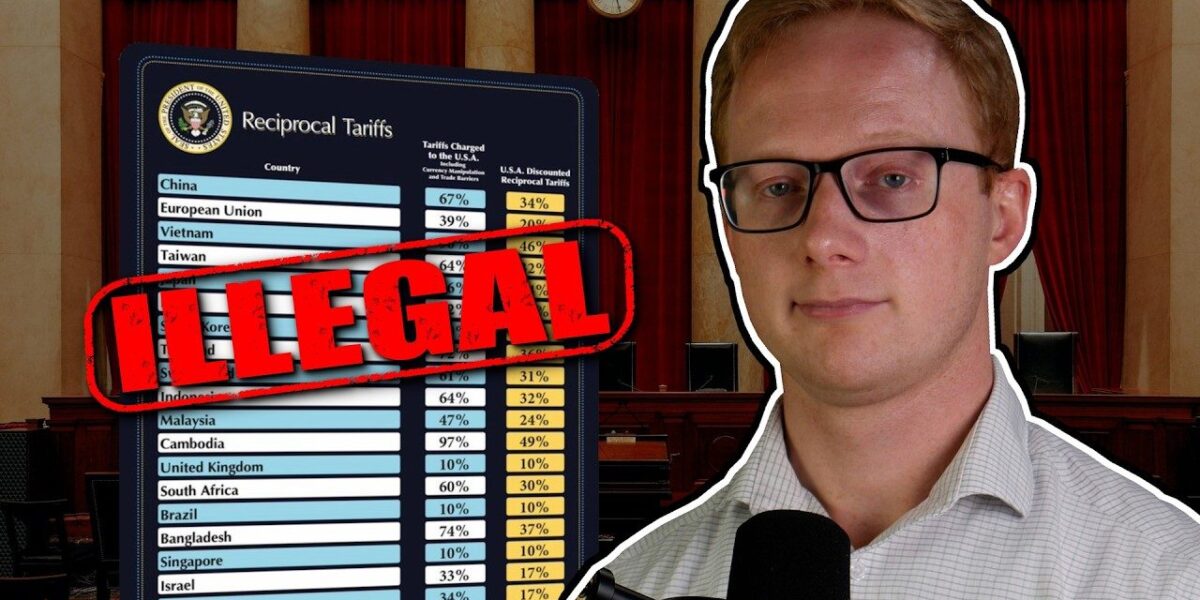
Supreme Court Overturns Trump Tariffs; New Trade Measures Announced
In a landmark decision, the United States Supreme Court has ruled against the legality of tariffs imposed by the Trump administration under the International Emergency Economic Powers Act (AIPA). This ruling, which upholds a lower court’s decision, mandates the White House to lift all tariffs previously enacted through this specific legislative channel. The move was initially hailed by many as a significant setback for former President Trump’s trade agenda, effectively dismantling one of his signature foreign policy tools.
The Supreme Court’s Ruling Explained
The case, Learning Resources v. Trump, consolidated with a similar suit from liquor company VOS Elections and twelve U.S. states, centered on whether AIPA, a 1977 law granting the president powers to restrict trade during national emergencies, authorized the imposition of tariffs. The plaintiffs argued, and the Supreme Court justices agreed in a 6-3 decision, that AIPA does not grant the president the explicit power to tax. While the law allows for the restriction of imports and exports, the authority to levy taxes, the Court stated, rests solely with Congress as per the Constitution. The justices invoked the “major questions doctrine,” asserting that executive actions of significant consequence require clear congressional authorization, which was absent in the language of AIPA regarding tariffs.
The ruling specifically impacts two primary sets of tariffs: those initially imposed against China, Mexico, and Canada related to fentanyl, including a 10% tariff on Chinese goods, a 25% tariff on Mexican goods, and a 35% tariff on Canadian goods; and broader country-specific reciprocal tariffs announced on April 2nd. These tariffs, which affected numerous countries, are now effectively nullified.
Unaffected Tariffs and Revenue Implications
It is crucial to note that not all tariffs are affected by this ruling. Sectoral tariffs enacted under Section 232 of the Trade Expansion Act of 1962, which include levies on steel, aluminum, auto parts, and other goods, remain in effect. These tariffs, while significant, accounted for approximately one-third of the revenue generated by Trump-era tariffs in the last quarter of 2025, according to Reuters. The AIPA tariffs, however, generated an estimated $175 billion in revenue for the U.S. government since their implementation.
The Fate of Collected Revenue
A significant question arising from the ruling is the disposition of the $175 billion in tariff revenue deemed illegally collected. While a refund of these levies is widely expected, the Supreme Court’s ruling offers no directive on the process. This leaves the issue to lower courts, such as the U.S. Court of International Trade, potentially leading to years of further litigation. The practicalities of reimbursement are complex; while foreign companies may have absorbed some costs, U.S. consumers bore the brunt of price increases. However, refunds are likely to be directed primarily to importing companies, as they were the entities directly charged the tariff fees. Smaller businesses may face significant hurdles in reclaiming funds compared to larger corporations like FedEx, which has already initiated legal action for tariff reclamation. Some proposals for a tariff dividend have been floated, but these would likely require congressional approval and may not meet reimbursement requirements.
New Tariffs Emerge Amidst Legal Victory
Despite the Supreme Court’s decision, the administration swiftly moved to implement new trade measures. The President announced a temporary 10% tariff on most countries, later increased to 15% for some, under Section 122 of the Trade Act of 1974. This section permits tariffs of up to 15% for 150 days to address significant balance of payments deficits. While described as a baseline tariff, the new measure includes numerous exemptions for critical minerals, energy products, certain agricultural goods, pharmaceuticals, vehicles, and goods already subject to Section 232 tariffs or covered by trade agreements like the USMCA and CAFTA-DR.
For Canada, the impact of this new tariff is less pronounced, as most of its exports already entered the U.S. tariff-free under the USMCA. However, for other nations, the temporary nature of this tariff means congressional approval is required for extension beyond 150 days, a prospect that appears uncertain given the upcoming midterm elections and general public sentiment against tariffs.
Future Tariff Avenues
The ruling does not signal an end to tariff imposition. Several other legal avenues remain available. Section 232 tariffs, requiring a national security investigation, are still in place. Additionally, Section 201 of the Trade Act of 1974 allows for product-specific tariffs in cases of serious injury to domestic producers due to import surges. Section 301 of the same act permits tariffs for trade deal violations or unjustifiable burdens on U.S. commerce, a measure for which a formal investigation has already been announced. Furthermore, Section 338 of the Tariff Act of 1930 enables the president to impose country-specific tariffs of up to 50% in cases of unreasonable discrimination against U.S. trade, though its broad application may face legal challenges.
Market Impact and Investor Considerations
The immediate impact of the Supreme Court ruling is a reduction in tariffs for many countries, with some seeing their rates fall significantly. However, the introduction of new, albeit temporary, tariffs creates uncertainty. Countries that had negotiated trade deals, such as the UK and the European Union, may find themselves facing similar tariff rates as others, potentially impacting ongoing trade negotiations and discouraging future agreements. While U.S. trade representatives have assured adherence to existing deals, the administration’s track record of policy shifts could foster skepticism among international partners.
From a budgetary perspective, the elimination of AIPA tariffs presents a challenge, as they represented a substantial offset to deficits. The reduction in the average effective tariff rate faced by consumers is estimated to decrease inflation from tariffs by half, from 1.2% to 0.6%. However, the administration’s continued reliance on tariffs as a revenue source, as evidenced by the new levies and past proposals to replace income taxes with tariffs, suggests a persistent focus on this policy tool.
For investors, the landscape remains dynamic. While the legal challenge to AIPA tariffs has been resolved, the administration’s ability to implement new tariffs through different legal frameworks introduces ongoing risk and complexity. Sectors heavily reliant on international trade, particularly those affected by steel, aluminum, and auto tariffs, will continue to navigate these uncertainties. The potential for further litigation regarding the refund of illegally collected tariffs also adds a layer of complexity for businesses and their financial planning.
Conclusion
The Supreme Court’s decision marks a significant legal victory against the broad use of AIPA for tariff imposition, limiting the executive branch’s unilateral power in this domain. However, the swift implementation of new tariffs demonstrates that the administration remains committed to using trade policy as a key instrument. Investors and businesses must remain vigilant, monitoring legislative actions, potential legal challenges, and the evolving global trade environment shaped by these ongoing policy shifts.
Source: Trump's Tariffs Deemed Illegal – What Now? (YouTube)

Related Articles

Bondi’s Court Blunder Could Cost US Billions
A court filing from Pam Bondi's Department of Justice may have committed the U.S. to refunding $170 billion in tariffs. This legal promise was made during challenges to Trump-era tariffs, with the DOJ assuring the court that collected funds would be repaid if the tariffs were overturned.
Trump’s Tariffs Linked to Stagnant Job Growth in First Year Back
The U.S. economy saw minimal job growth in 2025, adding just 181,000 jobs, a figure attributed to business uncertainty fueled by Donald Trump's volatile tariff policies. While January 2026 showed gains, they were heavily concentrated in healthcare, masking broader economic weakness and significant layoffs.


Supreme Court Reins In Presidential Tariff Power
The U.S. Supreme Court has ruled that the President cannot use emergency powers to impose tariffs, potentially requiring billions in collected revenue to be repaid to corporations. This decision limits executive authority in trade policy.