Supreme Court Strikes Down Trump Tariffs, Igniting On-Air ‘Panic’ and Contradictions at Fox News
The Supreme Court's decision to strike down Donald Trump's tariffs has sparked a contentious debate, particularly on Fox News, where hosts and guests offered contradictory defenses and economic misrepresentations. The ruling reaffirms Congress's authority over taxation and mandates billions in refunds, highlighting the legal and economic chaos caused by unilateral executive actions.

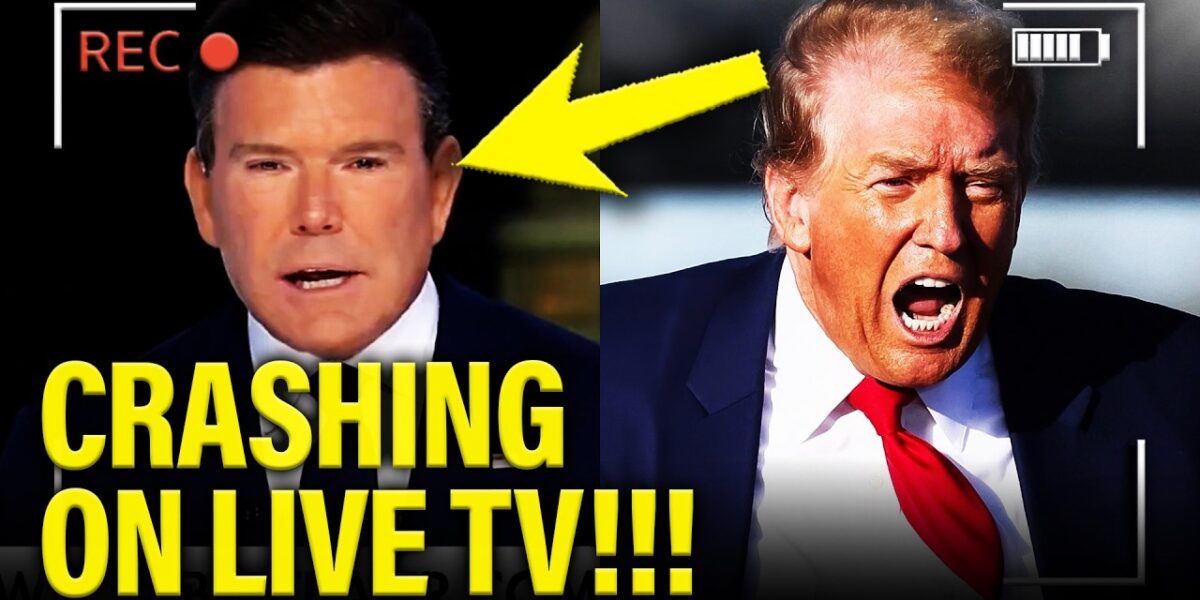
Supreme Court Strikes Down Trump Tariffs, Igniting On-Air ‘Panic’ and Contradictions at Fox News
A landmark decision by the United States Supreme Court, striking down a series of tariffs unilaterally imposed by former President Donald Trump, has sent shockwaves through the political landscape, particularly within certain media circles. The ruling, which declared Trump’s tariffs against the world unlawful, triggered what one observer described as an on-air ‘panic’ at Fox News, characterized by a flurry of contradictory statements, economic misrepresentations, and fervent defenses of the former administration’s trade policies.
The Supreme Court’s decision is not merely a legal technicality; it represents a significant reassertion of congressional authority over taxation and trade, directly challenging the executive branch’s expansive interpretation of emergency powers. The immediate aftermath has seen a contentious debate unfold, pitting the rule of law against political expediency, and highlighting deep divisions on fundamental economic and constitutional principles.
The core of the controversy revolves around the use of a 1977 statute — the International Emergency Economic Powers Act (IEEPA), which the transcript refers to as AIPA — that Trump’s administration employed to justify the imposition of tariffs. While the statute grants the president authority to regulate imports and exports during a declared national emergency, the Supreme Court ultimately determined that this power does not extend to levying tariffs, a prerogative constitutionally reserved for Congress.
The Supreme Court’s Landmark Decision and the Challenge to Executive Power
The Supreme Court’s ruling against Donald Trump’s tariffs marks a pivotal moment in the ongoing struggle over the balance of power between the executive and legislative branches. At the heart of the legal challenge was the interpretation of the International Emergency Economic Powers Act (IEEPA), a 1977 law designed to give the President flexibility in responding to national emergencies that threaten U.S. national security, foreign policy, or economy. The Trump administration invoked this statute to impose a broad range of tariffs on goods from various countries, arguing that the nation faced an “emergency” due to trade imbalances.
Understanding IEEPA and its Limitations
The IEEPA, passed in the wake of the Vietnam War and Watergate, aimed to refine presidential emergency powers, ensuring they were exercised within defined legal boundaries. It allows the President to “regulate” international economic transactions, including imports and exports, to deal with unusual and extraordinary threats. However, as the Supreme Court underscored, the statute specifically omits the power to impose tariffs. The power to “tax,” which tariffs fundamentally are, rests squarely with Congress under Article I, Section 8, Clause 1 of the U.S. Constitution, which grants Congress the power “To lay and collect Taxes, Duties, Imposts and Excises.”
The Court’s decision effectively clarified that “regulation” under IEEPA does not equate to “taxation.” This distinction is crucial, as it prevents the executive branch from bypassing Congress on significant economic policy decisions that directly impact American consumers and businesses. Justice Gorsuch, as noted by Senator Amy Klobuchar, repeatedly emphasized Congress’s constitutional role in taxation during oral arguments, signaling the Court’s leanings towards a strict interpretation of the law.
The Financial Fallout: Billions in Refunds and Economic Disruption
The immediate practical consequence of the Supreme Court’s ruling is the obligation to refund an estimated $175 billion in tariffs unlawfully collected. This substantial sum represents money paid by American importers — ranging from large corporations to small businesses like a Utah fishing apparel company or a Pennsylvania toy store — who bore the initial cost of these tariffs, often passing them on to consumers in the form of higher prices.
The prospect of such massive refunds introduces considerable complexity for the Treasury Department. While the former Treasury Secretary Scott Bessant, as quoted in the transcript, expressed a dismissive “Good luck trying to get that,” implying resistance, Senator Klobuchar affirmed that the retroactive nature of the ruling makes the refunds “very clear.” The process of identifying eligible parties and disbursing these funds is expected to be a monumental administrative undertaking, with calls for the administration to make the process as smooth as possible, ideally ensuring the benefits reach individual consumers who ultimately paid the increased prices.
The entire episode highlights the economic chaos that can ensue when executive actions venture beyond established legal frameworks. Businesses made investment decisions, adjusted supply chains, and navigated global markets under a tariff regime that has now been retrospectively deemed illegal, creating uncertainty and financial strain.
Fox News’s On-Air Reaction: A Study in Contradictions
Following the Supreme Court’s definitive ruling, the reaction on Fox News, as observed by the transcript’s speaker, was characterized by a palpable sense of “panic” and a series of “ridiculous and pathetic” attempts to spin the narrative. The network’s hosts and guests engaged in a remarkable display of rhetorical gymnastics, simultaneously attacking the legitimacy of the Supreme Court while also attempting to portray the unlawful tariffs as a triumph for American policy.
Defending the Indefensible: Jameson Greer and Scott Bessant
Among the first to appear were key figures from the Trump administration, including former U.S. Trade Representative Jameson Greer and former Treasury Secretary Scott Bessant. When pressed by host Brett Baier on whether he regretted using AIPA, Greer staunchly defended the decision. He asserted, “No, not at all,” claiming the president “wanted to move quickly” and “flexibly” to address a “huge trade deficit” left by the Biden administration (a claim factually disputed as the tariffs were largely imposed during Trump’s first term, preceding Biden’s presidency). Greer argued that IEEPA was an “appropriate tool” and a “necessary tool,” despite the Supreme Court’s disagreement. He even boasted that the tariffs had helped “obtain tons of deals covering half of the world’s population,” and that while “the tools may change, the policy stays the same.”
This unwavering defense, even in the face of a Supreme Court rebuke, underscored a narrative of executive prerogative over legal constraints. The implication was that the policy was so vital that its legality was secondary. Adding to this stance, former Treasury Secretary Scott Bessant, when confronted with the prospect of $175 billion in refunds, cavalierly remarked, “Good luck trying to get that. Why would we give it back to you?” This statement, likened by the transcript’s speaker to a villain’s defiance, suggested a potential disregard for the Court’s order and the financial rights of those unlawfully taxed.
The Miller Doctrine: Expanding Tariffs Amidst Defeat
Steven Miller, a former senior advisor to Trump, took a characteristically aggressive approach. While acknowledging the Supreme Court ruling as “cowardly” and “horrendous,” he quickly pivoted to claiming it presented a “good news” scenario. Miller argued that the Court had affirmed the president’s authority under other statutes — specifically sections 301, 232, 122, and 338 of federal law — to levy tariffs. He declared that Trump’s tariff program would not only be “fully reconstituted” but “expanded,” promising to make tariffs “even harder on the American people.”
Miller further asserted that the tariffs had “brought inflation down to 1.4%,” a claim directly refuted by the transcript’s speaker, who pointed out that the Bureau of Economic Analysis (BCE) was rising past 3% and that Miller was likely confusing inflation rates with a fourth-quarter GDP number. This misrepresentation of fundamental economic data served to create a false narrative of success, ignoring the actual economic indicators of rising inflation and slowing GDP growth. His argument that tariffs “keep prices low by incentivizing products to be made here in America” also runs counter to established economic theory, which generally posits that tariffs increase consumer costs by making imported goods more expensive and reducing competitive pressure on domestic producers.
Jesse Waters’s Shifting Narratives and Outlandish Claims
Jesse Waters, another prominent Fox News host, offered a series of shifting and often contradictory arguments. Initially, he questioned how Trump could be labeled a dictator if the Supreme Court ruled against him and he “follows the order.” This was immediately countered by the transcript’s speaker, who highlighted Trump’s “deranged press conference” where he explicitly stated his intent not to follow the Court’s orders and outlined new punitive measures.
Waters then attempted to frame the ruling as a “trap” for Democrats, suggesting that Trump would issue “tariff rebate checks with Trump’s name on it right before the midterms,” making Americans “so thankful.” This was swiftly debunked as a “lie,” reminiscent of previous unfulfilled promises of “Doge dividend checks” or $2,000 healthcare checks. The transcript’s speaker characterized this as Trump’s “MO” — to promise checks instead of solving problems, a tactic labeled as that of a “con artist and a total fraud.”
Perhaps most astonishing were Waters’s claims about the geopolitical achievements of the tariffs. He asserted that tariffs had helped the U.S. “get Greenland,” “the Panama Canal back,” “boost NATO funding,” and even “settle eight wars.” These claims were dismissed as completely unfounded, with the transcript’s speaker pointing out the actual detrimental effects of the tariffs: causing other countries to form new trade alliances that actively excluded the United States, such as Canada linking trans-Pacific and transatlantic partnerships, the growing influence of the BRICS bloc, and new trade deals between the European Union and India, and Canada and China.
Economic Misinformation and False Promises: Monica Crowley
Monica Crowley, described as “Donald Trump’s ambassador of protocol,” contributed to the narrative of economic success through tariffs. She claimed that Trump’s tariffs had “generated nearly $270 billion for the federal government” in the calendar year 2025 (a future date, suggesting a misstatement or projection, as the tariffs were largely in effect prior to that year). Crowley further asserted that these returns were leading to “lower deficits, an overall lower national debt,” and “generating tremendous economic growth,” “private job creation,” and a “manufacturing boom.”
These claims were directly challenged by the transcript’s speaker, who cited actual economic conditions: a “jobs recession,” “stagnant” economic growth, an “increasing” national debt, and deficits that are “not lower.” The speaker highlighted that the federal budget deficit stood at approximately $1.7 to $1.8 trillion over the past 12 months, with government expenditure significantly outpacing revenue. The core argument was that the $270 billion, even if collected, was “stolen” through an unlawful tax, making the notion of it contributing positively to the national debt or deficit fundamentally flawed in a legal sense.
The “Workaround” Mentality: Greg Gutfeld’s Outburst
Greg Gutfeld, another Fox News personality, resorted to a more visceral reaction, reportedly cursing on air and telling those “gloating” about the ruling to “STFU.” His argument centered on the idea that Supreme Court rulings, like those against student loan bailouts or vaccine mandates, were often circumvented, implying that there’s “always a workaround.” This sentiment reflected a dismissal of the judiciary’s role in upholding the rule of law and suggested an executive branch could simply find alternative means to achieve its policy goals, regardless of legal constraints.
The Reality of Trump’s Post-Ruling Actions
Contrary to Jesse Waters’s assertion that Donald Trump would “follow the order” of the Supreme Court, the former President’s immediate response to the ruling was one of defiance and escalation. The transcript describes a “deranged press conference” where Trump made it clear he had no intention of adhering to the spirit of the Court’s decision. Instead, he announced a series of retaliatory measures designed to make “life so painful for Americans,” further demonstrating a willingness to prioritize political leverage over legal compliance and economic stability.
Among his announced actions was the elimination of the de minimis tariff exemption, which previously allowed Americans to purchase goods valued at $800 or less without incurring tariffs. This move directly targets everyday consumers, increasing the cost of imported items and effectively broadening the tax burden on ordinary purchases. This measure, coupled with a unilateral 150-day 10% tariff against the world, signaled an aggressive posture aimed at punishing both foreign trading partners and, implicitly, American consumers.
Furthermore, Trump reportedly threatened to impose embargos against countries that might seek to renegotiate or withdraw from what he termed “fake trade deals” announced on social media. Such threats, delivered outside traditional diplomatic channels, underscore a volatile approach to international trade that prioritizes unilateral action and punitive measures over negotiated agreements and established legal frameworks. These actions, far from complying with the Supreme Court’s ruling, appear to be a direct challenge, demonstrating an executive branch attempting to reassert its will through alternative, and potentially equally unlawful, means.
Expert Perspective: Senator Amy Klobuchar’s Clarity
Amidst the flurry of partisan rhetoric, Senator Amy Klobuchar, a Democratic senator running for governor of Minnesota, offered a grounded and legally informed perspective on the situation. Speaking on Fox News, she directly addressed the implications of the Supreme Court’s decision, emphasizing the constitutional principles at stake and the practical consequences for the American economy.
Klobuchar unequivocally stated that the Supreme Court’s ruling makes it “clear that [the president] has to work with Congress” when it comes to taxation and trade policy. She reiterated Justice Gorsuch’s point that “Congress has the power to tax,” thereby reinforcing the separation of powers and the legislative branch’s constitutional authority. Her remarks served as a crucial reminder that presidential actions, however swift or well-intentioned, must operate within the bounds of the law.
The Senator also highlighted the economic fallout of such unilateral and illegal actions. She warned that these policies “lead to complete chaos in the economy,” citing rising housing costs and other inflationary pressures that directly impact American families. This perspective contrasts sharply with the claims made by Trump’s former advisors, who often dismissed the negative economic consequences or attributed them to other factors.
Regarding the contentious issue of refunds, Klobuchar was emphatic: “it is very clear they made this retroactive.” She acknowledged that importers — particularly small businesses like a Utah fishing apparel company or a Pennsylvania toy store — would be seeking their money back through legal avenues, potentially via the international court or other bodies. Crucially, she expressed hope that these refunds would ultimately benefit “individual consumers who ended up really paying for this because of the increased prices.” This focus on the consumer underscored the real-world impact of the tariffs and the moral imperative to rectify the unlawful collection of funds.
Klobuchar criticized the administration’s initial decision to use the IEEPA statute for tariffs, stating, “The administration should have never used this statute.” While acknowledging the desire for the president to “move quickly,” she stressed that legality must always take precedence: “But you want to do things legally or you’re going to end up in a huge mess, which he has continued to have happened to him in various other realms throughout this administration.” Her pragmatic and legally sound analysis provided a stark contrast to the often-unsubstantiated claims and emotional appeals from other guests, offering a clear-headed assessment of the ruling’s implications.
Broader Economic and Geopolitical Implications
The Supreme Court’s ruling, and the preceding years of tariff imposition, have significant broader implications for the U.S. economy and its standing on the global stage. While proponents like Steven Miller and Monica Crowley claimed tariffs spurred domestic manufacturing and reduced deficits, the reality, as highlighted by the transcript’s speaker, suggests a more complex and often detrimental outcome.
Trade Wars and Global Realignment
One of the most profound impacts of the Trump administration’s tariff policy was the instigation of retaliatory measures from other countries, leading to a series of trade wars. Far from making America “powerful” or compelling nations to acquiesce, these tariffs often prompted other countries to seek trade agreements with each other, effectively cutting out the United States. The transcript specifically mentions Canada forging trans-Pacific and transatlantic partnerships, the growing influence of the BRICS bloc (Brazil, Russia, India, China, South Africa), and new trade deals between the European Union and India, and Canada and China. This global realignment represents a significant challenge to U.S. economic leadership, as it fosters alternative supply chains and trade networks that bypass American markets.
The argument that tariffs “settled eight wars” or “got Greenland” is not only without factual basis but also distracts from the actual consequences of such policies. Instead of achieving geopolitical gains, the tariffs strained relationships with key allies and trading partners, fostering an environment of mistrust and unpredictability. This isolationist approach undermined multilateral trade institutions and norms that the U.S. had historically championed, leaving a vacuum that other global powers were quick to fill.
Domestic Economic Impact: Prices, Jobs, and Investment
Domestically, the economic claims made by tariff proponents often diverge from observed realities. While the stated goal was to boost American manufacturing and jobs, tariffs typically lead to higher costs for consumers and businesses. Importers face increased expenses, which are then passed on to retailers and ultimately to the consumer, contributing to inflationary pressures. This directly contradicts the claim that tariffs “keep prices low.” Furthermore, American manufacturers reliant on imported components also face higher input costs, potentially reducing their competitiveness and stifling innovation.
The claims of “lower deficits, an overall lower national debt,” and “tremendous economic growth” due to tariffs also face scrutiny. As the transcript’s speaker pointed out, the U.S. has experienced a “jobs recession,” “stagnant” economic growth, and an “increasing” national debt. Government deficits have remained substantial, reflecting ongoing imbalances between expenditure and revenue. While tariffs do generate revenue, this revenue comes at a cost — higher prices for consumers and businesses, and potential economic distortions. Moreover, if the tariffs are deemed unlawful, the revenue collected is essentially “stolen,” creating a legal and ethical obligation for refunds, which further complicates the fiscal picture.
The broader implications highlight that while tariffs can be a tool in specific, targeted trade disputes, their broad, unilateral application often backfires, harming domestic consumers and industries, alienating allies, and eroding a nation’s credibility in the international trading system. The Supreme Court’s decision serves as a powerful reminder of the importance of adhering to legal and constitutional frameworks, especially in areas with such far-reaching economic consequences.
Conclusion: Upholding the Rule of Law in Trade Policy
The Supreme Court’s definitive ruling against Donald Trump’s tariffs represents a crucial affirmation of the rule of law and the constitutional separation of powers. By clarifying that the executive branch cannot unilaterally impose tariffs under emergency statutes designed for different purposes, the Court has underscored Congress’s indispensable role in taxation and trade policy. This decision serves as a vital check on presidential authority, preventing potential abuses of power that could destabilize the economy and undermine democratic governance.
The on-air reactions at Fox News, as detailed in the transcript, offer a stark illustration of how political narratives can diverge sharply from legal and economic realities. The attempts to portray an unlawful policy as a success, to dismiss a Supreme Court ruling as “cowardly,” and to conjure fantastical geopolitical achievements from trade wars, reveal a persistent effort to shape public perception in defiance of established facts. The repeated misrepresentation of economic data and the cavalier attitude towards the obligation of billions in refunds further highlight a media ecosystem where partisan loyalty often overrides journalistic integrity.
The fallout from this ruling is multifaceted: it mandates significant refunds to American businesses and consumers, demands a more legally compliant approach to trade policy from future administrations, and reaffirms the judiciary’s role as the ultimate arbiter of constitutional boundaries. As Senator Amy Klobuchar logically articulated, acting legally, even if it means moving less “quickly,” is essential to avoid “complete chaos in the economy.” The path forward requires a renewed commitment to working within established legal frameworks, fostering predictable and stable trade relationships, and ensuring that economic policy serves the long-term interests of all Americans, rather than the short-term political aims of any single administration.
Source: Fox News PANICS ON AIR after Trump’s BIGGEST LOSS (YouTube)

Related Articles
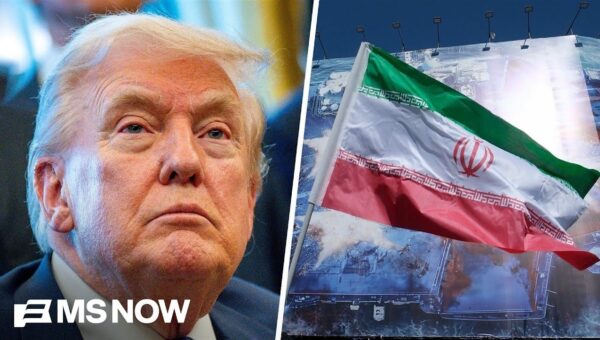
Trump Open to Iran Talks After Attacks, Shifts on Regime Change
President Trump has agreed to negotiate with Iran's new leadership following recent U.S. and Israeli attacks, signaling a potential shift from his regime change objective. The move has drawn scrutiny from former officials who question the strategic coherence of U.S. policy.
Trump: Iran Strikes Ahead of Schedule, Expects ‘Great Deal for World’
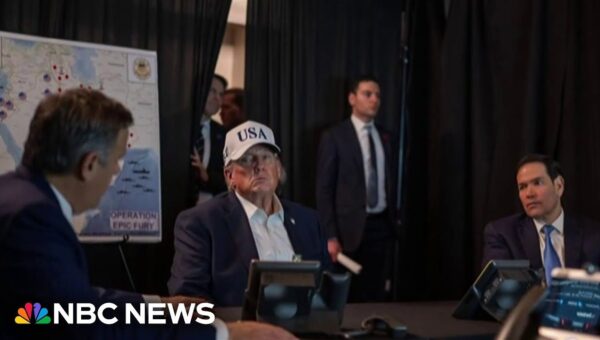
Three U.S. service members have been killed amid escalating conflict with Iran, President Trump confirmed. He stated that strikes are ahead of schedule, with senior Iranian leaders killed, and expressed optimism for a "great deal for the world" despite ongoing talks with Iranian officials.
Trump Agrees to Talks with Iran After Major Strikes
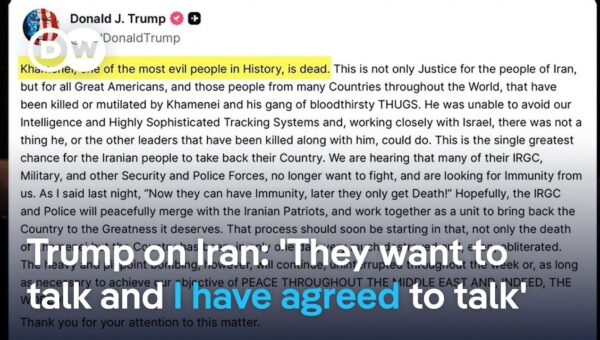
President Donald Trump has agreed to talks with Iran's leadership following coordinated strikes that reportedly killed key figures, including the Supreme Leader. While Trump claims significant military successes, U.S. strategy remains unclear, and public opinion shows limited support for the actions amid rising American casualties.