Supreme Court Strikes Down Trump Tariffs, Causing Market Turmoil
The Supreme Court has struck down key Trump-era tariffs, ruling the former president overstepped his authority by using national emergency powers. The decision throws U.S. trade policy into uncertainty, with potential implications for businesses and global markets.

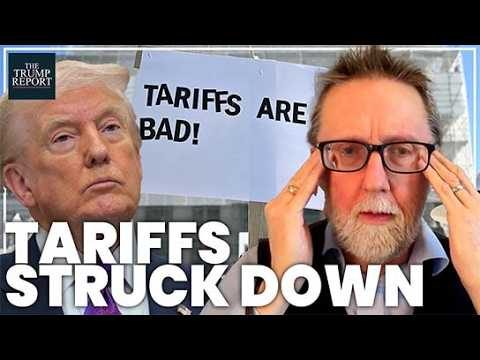
Supreme Court Ruling Undermines Trump’s Tariff Authority
In a significant 6-3 decision on Friday, the U.S. Supreme Court declared a substantial portion of former President Donald Trump’s tariffs illegal, ruling that his administration improperly invoked national emergency powers to impose them. The ruling effectively asserts that the authority to implement broad tariffs rests with Congress, not the executive branch acting unilaterally. This landmark judgment has thrown the future of U.S. trade policy into disarray, prompting immediate, albeit potentially temporary, retaliatory measures from the former president and creating widespread uncertainty for businesses and consumers globally.
A Patchwork of Tariffs Unravels
The core of the Supreme Court’s decision targets tariffs imposed under the International Emergency Economic Powers Act (IEEPA). For years, the Trump administration had implemented a complex and often fluctuating system of tariffs, applying different rates to various countries and goods. As analyst Scott Lucas explained, this created a “patchwork of tariffs,” with rates varying wildly. For instance, the UK faced a 10% tariff, the EU 15%, and some countries like India experienced rates as high as 50%. These rates were not static; they were frequently altered, sometimes daily, creating immense unpredictability for global commerce.
“The problem here is is that you remember Trump’s magic chart last April that made absolutely no sense,” Lucas noted. “What he was effectively saying is we’re going to slap a different tariff on every single country… So you’re talking about dozen scores of tariffs.” This volatility made long-term business planning nearly impossible, as companies struggled to adapt to constantly shifting trade costs.
Trump’s Immediate Response and Legal Constraints
In the wake of the Supreme Court’s ruling, Donald Trump announced an immediate increase in global tariffs to 15%. However, Lucas clarified the legal limitations now imposed on such actions. While the Trump camp can still implement tariffs, the Supreme Court’s decision significantly constrains their ability to do so unilaterally and indefinitely.
Under Section 122 of relevant legislation, the administration can impose a 15% tariff, but only for a limited period of 150 days (approximately five months). Beyond this period, any extension or further imposition of tariffs requires congressional approval. “The Supreme Court decision reaffirmed it is Congress that has the power to implement tariffs, not the president,” Lucas emphasized.
Alternative Tariff Avenues and Their Hurdles
The Trump administration has two other legislative avenues for imposing tariffs, though both involve more rigorous processes and significant delays:
- Section 232 Tariffs: These are levied on national security grounds, such as those previously applied to steel and aluminum, or threatened for pharmaceuticals. However, implementing these requires a formal finding of a national security threat, a process that typically takes months.
- Section 301 Tariffs: These target unfair trade practices. Similar to Section 232, they necessitate a formal finding that a specific country is engaging in unfair trade, and this process must be undertaken for each country targeted. This also involves a lengthy investigation and decision-making period.
“So in other words, they still haven’t solved that patchwork of tariffs and if anything, they’ve made it worse,” Lucas observed, highlighting the ongoing complexity and uncertainty.
The Question of Refunds and Trade Frameworks
A pressing question arising from the ruling is whether businesses and consumers can reclaim tariffs paid under the now-invalidated provisions. Unfortunately, for consumers, obtaining refunds is highly unlikely due to the complexity and scale of potential class-action lawsuits. Individual businesses may attempt to sue for refunds, but this is described as a “cumbersome process.” Some U.S. governors have indicated intentions to sue the federal government to recover tariffs for their constituents.
The ruling also casts doubt on existing trade frameworks. For example, the UK had a trade framework with the U.S. for a 10% tariff. It remains unclear whether this framework is still valid or if the new 15% rate applies. Similarly, a 15% tariff framework with the EU, which had not yet been ratified by the EU Parliament, now faces suspension or renegotiation. The European Commission has stated, “a deal’s a deal,” suggesting they may adhere to the 15% rate despite the ratification issue, offering a degree of clarity for the EU.
Market Reaction and Economic Uncertainty
The immediate aftermath of the Supreme Court’s decision saw a volatile reaction in global stock markets. Markets initially rose on Friday, anticipating a clarification of trade policy, but began to drop later in the day and into the following week as the extent of the uncertainty became apparent. “Stock markets today around the world, they’re going to be dipping because they went up on Friday because they thought the Supreme Court finally clarified this for us and then they immediately started to drop,” Lucas noted.
This unpredictable environment, characterized by “tariff chaos and it’s unpredictability, it’s uncertainty,” poses a significant challenge for any political campaign. Lucas questioned how Donald Trump could present himself as a “safe pair of hands with the economy” in the upcoming November elections given this backdrop of trade instability.
Looking Ahead: The Path Forward
The Supreme Court’s ruling has fundamentally altered the landscape of U.S. tariff policy. While the immediate impact is a period of significant uncertainty and the potential for a return to a more congressionally-driven tariff process, the long-term implications remain to be seen. The ability of the Trump administration to navigate the legal constraints and the actual implementation of any new tariff strategies, coupled with the reactions of global trading partners and the U.S. Congress, will be crucial. Furthermore, the economic consequences for American businesses and consumers, and how these are perceived by voters, will undoubtedly play a role in the upcoming political discourse.
Source: Trump’s tariff strategy collapses after Supreme Court ruling | Scott Lucas analyses the fallout (YouTube)

Related Articles
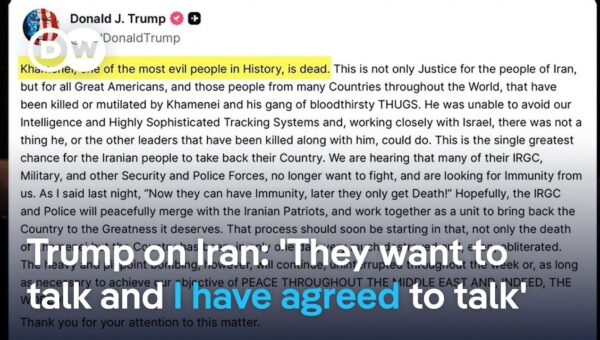
Trump Agrees to Talks with Iran After Major Strikes
President Donald Trump has agreed to talks with Iran's leadership following coordinated strikes that reportedly killed key figures, including the Supreme Leader. While Trump claims significant military successes, U.S. strategy remains unclear, and public opinion shows limited support for the actions amid rising American casualties.
Democrats Demand Clarity on Iran Strategy Amid Strike Concerns
Top Democrats are demanding clarity on President Trump's strategy in Iran, calling for an immediate War Powers vote amid concerns over escalating military actions. Lawmakers cite a lack of clear objectives, potential constitutional overreach, and insufficient diplomatic engagement as key reasons for their pushback.

MS NOW Reporter Details Unprecedented Call with Donald Trump
A reporter from MS NOW has detailed an exclusive phone conversation with former President Donald Trump. The call provided a rare, candid glimpse into Trump's current perspectives on national and international issues. This direct engagement highlights the ongoing influence of former presidents in political discourse.