Supreme Court Shields Trump Ally From Justice
The Supreme Court's decision to vacate Steve Bannon's conviction has sparked debate about fairness and political influence in the justice system. This move, following the DOJ's desire to drop the case, raises concerns about special treatment for Trump allies and potential misuse of taxpayer funds.

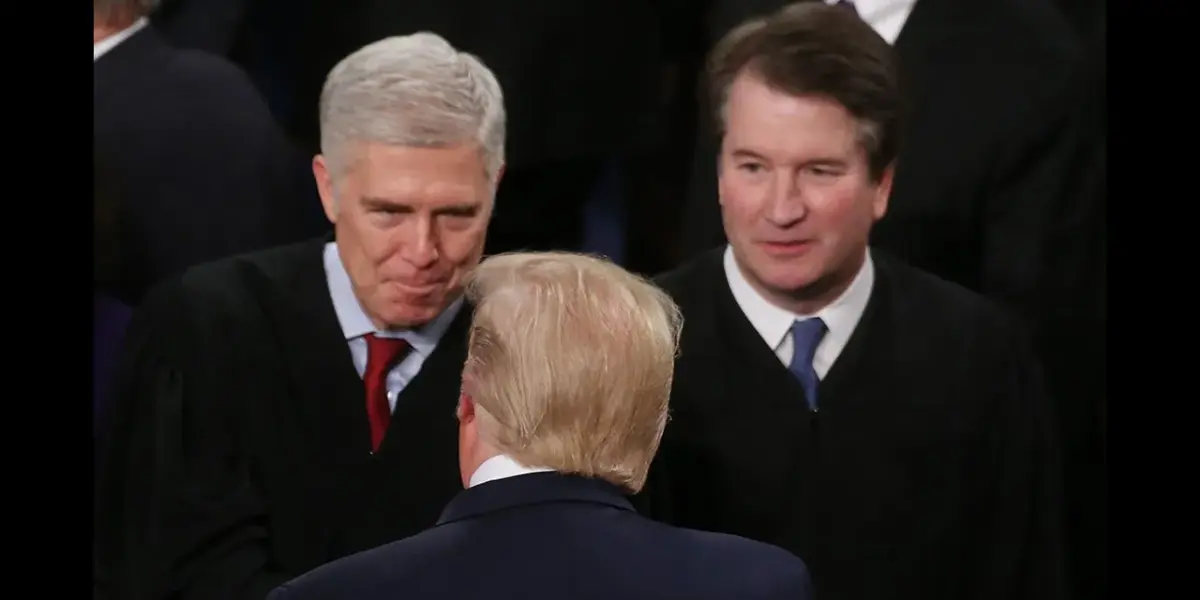
Supreme Court Shields Trump Ally From Justice
The U.S. Supreme Court recently made a decision that has raised serious questions about fairness and the legal process. The court essentially threw out an appeals court ruling that upheld Steve Bannon’s conviction. This move came after the Department of Justice, now under Donald Trump’s influence, said it wanted to dismiss Bannon’s case.
Steve Bannon was convicted of defying congressional subpoenas. He ignored two subpoenas, one asking for his testimony and another for documents related to a House investigation. The Department of Justice investigated, and a grand jury indicted him. He was found guilty by a jury and sentenced to four months in prison. Bannon served his sentence, and an appeals court later affirmed his conviction, agreeing that he was lawfully found guilty.
However, Bannon appealed to the Supreme Court. He argued that since the current Department of Justice, aligned with Donald Trump, intended to drop the case, the appeals court’s decision affirming his conviction should be thrown out. The Supreme Court agreed, issuing a brief, unsigned opinion. They vacated the lower court’s decision and sent the case back. This effectively means the conviction can now be dismissed.
A Favor for a Friend?
This decision has been called a “stunning move” and a “searing injustice” by legal analysts. They point out that thousands of convictions are affirmed each year. Few, if any, receive the kind of special treatment Bannon got. This action suggests a political ally of the former president received preferential treatment, even after being convicted and serving time.
The situation raises concerns about the integrity of the justice system. When a case is properly investigated, tried, and a sentence is served, the idea of undoing it simply because of a change in political power is deeply troubling. It appears to bypass the normal course of justice, leading some to question the Supreme Court’s authority in such a situation.
“The searing injustice of that and how there are thousands of convictions that are affirmed every year. None of them enjoy the kind of relief and the kind of favoritism that Steve Bannon just received…”
Historical Context and Legal Norms
For decades, the legal system has aimed for consistent application of the law. When someone is convicted and serves their sentence, that chapter is generally considered closed. The appeals process confirms the fairness of the trial and conviction. Bannon’s case, however, seems to break this pattern.
The Supreme Court’s ruling on presidential immunity, which stated a president cannot be held accountable for violating laws, has been cited as a potential factor. If the highest court suggests a president is above the law, it might embolden lower courts to act in ways that seem to favor the president’s allies. This is seen by some as leading the country toward a “banana republic” or a “rogue state” where laws are not applied equally.
Potential Financial Ramifications
Beyond simply dismissing the conviction, there’s a concern that Bannon might seek financial compensation. This follows a pattern seen with other Trump allies, like Michael Flynn. Flynn, after pleading guilty to lying to the FBI, had his case dismissed by Trump’s DOJ and later received a $1.25 million settlement from taxpayers. Bannon is reportedly preparing to seek millions from the government, arguing his prosecution was improper.
Peter Navarro, another former Trump official convicted of defying subpoenas, is also expected to follow a similar path. This raises fears of a “slush fund” for Trump’s associates, where taxpayer money is used to reward them for actions that led to their convictions. Legal experts suggest it’s possible, though not probable, that future administrations could try to claw back these funds.
Checks and Balances in Question
The ability of the Department of Justice to dismiss cases, especially with the court’s apparent approval, raises questions about checks and balances. While a judge must grant a motion to dismiss, there have been instances where judges felt they had limited power to refuse, even if they disagreed with the dismissal’s reasoning. This happened in the Michael Flynn case and a case involving New York Mayor Eric Adams.
In the Adams case, a judge even appointed an outside prosecutor to argue against dismissal. However, the judge ultimately dismissed the case with prejudice, meaning it couldn’t be brought back. This shows there’s some wiggle room, but the overall trend suggests a willingness to accommodate the Department of Justice’s requests, particularly when politically motivated.
Targeted Prosecutions and Future Recourse
The current climate has also seen numerous investigations and lawsuits targeting political opponents of Donald Trump. While many haven’t resulted in convictions, the process itself is costly and exhausting for those targeted. The question arises whether individuals facing such politically motivated actions by the DOJ will have recourse in the future.
Legal experts believe that if someone is vindictively prosecuted, they should have a legal claim. This is true even if the current administration is making “corrupt bargains” with its allies. It’s suggested that future administrations committed to the rule of law should pursue these claims to fight against such injustices.
Looking Ahead: A Troubling Trend?
The overall situation is described as operating “without a map” or “compass.” The fear is that this could lead to even more extreme actions, such as creating false evidence to prosecute political enemies. This would be “vindictive prosecution on steroids.” The hope is that voters will hold those responsible accountable at the polls, ensuring a return to a justice system that serves all Americans, not just political insiders.
Why This Matters
This case is significant because it touches on fundamental principles of justice and equality under the law. When high-profile individuals appear to receive special treatment, it erodes public trust in institutions like the Supreme Court and the Department of Justice. The potential for political influence to override legal processes sets a dangerous precedent. It suggests that loyalty may be valued over accountability, which is a hallmark of less democratic systems. The financial implications, where taxpayer money could be used to settle with individuals convicted of crimes, also represent a misuse of public funds and a reward for actions that undermined the rule of law. The future outlook depends heavily on how these legal and political battles unfold, and whether a commitment to justice can be restored.
Source: BREAKING: US Supreme Court does INSANE favor for Trump (YouTube)

Related Articles

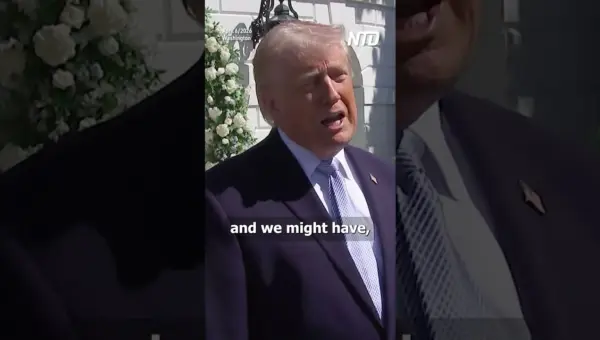
Trump Threatens Iran’s Destruction, Hints at Oil Seizure
Former President Donald Trump has issued severe threats against Iran, vowing to "obliterate" the country if it doesn't surrender. He also expressed a desire to seize Iran's oil resources, citing it as "there for the taking." These statements highlight a stark and aggressive foreign policy stance.
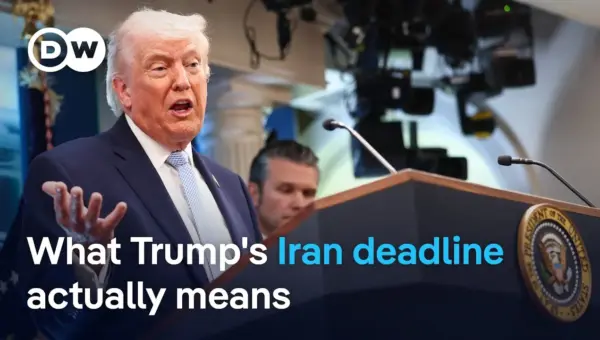
Iran Rejects Ceasefire; Trump’s Deadline Looms
Iran has rejected a U.S. proposal for a temporary ceasefire, demanding a permanent end to hostilities instead. President Trump's Tuesday deadline for reopening the Strait of Hormuz nears amidst escalating military actions and ongoing diplomatic efforts by regional powers.

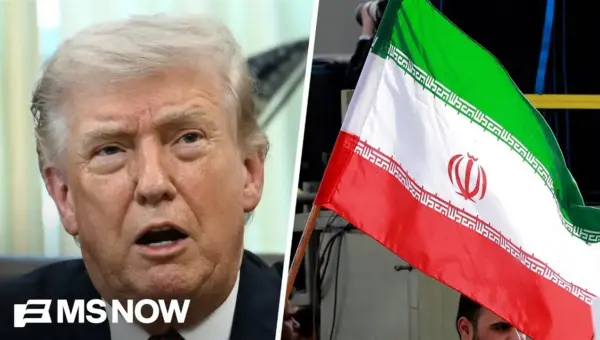
Trump Claims “Significant Step” in Iran Talks, But “Not Good Enough”
President Trump described Iran's latest proposal in talks as a "significant step" but "not good enough," while also renewing threats to strike Iranian infrastructure. Experts question the effectiveness of military threats and suggest alternative diplomatic strategies, as Iran signals it will not back down.