Supreme Court Ruling Sparks Tariff Turmoil and Trump’s Volatile Reactions
Former President Donald Trump's reactions to a recent Supreme Court ruling on tariffs have been described as erratic and contradictory. His public statements and social media posts reveal a pattern of predicting outcomes, attacking the court, and then implementing policies with apparent confusion and rapid reversals, leading to calls for his removal from office.

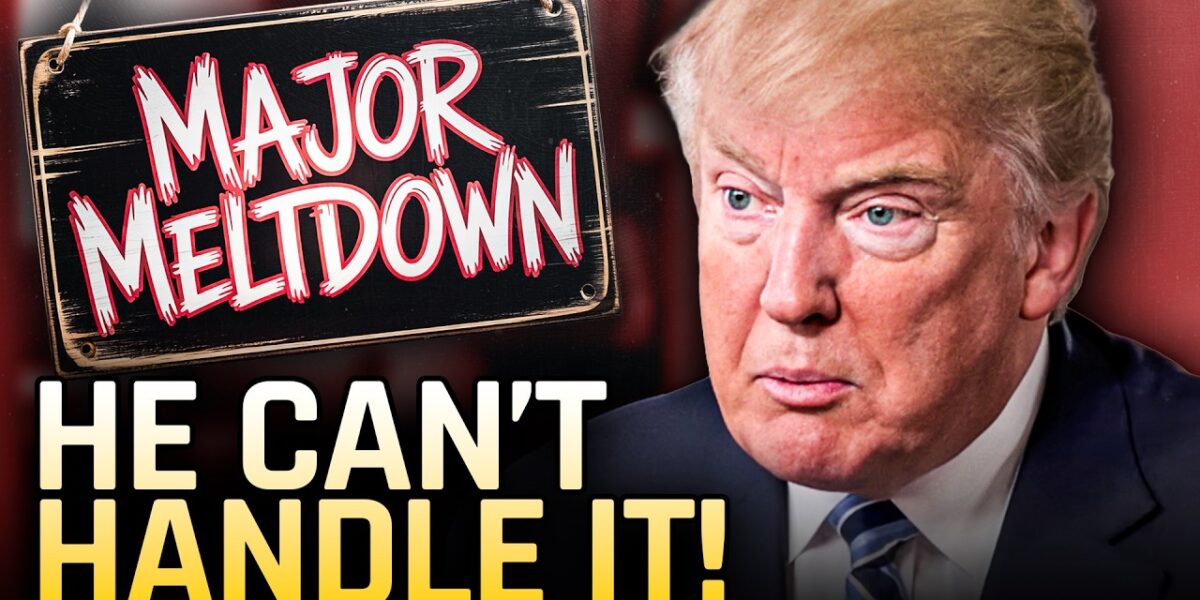
Supreme Court Ruling on Tariffs Triggers Unpredictable Responses from Former President Trump
A recent Supreme Court decision concerning the executive branch’s authority to impose tariffs has ignited a firestorm of reactions from former President Donald Trump, characterized by a series of public statements and social media posts that analysts are describing as erratic and contradictory. The ruling, which pertains to the President’s ability to levy certain tariffs under the Export Administration Act (EA), has seemingly prompted a volatile response from Trump, who predicted the outcome and then proceeded to act in ways that align with those predictions, albeit with significant confusion and apparent backtracking.
Predictions Come True: A Familiar Pattern of Response
During a live stream on Friday, observers noted a series of predictions made about Trump’s likely reaction to the Supreme Court’s ruling, which was released concurrently. These predictions included:
- Trump would frame the ruling as a threat to the United States.
- He would attack the Supreme Court justices.
- He would proceed to impose tariffs regardless of the ruling.
As events unfolded, all three predictions materialized, a sequence that, while perhaps predictable to many, underscores a consistent pattern in Trump’s public conduct when faced with legal or political challenges. The initial reaction came from an impromptu press conference at the White House, where Trump expressed strong dissatisfaction with the court’s decision.
Trump’s Initial Reaction: A Confused Defense of Tariffs
In his remarks, Trump articulated a complex and, according to critics, nonsensical argument about the ruling’s implications. He stated, “To show you how ridiculous the opinion is, the court said that I’m not allowed to charge even $1 to any country under the EA. I assume to protect other countries, not the United States, which they should be interested in protecting. But I am allowed to cut off any and all trade or business with that same country, even imposing a foreign country destroying embargo and do anything else I want to do to them. How nonsensical is that? They’re saying that I have the absolute right to license, but not the right to charge a license fee. What license has ever been issued with the right of to charge a fee? But now the court has given me the unquestioned right to ban all sorts of things from coming into our country, a much more powerful right than many people thought we had.”
He further added, “Our country is the hottest anywhere in the world. But now I am going in a different direction which is even stronger than our original choice.”
Commentators quickly pointed out the apparent lack of coherence in these statements. The assertion that the U.S. is the “hottest anywhere in the world” while simultaneously needing to adopt a “different direction which is even stronger” was seen as contradictory. Critics suggested that these rambling, stream-of-consciousness remarks indicated a state of high stress and potentially cognitive decline, with one observer bluntly stating, “we’re dealing with a man who has dementia.” The argument that the court granted him the right to ban trade but not charge a fee was also met with incredulity, as the core of the dispute revolved around the specific mechanisms and limitations of imposing tariffs and trade restrictions, not necessarily the ability to charge fees in all contexts.
Escalation on Truth Social: Tariffs Increased, Then Retracted
The perceived “meltdown” continued on social media. In a post on Truth Social, Trump initially seemed to suggest that the Supreme Court’s decision had, in fact, clarified and strengthened the President’s ability to regulate trade and impose tariffs. He wrote, “In actuality, while I am pretty sure they did not mean to do so, the Supreme Court’s decision today made a president’s ability to both regulate trade and impose tariffs more powerful and crystal clear rather than less. There will no longer be any doubt and the income coming in and the protection of our companies and country will actually increase because of this decision. Based on long-standing law and hundreds of victories to the contrary, the Supreme Court did not overrule tariffs. They merely overruled a particular use of the EA tariffs or or did tariffs. Yeah. The ability to block, embargo, restrict license or impose any other blah blah blah blah blah.”
This statement was immediately followed by an announcement of new tariffs: “Anyway, starting today, 10% global tariff.” This was a significant development, as it appeared to directly contradict the nuanced legal interpretation and potentially overstep the bounds that the Supreme Court ruling, however Trump interpreted it, might have set. The situation became even more convoluted when, by Saturday, Trump announced an increase:
“Extra 5% on top of the 10% he said Friday. So he’s he’s already not remembering what he initially imposed. Again, another random string of consciousness that makes no sense whatsoever.”
This rapid fluctuation and apparent memory lapse in tariff announcements further fueled concerns about Trump’s decision-making process and his grasp on the details of his own policy pronouncements.
Contradictory Calls for Unity and Political Purges
Adding another layer of bewildering behavior, Trump then issued a call for unity among Republicans on Saturday. He posted on Truth Social, “Republicans are so disloyal to themselves. Unite. Stick together and win. President DJT.” This plea for solidarity was quickly undermined by his subsequent post. Citing a “lack of support, in particular for the unbelievably successful tariffs imposed on foreign countries and companies,” Trump announced the withdrawal of his endorsement from Republican Congressman Jeff Herd of Colorado’s third district, fully endorsing a challenger, Hope Shppelman, instead.
The stark contrast between the call for unity and the immediate, aggressive political attack on a sitting Republican congressman was widely derided as hypocritical and self-defeating. Critics argued that this demonstrated an inability to maintain a consistent political strategy and highlighted a personal vendetta overriding any broader party goals. The extended post detailing Trump’s animosity towards Herd, juxtaposed with the earlier call to “stick together,” was described as “insane” and a clear act of “the opposite of what you said to do.”
Further Confusion on Supreme Court Powers and International Relations
The pronouncements continued into Sunday morning, with Trump again taking to Truth Social to discuss the Supreme Court ruling. He wrote, “The Supreme Court, which he put in all lowercase, and he said, ‘We’ll be using lowercase letters for a while based on a complete lack of respect of the United States accidentally and unwittingly gave me as president of the United States far more powers and strength than I had prior to their ridiculous, dumb, and very internationally divisive ruling.”
He reiterated his interpretation that the court had granted him broad powers to impose tariffs and licenses, while still expressing frustration over the perceived inability to charge fees. “For one thing, I can use licenses to do absolutely terrible things to foreign countries, especially those countries that have been ripping us off for many decades. but incomprehensibly according to the ruling can’t charge them a license fee. But all licenses charge fees. And why can’t the United States do so? You do a license to get a fee. The opinion doesn’t explain that, but I know the answer. The court has also approved other tariffs of which there are many and they can all be used in much more powerful and obnoxious ways with legal certainty than tariffs as initially he so he’s now threatening to just be obnoxious.”
The acknowledgment of intending to be “obnoxious” was seen as a disturbing admission of a desire to wield power punitively rather than strategically. The commentary suggested a lack of self-awareness regarding his previous actions, implying that his previous use of presidential power was not already perceived as “obnoxious.”
Concerns Over Rationality and the 25th Amendment
Trump’s commentary then veered into an attack on the Supreme Court, praising Justices Scalia, Leo, and Thomas for ruling in his favor in the dissent, while calling the majority “incompetent.” He then launched into a tangential and seemingly unhinged discussion about birthright citizenship and the 14th Amendment, linking it to the court’s supposed bias against the U.S. and in favor of countries like China.
“Our incompetent Supreme Court did a great job for the wrong people, and for that they should be ashamed of themselves, but not the great three, Scalia, Leo, and Thomas, who of course ruled in his favor in the descent.” Uh the next thing you know they will rule in favor of China and others who are making an absolute fortune on birthright citizenship by saying the 14th amendment was not written to take care of the babies of slaves which it was proven to by the exact timing of its construction filing and ratification which perfectly coincided with the end of the Civil War. How much better can you do than that? I don’t know. Maybe you could say something that actually makes sense because what the hell are you like where did where are you going? Where are you going with this? Nobody knows. In fact, I’m not even going to finish it. I’m not going to finish it because there is no need to finish it. He’s insane.”
The abruptness and lack of logical progression in these statements led to strong calls for the invocation of the 25th Amendment. The author of the original transcript argued that Trump’s “hellbent on continuing this policy that has destroyed the US economy that it’s driven him to complete and total madness.” The argument was made that if there was ever a moment for the 25th Amendment, it was now, and that any cabinet members refusing to act would be derelict in their duty and should be impeached.
Broader Implications: Economic Policy and Political Stability
The series of events highlights significant concerns regarding the predictability and stability of former President Trump’s policy positions and public communication. His administration’s use of tariffs as a foreign policy tool was a hallmark of his presidency, often justified as a means to protect American industries and workers. However, critics frequently argued that these tariffs harmed American consumers through increased prices and disrupted supply chains, while also leading to retaliatory tariffs from other nations that hurt U.S. exporters.
The Supreme Court’s ruling, whatever its precise legal interpretation, has become a focal point for Trump’s characteristic blend of legal interpretation, aggressive rhetoric, and policy pronouncements. The rapid escalation and de-escalation of tariff threats, coupled with contradictory political maneuvers, raise questions about the practical implications for international trade relations and domestic economic policy should he seek office again. The volatile nature of these reactions also underscores broader concerns about the temperament and fitness for office, particularly when combined with unsubstantiated claims and erratic communication patterns.
The legal nuances of the Supreme Court’s decision itself are complex, dealing with the balance of power between the executive and legislative branches regarding trade regulation. However, Trump’s public engagement with the ruling has largely overshadowed the legal specifics, transforming it into a platform for his personal grievances and policy assertions. The ongoing discourse surrounding these events will likely continue to shape perceptions of Trump’s leadership style and his potential impact on American governance and global affairs.
Source: Trump FALLS APART After Tariff Failure (YouTube)

Related Articles
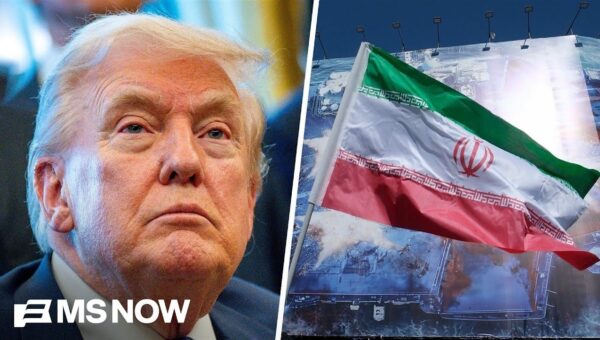
Trump Open to Iran Talks After Attacks, Shifts on Regime Change
President Trump has agreed to negotiate with Iran's new leadership following recent U.S. and Israeli attacks, signaling a potential shift from his regime change objective. The move has drawn scrutiny from former officials who question the strategic coherence of U.S. policy.
Trump: Iran Strikes Ahead of Schedule, Expects ‘Great Deal for World’
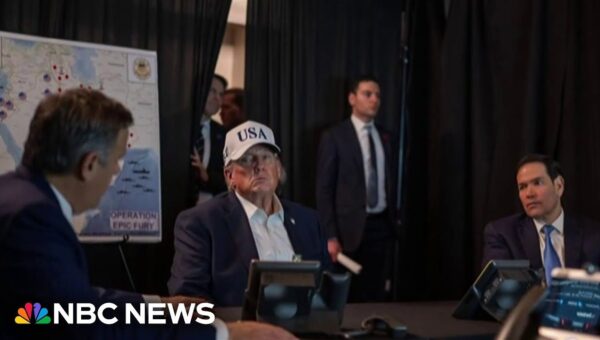
Three U.S. service members have been killed amid escalating conflict with Iran, President Trump confirmed. He stated that strikes are ahead of schedule, with senior Iranian leaders killed, and expressed optimism for a "great deal for the world" despite ongoing talks with Iranian officials.
Trump Agrees to Talks with Iran After Major Strikes
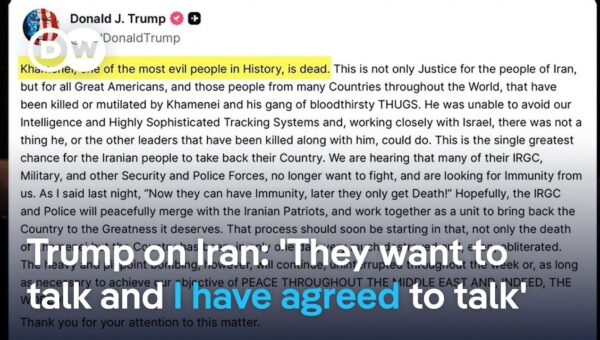
President Donald Trump has agreed to talks with Iran's leadership following coordinated strikes that reportedly killed key figures, including the Supreme Leader. While Trump claims significant military successes, U.S. strategy remains unclear, and public opinion shows limited support for the actions amid rising American casualties.