Supreme Court Rejects Trump Tariffs, Sparking Uncertainty
The U.S. Supreme Court has struck down a significant portion of President Trump's tariffs, ruling them illegal and potentially triggering billions in refunds. The decision curtails executive power, creates trade uncertainty, and poses fiscal challenges.

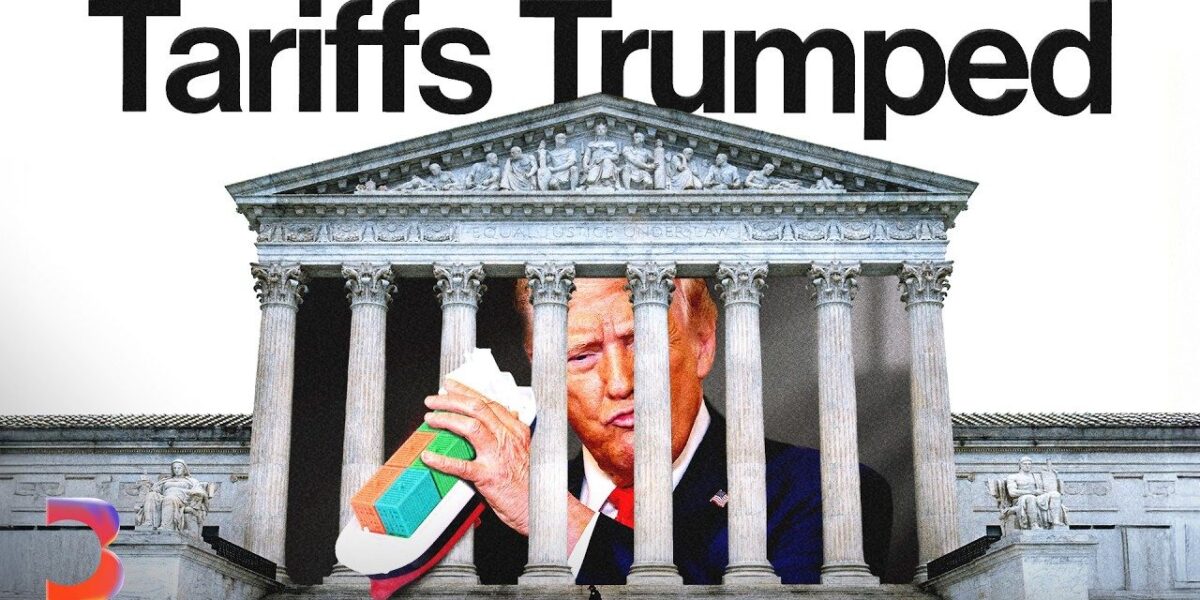
Supreme Court Rejects Trump Tariffs, Sparking Uncertainty
In a significant legal and economic development, the U.S. Supreme Court has delivered a major blow to President Donald Trump’s signature tariff policy, ruling that a substantial portion of tariffs implemented during his administration were illegal. This decision effectively invalidates approximately two-thirds of the tariffs enacted, marking a critical setback for the former president’s economic agenda and sending ripples of uncertainty through global trade relationships.
Tariff Authority Questioned
The core of the legal challenge centered on the International Emergency Economic Powers Act (IEEPA), a law that grants the president authority to regulate commerce in response to a national emergency. President Trump had asserted that IEEPA provided him broad power to impose tariffs of any level on goods from any nation. However, the Supreme Court’s ruling clarified that this interpretation was too expansive, effectively curtailing the executive branch’s unilateral power to enact such broad trade measures.
Potential for Massive Refunds
Adding to the complexity, the Supreme Court’s decision leaves open the question of what happens to the substantial revenue already collected through these tariffs. Estimates suggest that the U.S. government collected approximately $170 billion in tariffs under the now-questioned authority. While the process of assessing and potentially refunding these unconstitutional collections could be intricate, historical precedents show that tariff refunds have occurred. However, the sheer scale of this situation is described as unprecedented, potentially constituting “the mother of all tax refunds.” The administration had reportedly relied on this tariff revenue to help offset the national deficit, and its potential return to importers creates a significant fiscal challenge.
Economic Impact on Businesses and Trade Partners
The ruling has created immediate “tariff whiplash” for U.S. trading partners. The European Union, for instance, has already moved to freeze the implementation of its side of a trade deal with the U.S. in response. While some nations might see immediate relief from lower tariffs, others, such as Vietnam, could face disadvantages. Vietnam, despite potentially benefiting from lower tariffs, loses a comparative advantage it held over China due to the previous tariff structure. Conversely, China is likely the primary beneficiary of this ruling, as it alleviates pressure from tariffs that had reshaped global supply chains.
Domestically, the impact on businesses and consumers is multifaceted. The assertion that foreign countries pay for tariffs has proven largely inaccurate, with evidence suggesting that 90-95% of tariff costs are passed through to U.S. importers and ultimately consumers. This contradicts one of the stated goals of reducing the U.S. trade deficit. Data from 2025 indicated a goods trade deficit of around $1.2 trillion, a figure nearly identical to the previous year, suggesting tariffs had minimal impact on the aggregate deficit and primarily served to redirect trade flows rather than reduce overall imbalances.
Manufacturing Sector Struggles
A key promise of the tariff policy was to revitalize U.S. manufacturing. However, ten years into the trend, the manufacturing sector shows little sign of significant recovery. In the past year alone, the U.S. lost over 80,000 manufacturing jobs, even as tariffs were in place. Manufacturers often rely on imported components, and increased costs due to tariffs can hinder their ability to expand and hire. Analysis of industrial production reveals that sectors facing higher tariffs, such as autos and metals, experienced slower growth compared to lower-tariffed industries like pharmaceuticals and electronics. Experts suggest that technological advancements, rather than trade policy, are the primary drivers of the long-term decline in manufacturing employment.
Geopolitical Ramifications and Political Landscape
Beyond economic implications, the Supreme Court’s decision significantly curtails President Trump’s ability to use tariffs as a tool for geopolitical leverage. This authority had been employed to influence foreign policy decisions, including pressuring India on Russian oil purchases and intervening in domestic politics in countries like Brazil. The loss of this immediate and broad tariff-imposing power limits the U.S.’s capacity to exert pressure on other nations. This development occurs amidst heightened scrutiny of U.S. commitments to international alliances, such as NATO, and broader concerns about global stability.
The timing of the ruling, preceding U.S. midterm elections, adds a political dimension. Polls indicate that tariffs are unpopular and are associated with rising consumer prices. This could pose a challenge for Republican candidates who have supported the policy. Furthermore, Congress must approve the extension of any tariffs beyond the initial 150-day period allowed under the new executive order, introducing a crucial legislative hurdle.
Fiscal Reckoning and Market Confidence
The potential for large-scale tariff refunds presents a looming fiscal reckoning. The loss of tariff revenue, which the administration had counted on to help finance the deficit, could widen the existing budget gap. This comes at a time when the U.S. has consistently run deficits, exacerbated by pandemic-related spending and expansionary fiscal policies. If this revenue stream disappears, the fiscal deficit could increase substantially, raising questions about the bond market’s reaction and the overall fiscal health of the United States.
More broadly, a growing sense of unease about U.S. governance, fueled by challenges to institutions like the Supreme Court and the Federal Reserve, could erode confidence in the U.S. dollar as the world’s reserve currency. This erosion of investor confidence is a significant long-term risk that could have profound global economic consequences.
Future Uncertainty
The Supreme Court’s decision is not an isolated event but signals the potential for broader legal challenges regarding the executive branch’s use of presidential and emergency powers. The ramifications extend to the nature of U.S. governance, democracy, and constitutional interpretation. With maximum uncertainty surrounding the future direction of U.S. trade policy and the executive’s authority, businesses and investors face a complex and unpredictable landscape.
Market Impact
The Supreme Court’s ruling against President Trump’s broad tariff authority creates significant market uncertainty. The potential for $170 billion in refunds could impact government finances and create a fiscal hole. The redirection of trade flows and the loss of comparative advantages for certain countries, like Vietnam, will necessitate adjustments. Businesses reliant on imported components may see cost pressures ease, but the overall impact on manufacturing job growth remains questionable, with technology cited as a more dominant factor. Geopolitical leverage through tariffs is diminished, potentially altering international relations. The broader impact on investor confidence in U.S. institutions and the dollar is a key long-term consideration.
Source: How Trump's Tariffs Got a Reality Check (YouTube)

Related Articles

Bondi’s Court Blunder Could Cost US Billions
A court filing from Pam Bondi's Department of Justice may have committed the U.S. to refunding $170 billion in tariffs. This legal promise was made during challenges to Trump-era tariffs, with the DOJ assuring the court that collected funds would be repaid if the tariffs were overturned.
Trump’s Tariffs Linked to Stagnant Job Growth in First Year Back
The U.S. economy saw minimal job growth in 2025, adding just 181,000 jobs, a figure attributed to business uncertainty fueled by Donald Trump's volatile tariff policies. While January 2026 showed gains, they were heavily concentrated in healthcare, masking broader economic weakness and significant layoffs.

Supreme Court Reins In Presidential Tariff Power
The U.S. Supreme Court has ruled that the President cannot use emergency powers to impose tariffs, potentially requiring billions in collected revenue to be repaid to corporations. This decision limits executive authority in trade policy.