Supreme Court Hears Challenge to Birthright Citizenship
The U.S. Supreme Court has heard arguments on a challenge to birthright citizenship, a key part of President Trump's immigration agenda. The case questions if children born in the U.S. to parents without legal status should automatically be citizens. The ruling could impact millions and redefine a long-standing constitutional principle.

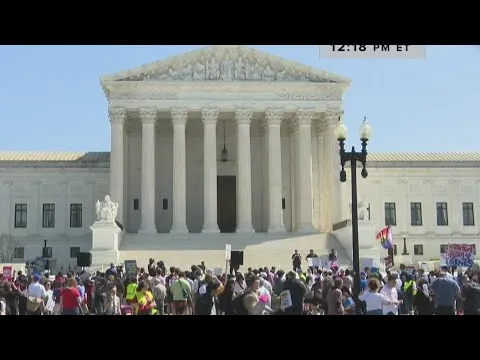
Supreme Court Considers Birthright Citizenship Challenge
The U.S. Supreme Court recently heard arguments on a major challenge to birthright citizenship. This issue is a key part of President Trump’s immigration policy. The case questions whether children born in the U.S. to parents who are in the country illegally or on temporary visas should automatically become citizens. President Trump himself attended some of the oral arguments, a highly unusual step for a sitting president.
Arguments and Judicial Questions
For about two hours, the Supreme Court justices questioned the Solicitor General about the Trump administration’s view of the 14th Amendment. This amendment is the basis for birthright citizenship. The administration’s interpretation faced skepticism from both conservative and liberal justices. Some justices pointed out that the administration’s view could have wide-ranging effects not intended by those who wrote the amendment in the 19th century.
“I think it shows that they made a mess of the provision,” one justice noted, referencing a past dissenting opinion. This suggests concerns that the current interpretation complicates a long-standing rule.
The justices discussed how the world has changed since the 14th Amendment was created. Today, people can travel easily across borders. This raises new questions about who should be considered a citizen based on where a child is born. The debate touched on whether the original intent of the amendment focused on people living permanently in the U.S. and unable to become citizens through naturalization. It was also noted that historical cases sometimes emphasized specific facts, like the background of immigrant groups, to help the public accept the citizenship rule.
Background of the Case
These arguments grew out of an executive order from President Trump. This order aimed to change how birthright citizenship is applied. The President has argued that children born to parents who are not legally present in the U.S. should not automatically receive citizenship. The Supreme Court’s decision will determine if this executive order is constitutional.
Concerns and Potential Impact
Critics of the administration’s position, including groups like the ACLU, voiced strong opposition. They argue that the citizenship of millions could be affected. The ACLU stated that the case is about human beings and that anyone born in the United States is an American citizen. This case has drawn significant attention, with many watching closely to see how the Court will rule.
Global Impact
The Supreme Court’s decision on birthright citizenship could have significant implications beyond U.S. borders. Birthright citizenship, or jus soli, is a principle that has influenced immigration and national identity discussions worldwide. If the U.S. were to alter this long-standing interpretation, it could impact how other nations view citizenship laws. It might also affect international discussions on migration and the rights of children born to non-citizen parents. The ruling could set a precedent, influencing legal and political debates in other countries grappling with similar issues of immigration and belonging.
Historical Context
Birthright citizenship in the United States is largely based on the 14th Amendment, ratified after the Civil War in 1868. Section 1 states: “All persons born or naturalized in the United States, and subject to the jurisdiction thereof, are citizens of the United States and of the State wherein they reside.” For decades, this has been understood to include children born to undocumented immigrants. The Supreme Court’s 1898 ruling in *United States v. Wong Kim Ark* affirmed that children born in the U.S. to Chinese parents who were legal residents were citizens. The current case challenges this long-standing interpretation, seeking to limit the scope of the 14th Amendment based on the legal status of the parents.
Economic Considerations
While the transcript focuses on the legal arguments, the economic implications of birthright citizenship are also significant. Children born in the U.S., regardless of their parents’ status, are U.S. citizens. This grants them access to education, healthcare, and eventually the workforce. Changes to birthright citizenship could create a larger population of individuals with uncertain legal status, potentially impacting future economic contributions and social service needs. The administration’s immigration policies, including this challenge, are often framed within broader economic goals, such as managing labor markets and social welfare systems.
Future Scenarios
The Supreme Court now faces several possible outcomes. They could uphold the current understanding of birthright citizenship, affirming that all individuals born in the U.S. are citizens. Alternatively, they could adopt a narrower interpretation, potentially excluding children born to parents without legal status or on temporary visas. A third possibility is a ruling that addresses the specific circumstances of the case without broadly redefining birthright citizenship for all situations. The complexity of the issue and the differing views among justices suggest that the final decision will be carefully considered and could have lasting effects.
Source: Supreme Court weighs arguments on birthright citizenship | NewsNation Live (YouTube)

Related Articles

GOP Lawmaker Demands ‘Aggressive’ AG Replacement
GOP lawmakers are divided over border security funding as one representative calls for a more "aggressive" Attorney General. The debate over funding and the upcoming replacement for AG Pam Bondi highlight internal party struggles. Meanwhile, concerns about birthright citizenship and FEMA's low disaster fund add to the political landscape.

Trump Moves to Pay DHS Staff Amid Funding Stalemate
President Trump plans to sign an executive order to pay DHS employees amid a prolonged shutdown. This action comes as the department faces funding challenges and a review of its contracting policies. Expert Andrew Arthur discusses the need for congressional action and the push for greater accountability and efficiency within DHS.

Iran’s Regime Faces Pressure as US Focuses Inward
The U.S. faces a dual challenge: navigating complex foreign policy in Iran while grappling with deep domestic political divisions. The administration's strategy towards Iran is under scrutiny, with questions about its clarity and effectiveness. Simultaneously, the Supreme Court is hearing a pivotal case on birthright citizenship, potentially reshaping constitutional law.