Supreme Court Delivers ‘Massive Setback’ to Trump’s Tariff Strategy as President Announces Global 10% Tax
President Trump announced a 10% global tariff following a Supreme Court defeat on his tariff policies, launching unprecedented attacks on the judiciary in a 25-minute press conference. The ruling represents a significant constitutional setback, forcing the administration to use limited executive authority with a 150-day expiration period.

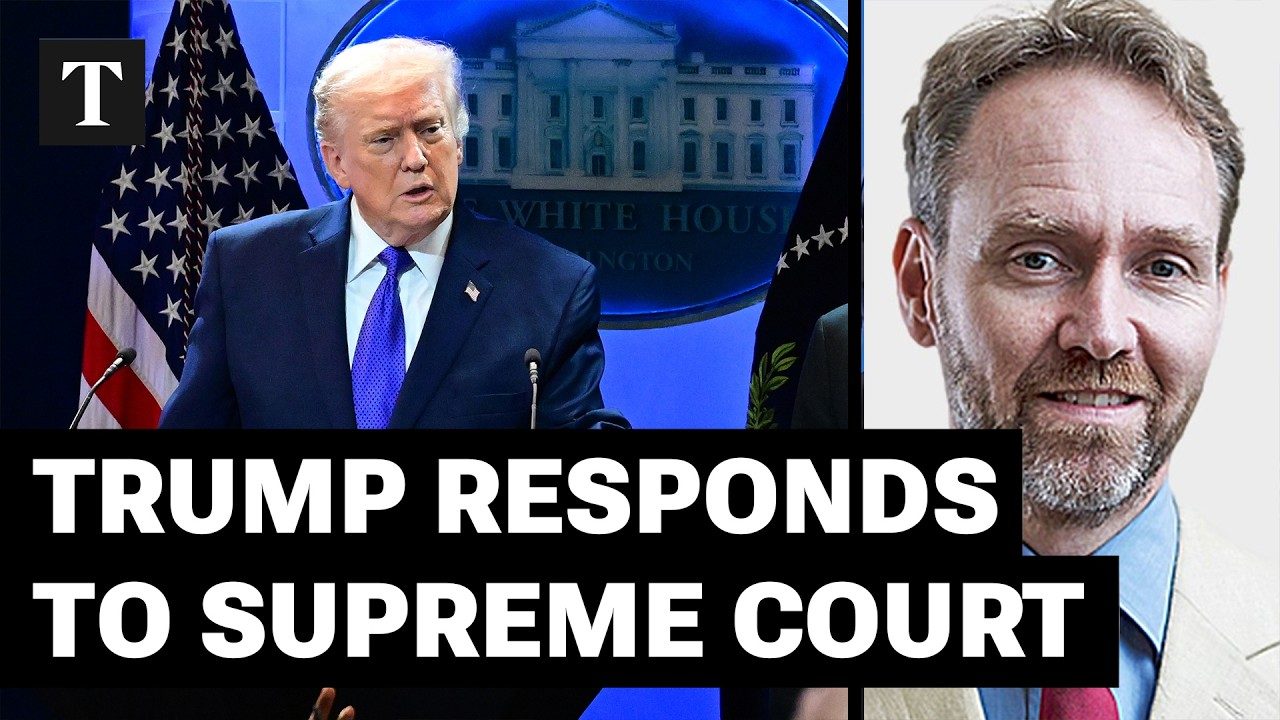
President Donald Trump suffered a significant legal defeat as the Supreme Court ruled against his tariff policies, prompting an extraordinary 25-minute press conference where he launched unprecedented attacks on the judiciary and announced sweeping new trade measures.
Supreme Court Ruling Sparks Presidential Fury
In a rare display of presidential criticism toward the nation’s highest court, Trump expressed his frustration in stark terms: “The Supreme Court’s ruling on tariffs is deeply disappointing and I’m ashamed of certain members of the court, absolutely ashamed for not having the courage to do what’s right for our country.”
The president specifically thanked Justices Thomas, Alito, and Kavanaugh “for their strength and wisdom and love of our country,” while suggesting that “Democrats on the court are thrilled” and alleging that “foreign countries that have been ripping us off for years are ecstatic.”
Immediate Response: 10% Global Tariff Implementation
Responding to the judicial setback, Trump announced the immediate implementation of a 10% global tariff “over and above normal tariffs” using Section 122 authority. This move represents a significant shift in trade policy, though experts suggest it may actually reduce the burden on many trading partners.
According to David Charter, The Times’s assistant US editor, this development is “a massive setback for Trump” that represents “an admission that he’s been hurt and defeated by this ruling.” Charter noted that the 10% flat rate actually reduces tariffs for most countries, with the notable exception of Britain, which had previously negotiated what it considered a favorable 10% rate.
Legal and Constitutional Implications
The Supreme Court’s decision centered on fundamental questions of separation of powers, determining what authority rests with the executive branch versus the legislature and judiciary. Monica Gorman, former member of President Biden’s National Economic Council, emphasized that “the court spoke very clearly” on these constitutional boundaries, even if it wasn’t “the answer the president wanted to hear.”
Trump’s attacks on the judiciary represent an unprecedented escalation in presidential criticism of the Supreme Court. His allegations that the court has been “swayed by foreign interests” particularly raised concerns among constitutional experts about the dangerous precedent of undermining judicial independence.
Economic Reality Behind the Rhetoric
Despite Trump’s claims that tariffs have made the “US economy boom,” economic analysts present a more nuanced picture. Gorman described the current economic situation as “a two-track economy” with strong top-line numbers but underlying concerns, including “struggling mortgage delinquencies and loan delinquencies among the less wealthy consumers.”
Charter challenged Trump’s selective use of trade statistics, noting that while the president cited a 78% improvement in trade balance figures, these represented carefully chosen data points comparing October figures to January. More recent data from November and December show “the trade balance is once again widening,” suggesting the tariff strategy’s limitations.
International Implications and Future Uncertainty
The Section 122 tariffs come with a built-in expiration date of 150 days, creating uncertainty for businesses through July. This time limitation means Trump’s administration will need to develop additional strategies, potentially including new Section 301 investigations that tend to be more targeted toward specific countries and industries.
International partners, particularly Canada, have been vocal critics of the tariff policies. Charter referenced Canadian Prime Minister Mark Carney’s speech at Davos, where he called for “middle countries” to “band together” against what he characterized as an administration that “was a reliable partner but no longer is.”
Political and Economic Strategy Moving Forward
The tariff announcement appears to serve as both economic policy and political messaging. Charter observed that Trump’s press conference seemed designed to generate “sound bites tonight on the news and on social media that he in fact has come out of this in a strong position, which he certainly has not.”
The president’s promise that foreign countries “won’t be dancing for long” suggests additional trade actions are being planned, though the specific nature and timing of these measures remain unclear.
Constitutional Concerns and Democratic Norms
Legal experts have expressed particular concern about Trump’s direct attacks on Supreme Court justices, with some calling it an unprecedented breach of presidential norms regarding judicial independence. The president’s suggestion that the court has been influenced by foreign lobbying represents a serious allegation against the integrity of the judicial system.
As the administration works within the 150-day window provided by Section 122 authority, businesses and international partners are preparing for continued uncertainty in trade policy. The Supreme Court’s ruling has effectively forced Trump to rely on more limited executive tools, potentially constraining his broader trade agenda and requiring alternative approaches to achieve his stated economic objectives.
Source: Supreme Court Ruling ‘Massive Setback For Trump’, As He Announces 10% Global Tariff | David Charter (YouTube)

Related Articles

Bondi’s Court Blunder Could Cost US Billions
A court filing from Pam Bondi's Department of Justice may have committed the U.S. to refunding $170 billion in tariffs. This legal promise was made during challenges to Trump-era tariffs, with the DOJ assuring the court that collected funds would be repaid if the tariffs were overturned.


Germany’s Export Powerhouse Faces Unprecedented Challenges
Germany's 'Made in Germany' export model faces significant challenges due to shifting global markets and intensified competition from China. Factors like state-backed advantages and a non-level playing field are testing the long-standing economic prowess of Europe's largest economy.

Supreme Court Reins In Presidential Tariff Power
The U.S. Supreme Court has ruled that the President cannot use emergency powers to impose tariffs, potentially requiring billions in collected revenue to be repaid to corporations. This decision limits executive authority in trade policy.