Supercomputer Predicts Your Choice in Million-Dollar Paradox
Newcomb's Paradox, a thought experiment involving a supercomputer predicting your choices, divides rational minds on whether to take one or both boxes of potential winnings. It challenges fundamental concepts of free will and decision-making.


The Million-Dollar Enigma: Supercomputer’s Prediction Divides Rational Minds
Imagine walking into a room where a supercomputer, renowned for its near-perfect ability to predict human choices, has laid out a peculiar challenge. On a table sit two boxes: one open, containing $1,000 in cash; the other, a sealed mystery box. The supercomputer, having already made a prediction about your decision before you even entered, offers you a choice: take both boxes, or take only the mystery box. The twist? If the supercomputer predicted you’d take both, the mystery box is empty. But if it predicted you’d take only the mystery box, it holds $1 million. This mind-bending scenario, known as Newcomb’s Paradox, has stumped philosophers and scientists for decades, revealing a deep divide in how we define rationality and make decisions.
The Two Camps: One-Boxers vs. Two-Boxers
The paradox presents a stark choice, leading to two distinct camps of decision-makers: the ‘one-boxers’ and the ‘two-boxers.’
The One-Boxer’s Rationale: Trusting the Predictor
One-boxers argue that the supercomputer’s accuracy is paramount. Believing in its almost infallible prediction, they reason that if the computer predicted they would take only the mystery box, then that box must contain $1 million. Their decision is based on ‘evidential decision theory,’ where the act of choosing one box is seen as evidence of the computer’s correct prediction. By choosing only the mystery box, they aim to secure the $1 million, accepting the $1,000 as a lesser outcome they must forgo. This approach aligns with the idea that the supercomputer’s past successes with thousands of individuals are a strong indicator of its ability to predict their own choice correctly.
The Two-Boxer’s Rationale: Dominance and Causality
Two-boxers, on the other hand, focus on the immediate consequences of their actions, employing ‘causal decision theory.’ They argue that the boxes have already been set up by the supercomputer before they made their choice. Therefore, their current decision cannot retroactively change what is inside the mystery box. Regardless of whether the computer predicted them to take one or two boxes, they reason that they are always better off taking both. If the $1 million is in the box, taking both yields $1,001,000 instead of $1 million. If the box is empty, taking both yields $1,000 instead of nothing. This strategy, known as ‘strategic dominance,’ suggests that taking both boxes is always the superior choice in terms of maximizing potential gain in the moment.
Historical Context: A Philosophical Conundrum
Newcomb’s Paradox was formally introduced by physicist William Newcomb in 1969 and later popularized by philosopher Robert Nozick in 1974. It challenges fundamental assumptions about free will, causality, and rationality. The paradox highlights a conflict between two seemingly sound principles of decision-making: trusting statistical evidence of a predictor’s accuracy versus acting on the belief that one’s current choices cannot alter past events. Polls, including one by The Guardian in 2016 surveying over 31,000 people, show a near even split, with 53.5% favoring the one-box strategy and 46.5% the two-box strategy. A Veritasium audience poll of over 24,000 respondents showed an even stronger preference for the one-box approach, with two-thirds of participants choosing it.
Beyond the Paradox: Free Will and Rationality
The implications of Newcomb’s Paradox extend far beyond a hypothetical thought experiment. It forces us to confront profound questions:
- Does free will exist? If a perfect predictor exists, does it imply that our choices are predetermined, and thus free will is an illusion? The paradox suggests that if a predictor is 100% accurate, then no action taken after the prediction can alter the outcome, raising questions about the nature of agency.
- What does it mean to be rational? The paradox demonstrates that two individuals, both employing logical reasoning, can arrive at diametrically opposed conclusions. This suggests that rationality might not be a single, objective standard but can depend on one’s foundational beliefs about causality and evidence.
- Is there an ideal way to act? The paradox implies that sometimes, to achieve the best outcome, one might need to act in a way that seems irrational in the immediate context, such as pre-committing to a less advantageous choice.
Real-World Parallels: Deterrence and Cooperation
The principles at play in Newcomb’s Paradox have striking parallels in real-world scenarios, particularly in game theory and international relations:
- Mutually Assured Destruction (MAD): During the Cold War, the strategy of MAD involved the pre-commitment to retaliate with overwhelming force in the event of a nuclear attack. This commitment, though leading to a potentially catastrophic outcome if triggered, served as a powerful deterrent, preventing initial attacks. The ‘rational’ choice for a president facing an imminent attack might be to not retaliate to save lives, but the pre-commitment to retaliate is what maintained peace.
- The Prisoner’s Dilemma: In a one-off Prisoner’s Dilemma, defecting is the rational individual choice. However, in repeated interactions, cooperation becomes the rational strategy for long-term benefit and societal stability. This suggests that the definition of rationality can shift depending on the context and the long-term implications.
- Game of Chicken: Similar to MAD, the game of chicken involves two drivers heading towards each other. The optimal strategy is to appear unwilling to swerve, thus forcing the opponent to yield. This involves a form of pre-commitment to a dangerous path to achieve a better overall outcome.
What Comes Next?
Newcomb’s Paradox remains a potent tool for exploring the complexities of decision-making. While the debate between one-boxers and two-boxers continues, the enduring value of the paradox lies in its ability to illuminate the philosophical underpinnings of our choices. It encourages us to question our assumptions about causality, free will, and what it truly means to be rational. The challenge posed by the supercomputer is not just about winning money; it’s about understanding the very nature of decision-making and its implications for how we navigate the world, from personal choices to global strategies.
Source: On This Problem Rational People Do Worse (YouTube)

Related Articles


Webb Telescope Unveils Hidden Water Worlds in Distant Galaxy
The James Webb Space Telescope has detected significant amounts of water vapor in a galaxy located 12.5 billion light-years away. This discovery provides crucial insights into the conditions of the early universe and the prevalence of water, a key ingredient for life.

Black Holes: 10 Years of Cosmic Mysteries Unraveled
For ten years, questions about black holes have dominated public curiosity. A new 10-hour compilation reveals fascinating insights into their formation, behavior, and cosmic role, from stellar remnants to galactic centers.
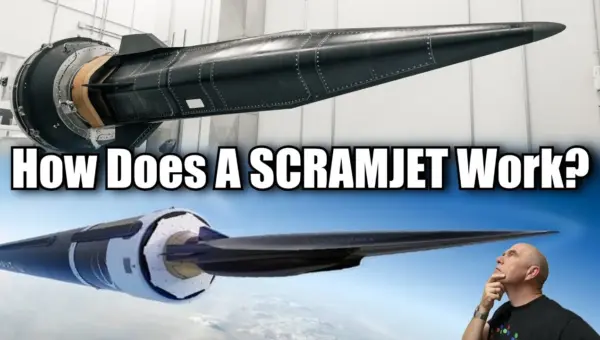
Hypersonic Scramjet Engine Flies at Blistering Mach 7 Speed
Australia's Dart AE vehicle, powered by a 3D-printed, hydrogen-fueled scramjet, has successfully flown at speeds exceeding Mach 7. This achievement marks a significant advancement in hypersonic air-breathing propulsion, building on decades of research and testing.