Sun Is Alone: Gaia and WISE Rule Out Stellar Companion
New data from NASA's WISE telescope and the European Space Agency's Gaia mission confirms our Sun is not part of a binary star system. Scientists also explore the challenges and prospects of lunar bases, from internet speeds to base locations, and ponder humanity's place in the vast, potentially inhabited universe.


Sun Is Alone: Gaia and WISE Rule Out Stellar Companion
For decades, scientists have pondered a curious question: could our Sun have a hidden partner? The idea that our star might be part of a binary system, orbiting another star, has long captured imaginations. However, thanks to powerful space telescopes like WISE and Gaia, we now have a much clearer answer: our Sun appears to be flying solo through the Milky Way galaxy.
Searching for a Shadowy Twin
The concept of a binary Sun isn’t entirely new. Astronomers have observed many wide binary star systems, where two stars are separated by vast distances, sometimes tens of thousands of astronomical units (AU). An AU is the distance between the Earth and the Sun, about 93 million miles. The closest star to us, Proxima Centauri, is over 4 light-years away, and it’s a red dwarf so faint you can’t see it without a telescope. Even fainter are brown dwarfs, sometimes called “failed stars,” which are even harder to detect.
The challenge in finding a potential stellar companion to our Sun lies in its faintness and immense distance. If such a star existed, it would likely be a dim red dwarf or a brown dwarf, making it incredibly difficult to spot against the backdrop of countless other stars.
WISE Telescope’s Infrared Gaze
Enter the Wide-field Infrared Survey Explorer (WISE) telescope, launched by NASA about 15 years ago. WISE was designed to scan the entire sky in infrared light. This type of light is heat, allowing WISE to detect objects that are too cool or faint to be seen in visible light. Astronomers used WISE to search for dim objects like giant planets in the outer reaches of our solar system or brown dwarfs in our cosmic neighborhood.
One of the theories WISE helped to test was the idea of a “Nemesis” star or a large planet that might be on a wide orbit around our Sun. Such an object, if it existed and periodically disturbed the Oort Cloud (a distant shell of icy bodies), could potentially send comets hurtling towards Earth, explaining past extinction events. However, WISE’s sensitive infrared vision scanned the sky and found no evidence of any brown dwarfs or Jupiter-sized planets within about 10,000 AU of us. This distance is roughly a quarter of the way to Proxima Centauri.
The WISE data placed firm limits on the size and distance of any potential companion. If a planet-sized object were lurking out there, it would have to be smaller than Jupiter and potentially closer to us, like the hypothetical Planet Nine. But even then, WISE’s observations constrain its possible size and location.
Gaia’s Precision Mapping
The second crucial instrument in solving this mystery is the Gaia mission, a European Space Agency project. Launched in 2013, Gaia’s mission is to create the most accurate and comprehensive 3D map of the Milky Way galaxy. It precisely measures the positions, distances, and movements of about a billion stars, especially those nearby.
Gaia’s precision is astonishing. It can measure the position of a star with the accuracy equivalent to seeing the width of a human hair from 1,000 kilometers away. This incredible capability allows scientists to track the exact paths of stars as they move through the galaxy.
By analyzing Gaia’s data, astronomers have found no stars in our vicinity that appear to be orbiting our Sun. Instead, Gaia has helped identify stars that seem to be “siblings” of our Sun. These stars share similar movements through the galaxy and have comparable chemical compositions, suggesting they were born around the same time in the same stellar nursery.
The combined evidence from WISE and Gaia leaves little room for doubt: our Sun is not part of a binary or multiple star system. We are an independent traveler in the vastness of space.
Are We Alone? The Cosmic Question
While the question of our Sun’s companionship is settled, another profound question remains: are we the only intelligent observers in the universe? This thought can be both awe-inspiring and terrifying.
The universe is staggeringly vast, filled with billions of galaxies, each containing billions of stars. It seems statistically unlikely that Earth is the only planet to host life, let alone intelligent life capable of observing the cosmos. Yet, despite decades of searching, we have found no definitive evidence of other advanced civilizations.
If other civilizations exist, they might perceive the universe in ways we can’t imagine. Perhaps they use different forms of sensing light, or their understanding of physics and chemistry is based on different experiences. Just as spiders might perceive reality through webs and humans through sight, alien civilizations might have unique perspectives that shape their scientific discoveries.
As Arthur C. Clarke famously put it, “Either we are alone in the universe or we are not. Either possibility is equally terrifying.” The search for extraterrestrial intelligence continues, driven by our innate curiosity and the profound implications of either answer.
The Cost of Lunar Ambitions
Looking closer to home, the prospect of building bases on the Moon raises questions about logistics and cost. Could we move something as large as the International Space Station (ISS) to lunar orbit or even land it on the Moon?
The short answer is: it would be astronomically expensive. Getting to the Moon isn’t like a short drive; it’s like climbing an enormous mountain. The ISS orbits Earth at an altitude of about 500 kilometers (310 miles). To stay in orbit, it must travel sideways at about 28,000 km/h (17,500 mph).
The Moon, however, is about 400,000 kilometers (250,000 miles) away, sitting at the top of a much steeper gravitational hill. To move the ISS there would require an immense amount of fuel and energy, likely costing as much as it cost to build the ISS in the first place—well over $100 billion, just for the journey to lunar orbit.
Landing the ISS on the Moon would be even more challenging. It would require hundreds of rockets to slow its descent gently onto the surface. A more feasible approach might involve breaking the ISS into modules, transporting them with advanced spacecraft like SpaceX’s Starship, and reassembling them on the lunar surface. Even this monumental task would likely cost hundreds of billions of dollars.
Lunar Bases: Location, Location, Location
If we do establish bases on the Moon, where will they be located? Geopolitics aside, lunar bases are likely to be situated near the Moon’s south pole, specifically within or near the permanently shadowed craters. These areas are thought to contain significant deposits of water ice, a crucial resource for life support, fuel production, and scientific research.
However, there are many suitable spots around the south pole. The exact location will depend on factors like proximity to water ice, access to solar power, scientific interest, safety from landslides, and ease of surface traversal. While the available area for construction is limited compared to Earth, there’s still plenty of space to choose from.
The question of how close bases might be to each other, such as a Chinese base to an American one, is complex. Ideally, collaboration would be beneficial, mirroring the spirit of the International Space Station, where former rivals worked together. Shared resources and infrastructure could save costs and reduce risks. However, earthly political tensions might extend to space, influencing the placement and interaction of lunar outposts.
Moon Internet: A Slow Connection
What about internet access on the Moon? Don’t expect lightning-fast speeds. The primary issue is the time it takes for signals to travel between Earth and the Moon. A one-way trip takes about 1.3 seconds, making a round trip for communication around 2.5 seconds. This means even simple actions like loading a webpage would take a few seconds.
For activities like online gaming, where low ping times are essential, a 2.5-second delay would be unbearable. However, new technologies are emerging. NASA is testing infrared laser communication systems that can transmit data at broadband speeds over millions of kilometers. Future lunar bases will likely use arrays of these lasers, along with advanced receivers and transmitters, to establish a more robust communication link with Earth.
The development of these technologies will enable faster and more reliable communication, paving the way for increased human activity and exploration on the Moon and beyond.
Source: Moon Bases Locations, Lunar Internet, Sun's Companion | Q&A 407 (YouTube)

Related Articles


Sun’s Hidden Shape Revealed by Simple Shadow Trick
A simple shadow illusion reveals the Sun's true shape, demonstrating the pinhole camera effect. This everyday phenomenon confirms the Sun is round, regardless of the aperture's shape, by projecting a perfect circle of light.


Sun’s Evolution to Render Earth Uninhabitable
Earth faces a profound transformation over the next billion years, primarily driven by the Sun's increasing luminosity. This will lead to dramatic climate shifts, the loss of oceans, and ultimately, the extinction of all life on our planet.
Gaia’s Precision Reveals Our Solar System’s Uniqueness
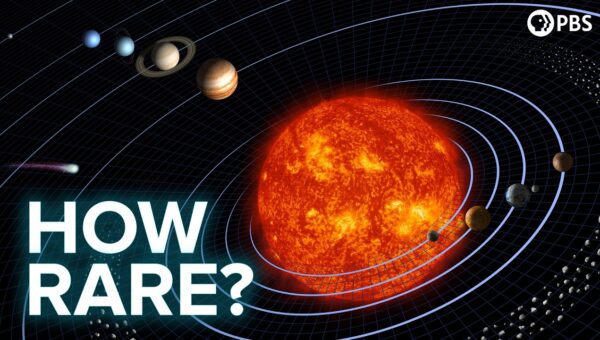
The Gaia mission's advanced astrometry is poised to reveal the true rarity of solar systems like ours. By detecting subtle stellar wobbles, Gaia can find distant gas giants, providing a comprehensive census of planetary architectures across the galaxy.