Strategic Sanctions: The Key to Crippling Russia’s War Machine?
A proposed strategy to cripple Russia's war funding involves imposing sanctions on eight key oil refineries in China, India, and Turkey that purchase Russian oil. Experts also discuss the psychological warfare employed by Ukraine and the internal power dynamics within both Russia and Ukraine.

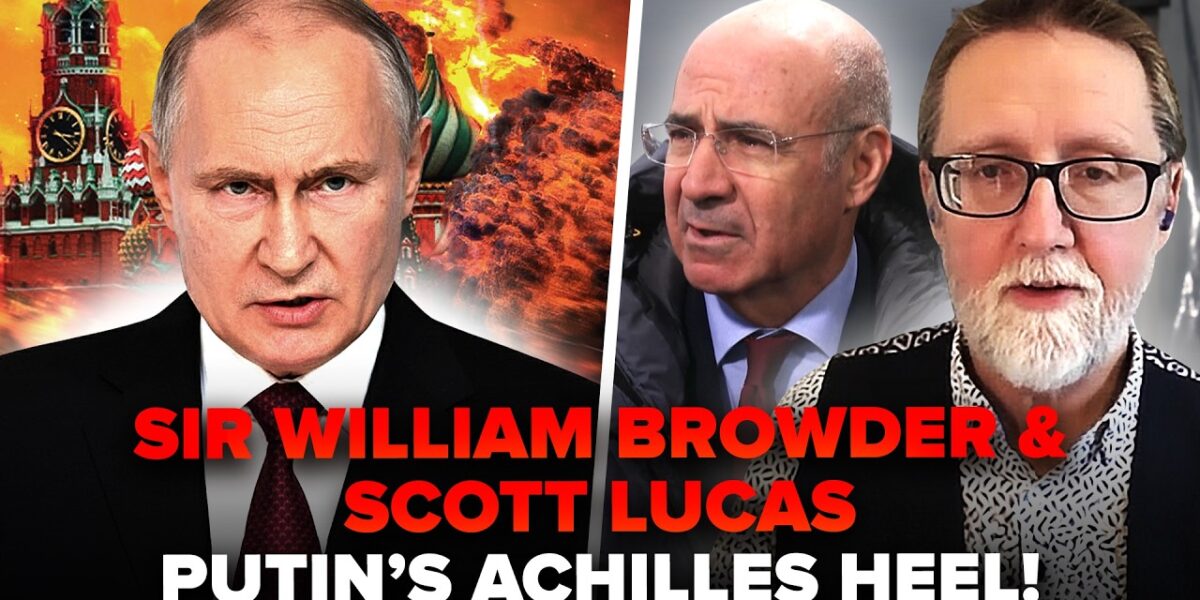
Unveiling Russia’s Economic Achilles’ Heel: Targeting Oil Buyers
In the ongoing geopolitical struggle surrounding the war in Ukraine, a critical question looms: how can the international community effectively cripple Russia’s ability to finance its military operations? While traditional sanctions have been a cornerstone of the Western response, a new strategic approach, focusing on the buyers of Russian oil, is being proposed as a potentially game-changing tactic. This strategy, championed at forums like the Munich Security Conference, aims to cut off the vast financial flows that sustain Moscow’s war effort.
The Proposed Sanctions Strategy
The core of this proposed strategy involves imposing sanctions on a select group of eight oil refineries that are major purchasers of Russian oil. These refineries are primarily located in China (two), India (four), and Turkey (two). The ultimatum presented to these entities would be clear: cease purchasing Russian oil, or face severe repercussions, including the inability to conduct business with Western nations. The logic behind this approach is that by denying Russia its primary source of foreign currency – oil revenue, which amounts to hundreds of billions of dollars – President Putin would be unable to procure the necessary funds for soldiers, ammunition, and other war-related expenditures.
The anticipated consequence of such a move would be a drastic reduction in the price of Russian oil, potentially plummeting to as low as $10 a barrel. This economic pressure, proponents argue, could render Russia economically incapable of sustaining the war effort within a six-month timeframe. While the United States and the European Union have already implemented sanctions against Russian energy companies, the focus on the buyers represents a significant escalation, targeting the demand side of the equation.
Psychological Warfare: A Crucial Front in the Conflict
Beyond economic measures, the conflict is also being waged on the psychological battlefield. Ukrainian President Volodymyr Zelensky’s recent remarks, highlighting his youth in contrast to Vladimir Putin’s age and suggesting he holds more leverage, are seen as a potent form of psychological warfare. This approach, according to analysts, targets Putin’s deep-seated aversion to disrespect. By framing Putin as old and weak, Zelensky’s administration aims to erode his authority and project an image of Ukrainian resilience and vitality.
This psychological dimension is considered as vital as military operations. The message conveyed is not just about military strength, but about undermining the psychological foundations of an authoritarian regime. Putin, it is suggested, cannot tolerate disrespect, as it can embolden others to challenge him, thereby threatening his grip on power.
Putin’s Fear of Losing Power and the Nature of Dictatorship
The relentless pursuit of power by authoritarian leaders, particularly in the face of significant challenges, is a recurring theme. It is widely believed that Vladimir Putin is acutely aware of the potential for losing power, and perhaps even his life, should the war in Ukraine prove to be a catastrophic failure. For a dictator, the exit strategy is often stark: assassination or imprisonment. This understanding, it is argued, drives his desperate efforts to cling to power, using war as a tool to maintain control.
The notion of a “dignified exit” is absent for such leaders, leaving them with few options beyond maintaining the status quo through force and suppression. The ongoing conflict, therefore, can be seen as a desperate gamble to secure his legacy and political survival.
Internal Dissent and the Illusion of Unity
Questions surrounding dissent within Putin’s inner circle have been a subject of intense speculation. Reports suggesting that former advisors, such as Dimitri K., opposed the war and advised against its launch have surfaced. However, a prevailing view is that such narratives may be exaggerated. Putin’s regime is characterized by a severe lack of tolerance for dissent. Open arguments or challenges to his policies are not permitted, as they could destabilize the entire structure of his authority.
The reality within Putin’s world is likely one of absolute adherence, where subordinates offer unwavering agreement rather than frank debate. The concept of a democratic exchange of ideas or fractious discussions, common in open societies, is virtually non-existent in the Kremlin’s inner sanctum. This creates an environment where Putin may receive curated information, reinforcing his existing beliefs rather than challenging them.
Awareness of Ground Realities: Intelligence vs. Perception
Despite the controlled information environment, it is highly probable that Putin is aware of the dire situation on the ground in Ukraine and the global strategic implications of his actions. As a former intelligence officer, he possesses a keen understanding of intelligence gathering and analysis. He is undoubtedly aware of the significant losses, both human and material, being incurred by Russia. The challenge for him lies not in a lack of information, but in how he chooses to process and present it, both internally and externally.
Putin’s strategy appears to be one of projecting an image of strength and resilience, believing that the West will eventually lose its resolve before he does. He is perceived as having a higher tolerance for pain and suffering, both for his populace and his military, because he believes that these costs do not directly translate into a loss of his personal power. This contrasts sharply with democratic societies, where public opinion and tolerance for casualties can significantly influence political decisions.
Russia’s Diminishing Global Standing
The decision to launch the war in Ukraine has undeniably weakened Russia’s standing on the international stage. Beyond the loss of influence in Syria and Venezuela, and the seizure of Russian oil tankers by the U.S. Navy, Moscow has experienced significant setbacks in other regions. The loss of influence in Armenia, particularly concerning Nagorno-Karabakh, and failed attempts to sway events in Moldova and Romania, underscore a broader pattern of geopolitical decline.
These failures represent a profound humiliation for Putin, particularly in his pursuit of a world order based on “might makes right.” Instead, his actions have exposed a perceived weakness, undermining the very principles he sought to uphold. The world he envisioned is, in practice, proving detrimental to his own interests and authority.
The Unwavering Resolve of Ukraine and the Legacy Imperative
At its core, the conflict is a battle for existence for Ukraine and a struggle for legacy for Vladimir Putin. While Putin may not easily relinquish his grip on power, driven by the imperative to secure his historical narrative, Ukraine’s fight for survival instills an unwavering resolve. This fundamental difference in motivation suggests that Ukrainian resistance is likely to persist, potentially for years to come, even beyond 2026.
While political negotiations remain crucial, their effectiveness is intrinsically linked to tangible support for Ukraine. This includes providing advanced air defenses, essential military equipment, and weapons to the front lines. Joint production projects, such as those for drone manufacturing, and support for Ukrainian counter-offensives within Russian territory are also vital components of sustained resistance. The reality on the ground, therefore, hinges not just on diplomatic talks but on consistent and robust material support.
Zelensky’s Strategic Provocations and the Impossibility of a Putin Meeting
President Zelensky’s assertion of having more leverage due to his youth compared to Putin is more than just a rhetorical flourish; it’s a calculated psychological maneuver. The proposal for a direct meeting with Putin has been met with predictable Kremlin responses. While Moscow has expressed a willingness to host Zelensky in the Russian capital, the reliability of Russian security guarantees is highly questionable, rendering such an offer disingenuous.
Zelensky’s counter-proposal – to meet outside of Russia – highlights the distrust and the inherent risks involved. The Kremlin’s subsequent dismissal of this offer underscores the unlikelihood of any direct, high-level engagement. Zelensky’s messaging serves a dual purpose: it psychologically pressures Putin by emphasizing his own resilience and the illegitimacy of the Kremlin’s narrative, and it signals to the world that Ukraine will not be coerced into surrendering its government or territory.
The possibility of elections in Ukraine hinges on a reliable, monitored ceasefire. Until such conditions are met, the current government, led by Zelensky, remains the legitimate authority, committed to resisting the invasion. Zelensky’s strategic communication, therefore, is a necessary form of “theater” to assert Ukrainian sovereignty and defiance.
Shifting Alliances and the European Security Dilemma
Recent discussions at the Munich Security Conference, particularly U.S. Secretary of State Marco Rubio’s speech, have signaled a complex shift in transatlantic relations. While Rubio’s address was perceived by some Europeans as a relief compared to harsher rhetoric, it also carried an implicit message: future cooperation would be on Donald Trump’s terms. This involves supporting movements aligned with Trump’s “America First” agenda, including anti-immigration and hard-right factions across Europe.
The endorsement of figures like Hungarian Prime Minister Viktor Orbán and Slovakian politician Robert Fico, both known for their pro-Kremlin stances and skepticism towards the European Union, indicates a broader strategy. This strategy appears to involve undermining the EU and promoting policies that align with a nationalist, often racially coded, white nationalist agenda. Even for a Hispanic figure like Rubio, the message carried a concerning undertone, potentially posing a long-term threat to European security and stability.
The Rise of European Strategic Autonomy
In response to perceived unreliability from traditional allies, Europe is increasingly exploring avenues for greater strategic autonomy. This includes significant investments in defense production and a renewed discussion around a European nuclear deterrent. The historical reliance on U.S. nuclear umbrellas, even for nuclear powers like France and the UK, is being re-evaluated. Nations like France and Germany are engaging in complex negotiations regarding the supervision and control of a potential European nuclear capability, possibly independent of U.S. involvement.
This shift is partly driven by the uncertainty surrounding future U.S. political leadership and its commitment to NATO. The prospect of a fragmented NATO, with Europeans taking on greater command and oversight responsibilities, is becoming a tangible possibility. The goal is to build independent capabilities, whether in nuclear or conventional weapons, intelligence sharing, or cybersecurity, to ensure security without solely relying on Washington.
Analyzing the 2023 Ukrainian Counteroffensive: Blame and Responsibility
General Valerii Zaluzhnyi’s candid assessment of the 2023 counteroffensive, suggesting that Ukraine’s leadership did not commit sufficient resources and that the strategy was flawed, has ignited significant debate. His assertion that a concentrated effort to retake Zaporizhzhia and cut Russia’s land bridge to Crimea was hampered by forces being spread too thin has been corroborated by Western defense officials.
While Zaluzhnyi’s statements, made in the context of potential presidential aspirations, could be interpreted as an attempt to distance himself from the disappointing outcome, the underlying issues are complex. The over-reliance on armor, particularly in Zaporizhzhia, and the underestimation of Russia’s fortified defenses and extensive use of drones, were critical factors. The success of the 2022 offensives, achieved through surprise and rapid breakthroughs, was not replicated in 2023 against entrenched Russian positions.
Internal Power Dynamics and Friction within Ukraine
Beyond the military strategy, Zaluzhnyi’s account of a raid on his office in September 2022 by Ukraine’s State Security Service (SBU) points to underlying power struggles within the Ukrainian leadership. His claims of friction between his office, the SBU, and presidential advisors, even during a period of military success, suggest that internal dynamics have complicated Ukraine’s war effort. The departure of Andriy Yermak, Zelensky’s chief of staff, may have addressed some of these tensions, but the question of resolved power struggles remains pertinent.
Zaluzhnyi’s careful framing of his current relationship with President Zelensky as positive, especially after assuming ambassadorial duties, indicates that the primary friction may have been with presidential advisors rather than Zelensky himself. The resolution of these internal power dynamics is crucial for Ukraine’s continued resilience and effectiveness in the face of ongoing Russian aggression.
Source: 💥US can CRUSH Russian economy! Moscow’s weakest spot REVEALED (YouTube)

Related Articles

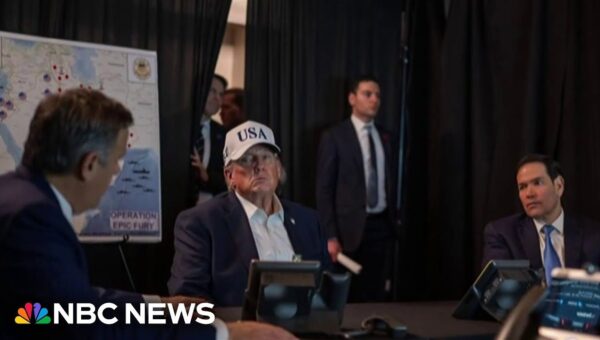
Trump: Iran Strikes Ahead of Schedule, Expects ‘Great Deal for World’
Three U.S. service members have been killed amid escalating conflict with Iran, President Trump confirmed. He stated that strikes are ahead of schedule, with senior Iranian leaders killed, and expressed optimism for a "great deal for the world" despite ongoing talks with Iranian officials.
Trump’s Putin Stance: US Strategy and Global Implications
Analysis suggests Donald Trump's approach to the Ukraine war involves pressuring Kyiv, but US involvement is crucial for resolution. China's influence and the 'MAGA' agenda's geopolitical implications are key factors.


US Strikes Iran: Mounk and Fukuyama Discuss Unpredictable Conflict
Leading political scientists Yascha Mounk and Francis Fukuyama analyze the recent US strikes on Iran, warning of unpredictable outcomes and internal instability. They question the objectives of the "war of choice" and its potential to destabilize the region, while also discussing the shifting global perceptions of Israel.