Strait of Hormuz Tensions: Global Oil Supply at Risk
Iran's Revolutionary Guards have issued warnings to ships in the Strait of Hormuz, a vital global oil transit route. Analysts warn that any disruption could significantly spike oil prices and exacerbate inflation, with potential repercussions for Iran itself.

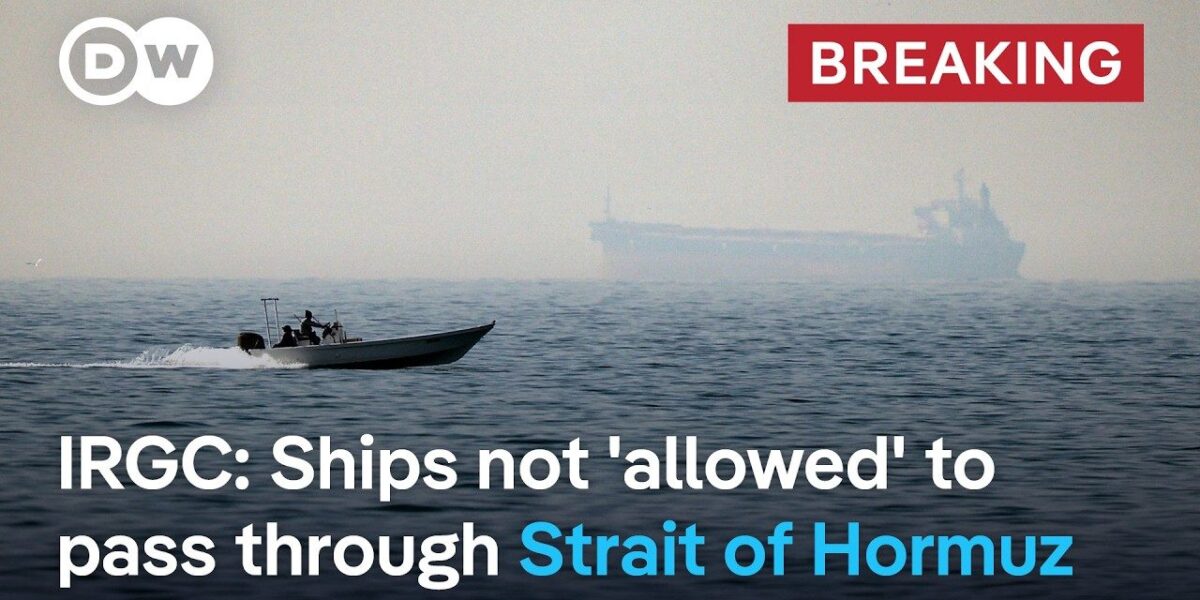
Global Oil Supply Threatened as Iran Issues Warnings in Strait of Hormuz
International shipping lanes in the vital Strait of Hormuz are facing unprecedented tension as Iran’s Revolutionary Guards have reportedly issued radio transmissions warning vessels against passage. This development, confirmed by the EU’s naval mission Aspidus, which is tasked with protecting international shipping, raises significant concerns about the stability of global oil supplies and the potential for a sharp rise in energy prices.
The Critical Chokepoint: Strait of Hormuz
The Strait of Hormuz, a narrow waterway connecting the Persian Gulf to the open ocean, is one of the world’s most critical maritime chokepoints. It serves as the primary export route for crude oil from major producers in the Gulf, including Saudi Arabia and the United Arab Emirates. Approximately 20% of the world’s total crude oil production flows through this strategic passage daily. Any disruption, even a limited one, carries the potential to dramatically impact global energy markets, experts warn, potentially exacerbating inflationary pressures worldwide.
Iran’s Capability and Intentions
Military analyst Marina Mirren, speaking with DW News from King’s College London, addressed the question of Iran’s capability to completely close the strait. “We have heard repeated statements from Iran that in case of an escalation of a military escalation is what we’re seeing now, there is a potential that this choke point will be closed off or mined making it very difficult for the oil to come out,” Mirren explained. She highlighted that the mere threat has already sent shockwaves through oil markets, with OPEC nations preparing to meet and likely discuss significant price increases. “I assume that we will see an increase of at least $10 to $20 per barrel of crude,” she projected.
Economic Repercussions for Iran
However, Mirren also cautioned that closing the strait might not be in Iran’s best economic interest. “Iran itself depends on oil exports and the Iranian religious leadership has been criticizing Iran’s dependence on crude and calling for looking for other ways to finance the country,” she stated. “Therefore, closing the Strait of Hormuz would not be very beneficial for Iran.” Furthermore, such a move could alienate regional players like the UAE and Saudi Arabia, with whom Iran has been attempting to normalize relations. “It would also spoil the relationship that Iran sought to build with these countries,” Mirren added, especially in light of recent reports of Iranian strikes against bases in Bahrain, the UAE, and Saudi Arabia.
Regional Diplomacy and Stability Concerns
The analyst emphasized the importance of how Arab states might respond to escalating tensions. She recalled past instances, such as the June 2025 “12-day war,” where nations like Oman and Qatar played mediating roles. “Nobody wants a wider war in the Middle East,” Mirren observed, noting that despite religious differences, regional stability is a shared concern. The potential destabilization following any significant event within Iran’s leadership structure, whether regime change or decapitation, is a major concern for the region’s long-term security. Mirren pointed out that for Iran’s existing leadership, maintaining relationships with neighbors and avoiding widespread adversaries is crucial, particularly given their long-standing declared opposition to Israel. The stance of neighboring countries, particularly those that might deny airspace access to potential attackers of Iran, is a significant factor.
External Influences and Future Uncertainty
The geopolitical landscape surrounding the Strait of Hormuz is complex, with numerous external actors and ongoing conflicts influencing the situation. Mirren highlighted the potential impact of support Iran might receive from global powers like Russia and China. Additionally, ongoing hostilities between Afghanistan and Pakistan, and the actions of the United States and Israel, including the possibility of further strikes, are critical variables. “What will happen internally? So there are quite a lot of shaky factors that make it very difficult to predict what is going to happen,” Mirren concluded.
Looking Ahead
As tensions simmer in the Strait of Hormuz, the global community will be closely monitoring diplomatic efforts, the reactions of key regional players, and the potential impact on oil prices. The coming days and weeks will be crucial in determining whether this critical maritime passage remains open or if the world faces significant energy market disruptions.
Source: Why closing the Strait of Hormuz could have devastating effects on global oil shipping | DW News (YouTube)

Related Articles


Trump: Iran Strikes Ahead of Schedule, Expects ‘Great Deal for World’
Three U.S. service members have been killed amid escalating conflict with Iran, President Trump confirmed. He stated that strikes are ahead of schedule, with senior Iranian leaders killed, and expressed optimism for a "great deal for the world" despite ongoing talks with Iranian officials.
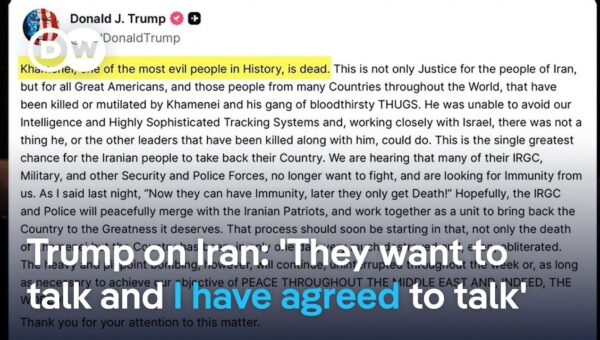
Trump Agrees to Talks with Iran After Major Strikes
President Donald Trump has agreed to talks with Iran's leadership following coordinated strikes that reportedly killed key figures, including the Supreme Leader. While Trump claims significant military successes, U.S. strategy remains unclear, and public opinion shows limited support for the actions amid rising American casualties.


Trump’s Putin Stance: US Strategy and Global Implications
Analysis suggests Donald Trump's approach to the Ukraine war involves pressuring Kyiv, but US involvement is crucial for resolution. China's influence and the 'MAGA' agenda's geopolitical implications are key factors.