Strait of Hormuz Closure: ‘Top 5’ Global Economic Scare is Real
The closure of the Strait of Hormuz, a critical chokepoint for global energy, is a 'top five' scariest economic scenario now unfolding, warns Sky News analyst Ed Conway. The disruption threatens not only oil and gas prices but also essential goods like fertilizer and materials for technology, impacting global food security and industrial production.

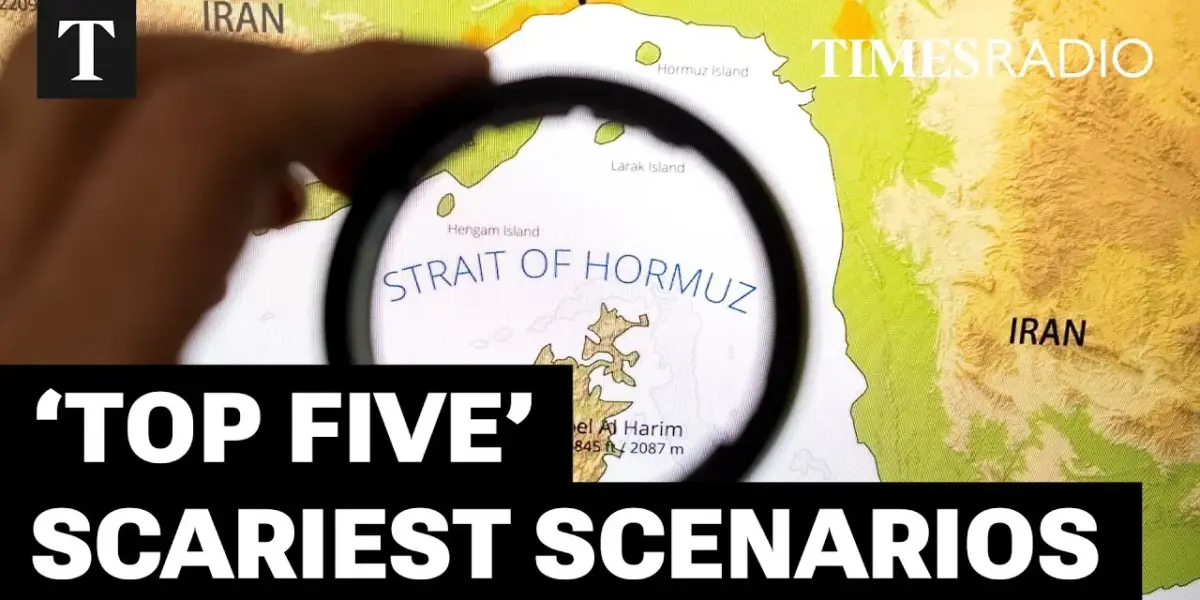
Global Economy Braces for Impact as Strait of Hormuz Effectively Shuts
The closure of the Strait of Hormuz, a vital artery for global energy supplies, presents one of the most significant threats to the world economy in decades, according to analysis by Sky News Economics and Data Editor Ed Conway. The waterway, through which approximately a fifth of the world’s oil and liquefied natural gas (LNG) passes, is now effectively shut to most traffic, sparking fears of widespread economic disruption.
A ‘Genuinely Quite Scary’ Scenario Unfolds
For years, the potential closure of the Strait of Hormuz has been a recurring element in worst-case economic scenarios discussed by experts. “If you talk to anyone, economists or people in geopolitics, and asked, you know, if they had a list of the scariest kind of scenarios that could happen to the global economy, you’d have things like, I don’t know, China taking possession of semiconductor foundries in Taiwan would be kind of high on the list. But the closure of the Straits of Hormuz would always be up there in the top five. And now it’s happening,” Conway stated.
The situation is exacerbated by the simultaneous closure of the Red Sea to much of shipping traffic due to ongoing Houthi rebel attacks. This dual disruption creates an unprecedented crisis, particularly given the concentration of energy resources in the Arabian Gulf. A significant portion of the world’s oil and gas production is located in a small geographic area along the coastlines of Saudi Arabia and Qatar, with the vast majority exported via tankers passing through the Strait of Hormuz.
Beyond Oil: The Ripple Effect on Essential Goods
The economic ramifications extend far beyond immediate fuel prices. Conway highlighted the critical role of natural gas, much of which transits the Strait, in various industries. “We still need this stuff, even in an era of renewables,” he explained. “We need the gas partly to heat our homes, but also to provide the fertilizer that we need to feed ourselves.” Approximately 30-40% of the world’s fertilizer supply originates from within the Arabian Gulf and passes through the Strait of Hormuz. Without sufficient fertilizer, the global food supply for half the world’s population is at risk.
Furthermore, the closure impacts the production of essential materials for modern technology. “Your dependence on you know concrete on copper, you need copper to make the service centers that AI functions with. What do you need copper to make? You need the obviously the ores, but you need stuff to refine it. And one of the things you need to refine it is sulfuric acid. And where does sulfuric acid come from? It comes from oil and a quarter of the world’s sulfuric acid comes through the Straits of Hormuz,” Conway added, illustrating the intricate web of global supply chains.
A Divided Market Reaction and Expert Concern
Despite the gravity of the situation, market reactions have been mixed. While Qatar’s Energy Minister has warned of economies collapsing and oil prices potentially soaring to $150 a barrel, major stock market indices like the S&P 500 have shown relative stability. Conway finds this dissonance concerning, noting that “the people who are terrified are the people who understand energy. And that is worrying for me because that is basically the heart of this.” He emphasized the underestimation of how higher energy prices permeate through to “basically everything,” with effects that are “really hard to quantify and to predict.”
Impact on Developing Nations and Global Markets
The closure disproportionately affects nations with limited energy storage capacity and a high reliance on imported LNG. Countries like Pakistan, India, Taiwan, and South Korea are identified as being in significant trouble. This increased competition for available LNG supplies will inevitably drive up prices globally, impacting even regions like Europe, which may not directly import Qatari gas but will face higher costs for LNG sourced from elsewhere, including the US and Russia.
The situation also presents an existential threat to the economic models of Gulf states like Dubai and Qatar, which have been diversifying away from oil. A mass exodus of the large expatriate populations, fearing future threats, could destabilize these economies. Moreover, oil producers face the risk of irreparable damage to their reservoirs if they are unable to pump oil for extended periods.
Potential Solutions and Uncharted Territory
When questioned about potential solutions, such as naval escorts or convoys, Conway acknowledged the ideas but pointed to the significant hurdles. “It seems like it’s not a crazy idea at all,” he said, “but I don’t know how many you could get through that way, whether it would the extent to which it would satisfy demand, the extent to which they could get insurance.” Currently, obtaining insurance for passage through the Strait is almost impossible, a factor largely determined in London, a global hub for marine insurance.
The current situation is described as “uncharted territory,” with Conway admitting, “all of the cliches, I’m afraid, are kind of true about where we are right now.” The only hope, he reiterated, is that the closure is temporary.
Geopolitical and Economic Repercussions
The conflict is also having geopolitical side effects. The Kremlin has reported an increase in demand for Russian energy, while the US Treasury has issued waivers allowing India to continue purchasing Russian oil. Countries like Norway, already operating at maximum capacity, are unable to significantly increase their output to fill the void. This crisis underscores Europe’s vulnerability, having only recently recovered from energy supply issues related to the war in Ukraine, and highlights the challenge of diversifying energy sources.
The economic fallout is expected to delay interest rate cuts by central banks. Conway noted a significant shift in expectations: “Literally a week ago, everyone thought there were going to be two interest rate cuts. Now all of a sudden that’s out of the water.” Higher inflation, driven by energy prices, means interest rates are unlikely to decrease in the near future, potentially impacting unemployment figures.
Looking Ahead: Interdependence and Resilience
The crisis serves as a stark reminder of global interdependence and the fragility of complex supply chains. While advancements in areas like Artificial Intelligence offer potential for future economic transformation, the fundamental reliance on physical resources and energy remains. “Our dependence on physical things never went away,” Conway concluded. “If you slice one arm off, then you’re in trouble. And slicing the straits off Hormuz off is like the ultimate example of that.”
The situation at the Strait of Hormuz remains highly volatile. As nations grapple with the immediate economic shock, attention will be fixed on diplomatic efforts to de-escalate tensions and the long-term strategies for enhancing energy security and diversifying global supply chains in an increasingly unpredictable world.
Source: Middle East: Impact Of Closing Strait Of Hormuz Is In 'Top Five’ Scariest Scenarios | Ed Conway (YouTube)

Related Articles


Presidential Slumber Amidst Global Conflict: A Nation’s Concern
A President's apparent struggle to stay awake during a conference, while regional conflicts escalate, raises serious questions about leadership and national security. This analysis explores the geopolitical context, contrasts administrations, and discusses the implications of perceived presidential disengagement.


Presidential Slumber Amidst Escalating Global Conflict
Observed presidential fatigue during a critical period of escalating global conflict raises serious questions about leadership priorities and the human cost of war. As regional tensions surge, the commander-in-chief's apparent disengagement from vital meetings and dismissive attitude towards casualties sparks widespread concern.


Iran War Escalates: US Faces Questions on Objectives, Casualties, Prices
The war against Iran escalates as the US faces questions on military goals, civilian casualties, and rising energy prices. President Trump's call for "unconditional surrender" and reports of Russia providing intelligence to Iran add to regional tensions.