Strait of Hormuz Blockade Threatens Global Oil, Rattles Markets
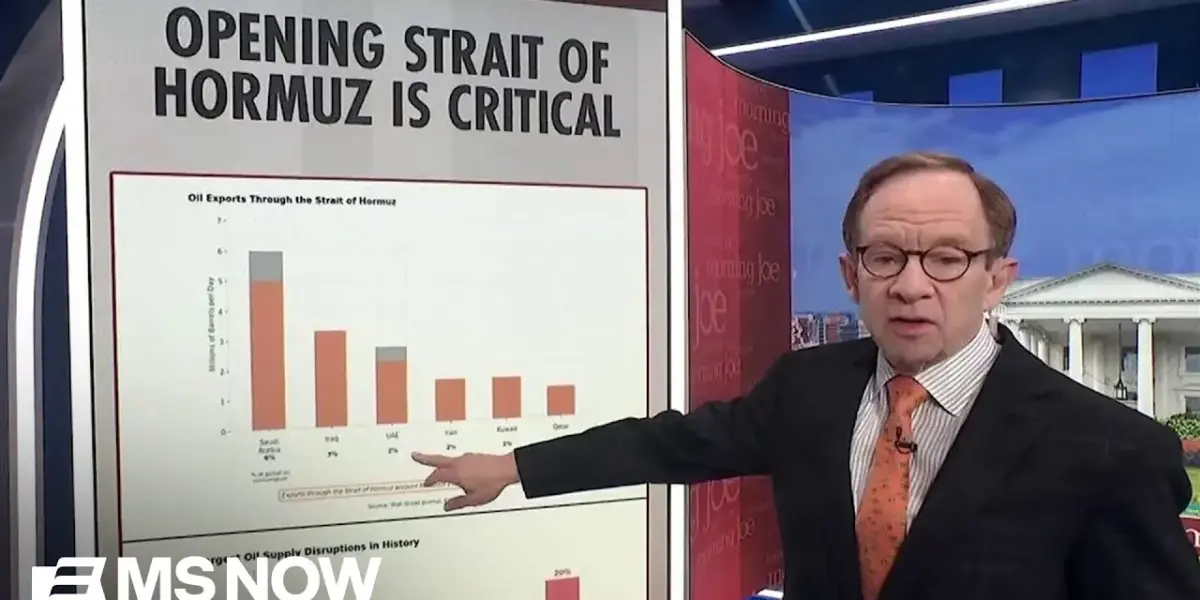
The Strait of Hormuz, a critical artery for 20% of global oil, faces severe disruption, threatening oil prices and the world economy. Former Treasury official Steve Rattner argues the situation is the largest oil supply disruption in history, with significant inflation and market impacts.

Global Oil Flow Threatened by Hormuz Blockade
The vital Strait of Hormuz, a narrow waterway through which 20% of the world’s oil passes, is under severe threat due to ongoing conflict with Iran. This disruption is not only causing oil prices to spike but is also fueling inflation and impacting global markets, according to former Treasury official Steve Rattner.
A Critical Chokepoint for World Energy
The Strait of Hormuz is a crucial chokepoint for oil exports from countries like Saudi Arabia, Iraq, Iran, Kuwait, and Qatar. While a few pipelines exist, the vast majority of oil must travel through this narrow passage, which is only about 21 miles wide. Iran’s ability to control this strait means it can significantly impact global oil supply and prices. Rattner highlighted that this situation is the largest oil supply disruption in history, twice as significant as the Suez Crisis in 1956.
Challenging the Idea of Natural Reopening
President Trump recently suggested that the Strait of Hormuz would reopen naturally once the conflict with Iran ends. However, Rattner strongly disagrees, likening the situation to the “Pottery Barn doctrine” – if you break it, you own it. He argues that the U.S. and its allies have disrupted the flow and must take responsibility for ensuring its reopening, rather than expecting it to resolve itself.
The idea that we’re just going to go leave and let the Europeans somehow figure out the Strait of Hormuz is really ridiculous.
Rattner explained that Iran can control traffic through the strait, even reportedly charging some tankers up to $2 million to pass. This suggests that Iran might allow its own oil through while blocking others, undermining the idea of a natural reopening for all. He also noted that a blockade, while a potential option, would require a significant, long-term military commitment, similar to the Cuban blockade in the 1960s.
Economic Ripple Effects: Beyond Gas Prices
The impact of the Strait of Hormuz disruption extends far beyond just gasoline prices at the pump. Rattner detailed how oil is a worldwide commodity, and its price fluctuations affect numerous sectors of the economy. Rising oil prices contribute to increased costs for airline fares, fertilizer production (leading to higher food prices), and diesel fuel for trucking, which raises the cost of all goods.
Economists have been forced to revise inflation forecasts upward. Before the conflict, inflation was projected to be around 2.4%. Now, groups like the OECD predict it could reach 4.2% this year, significantly above the Federal Reserve’s target of 2.7%. This persistent inflation means the Federal Reserve may be unable to cut interest rates as planned, keeping mortgage rates, car loan rates, and credit card interest higher for longer, which will negatively affect the economy.
Unintended Beneficiary: Russia
Ironically, the current situation provides a significant financial boost to Russia. The disruption of oil supplies and the resulting higher global oil prices have increased Russia’s oil and gas revenues. Sanctions had previously lowered these revenues, but the current market conditions are providing an estimated $17 billion per month in extra revenue for Russia. This comes at a time when the U.S. has eased some sanctions, allowing more Russian oil into the market.
Market Uncertainty and Long-Term Concerns
The market’s reaction has been swift, with stock prices falling and oil prices jumping significantly. The expectation is that oil prices will remain higher than previously anticipated due to destroyed infrastructure and ongoing concerns about supply chains. Rattner concluded that the president’s outlook on the situation was overly optimistic, suggesting that the economic impacts could be long-lasting and more severe than acknowledged.
As the international community convenes to discuss ways to restore traffic through the Strait of Hormuz, the focus remains on how to ensure the stable flow of global energy supplies. The complex geopolitical situation and its economic consequences will continue to be a major concern for consumers and policymakers worldwide.
Source: Steve Rattner: Opening the Strait of Hormuz is critical (YouTube)

Related Articles

Russia Bans Gas Exports Amid Refining Woes
Russia has banned gasoline exports, a move driven by Ukrainian drone attacks on its refineries and logistical issues. This forces Russia to prioritize domestic supply, preventing it from fully capitalizing on high global oil prices and impacting its revenue.

Trump’s Iran Strategy Risks Global Instability
Former Ambassador John Bolton criticizes President Trump's Iran strategy, citing contradictory statements and a lack of clear objectives. Bolton argues that without regime change, the U.S. faces a cycle of conflict, potentially leading to a major strategic defeat and empowering rivals like China and Russia.


Trump Declares Iran Conflict ‘Done,’ But Doubts Linger
President Donald Trump has declared the conflict in Iran nearing its end, promising a swift conclusion within weeks. However, the administration's shifting justifications for the war and the potential for prolonged engagement are raising doubts among analysts and the public.