Sterile Neutrino Hunt Ends: MicroBooNE Rules Out Key Theory
Fermilab's MicroBooNE experiment has delivered a significant blow to the theory of sterile neutrinos. By precisely distinguishing between real neutrino interactions and background noise, the experiment found no evidence for the elusive particle, casting doubt on its role in solving mysteries like neutrino mass and dark matter.

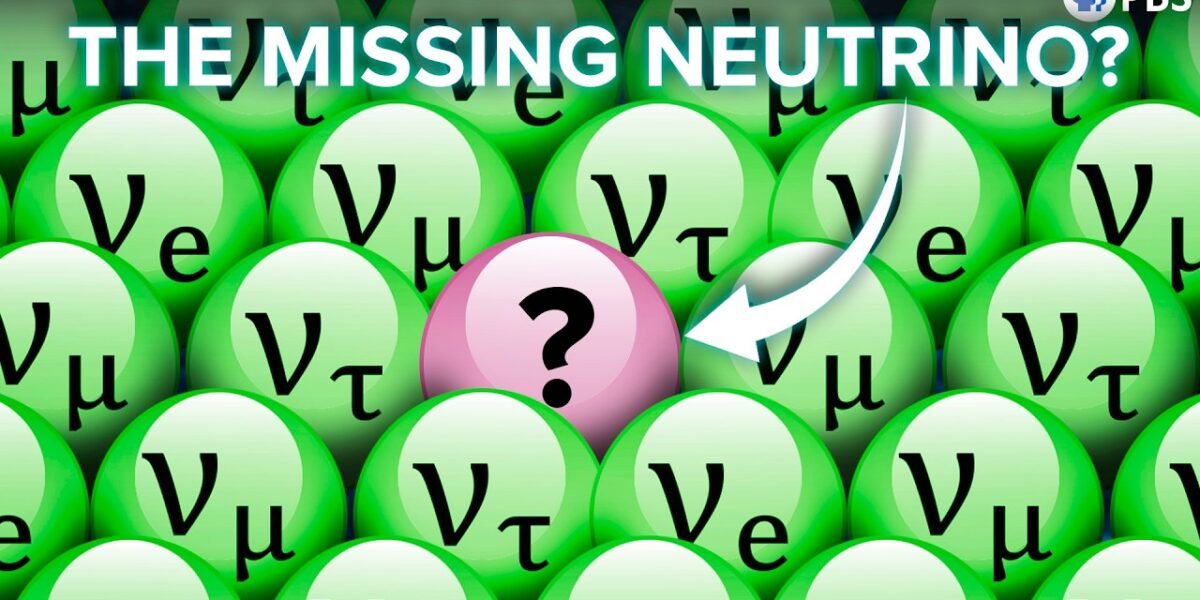
Cosmic Enigma Fades: New Experiment Casts Doubt on Elusive Particle
The universe, in its bewildering complexity, is often described by the Standard Model of particle physics. This elegant framework, built upon the idea that fundamental particles are mere vibrational manifestations of deeper quantum fields, has been remarkably successful in explaining the cosmos. Yet, like any great scientific endeavor, the Standard Model is not without its gaps, and for decades, one of the most tantalizing of these gaps has been the potential existence of the ‘sterile neutrino’. Now, groundbreaking results from Fermilab’s MicroBooNE experiment suggest that this long-sought particle, which promised to solve some of physics’ most profound mysteries, may not exist after all.
The Neutrino Puzzle: A Story of Chirality and Mass
At the heart of the Standard Model are three generations of fundamental particles: quarks and leptons. For leptons, this includes the familiar electron, muon, and tau, along with their elusive, nearly massless counterparts – the neutrinos. These particles are further categorized by their ‘chirality,’ a property akin to handedness, describing their intrinsic spin relative to their direction of motion. While quarks and heavier leptons exhibit both left-handed and right-handed forms, a peculiar asymmetry has always been observed with neutrinos: only left-handed neutrinos have ever been detected.
This observation, while initially seeming like a cosmic oddity, makes sense within the Standard Model’s framework. Neutrinos interact only through gravity and the weak nuclear force, both of which are incredibly feeble. The weak force, in particular, only affects left-handed particles, rendering right-handed neutrinos essentially undetectable as they possess no other charge or interaction mechanism besides their negligible gravitational pull. They were, in essence, ‘sterile’ – devoid of interaction.
The original architects of the Standard Model, including Weinberg, Salam, and Glashow, were meticulous in their inclusion of particles, only adding those necessary to explain observed phenomena. At the time, neutrinos were believed to be massless, and the inclusion of right-handed, sterile neutrinos was not only unnecessary but also complicated lepton flavor conservation laws. Thus, they were left out.
A Shift in Understanding: Neutrino Mass and the Sterile Hypothesis
The scientific landscape shifted dramatically in the 1990s with the discovery that neutrinos do, in fact, possess mass. This was confirmed through observations of neutrino oscillations, where neutrinos spontaneously change between their electron, muon, and tau flavors. This revelation opened the door for the sterile neutrino to re-enter the theoretical discussion. If neutrinos have mass, then perhaps right-handed sterile neutrinos play a role, possibly by interacting with the Higgs field to impart mass to their left-handed counterparts through a mechanism known as the ‘see-saw process’.
The implications of the sterile neutrino’s existence extended beyond explaining neutrino mass. Its hypothetical properties – being massive yet interacting only gravitationally – made it a prime candidate for dark matter, the invisible substance that constitutes about 80% of the universe’s matter. The sterile neutrino thus became a compelling, albeit speculative, solution to two of the biggest puzzles in modern physics.
The Hunt Begins: From Los Alamos to Fermilab
Detecting the undetectable became the mission. Since sterile neutrinos do not interact via the weak force, direct detection was impossible. Instead, physicists focused on indirect evidence: anomalies in the behavior of known neutrinos. The theory proposed that known neutrinos could oscillate into sterile neutrinos, creating subtle deviations in observed particle interactions. This became the basis for experiments like the Liquid Scintillator Neutrino Detector (LSND) at Los Alamos National Laboratory in the 1990s.
LSND directed a beam of muon neutrinos into a vat of mineral oil. When a neutrino interacted with a neutron, it could transform into a proton and a muon. Crucially, if a muon neutrino could oscillate into an electron neutrino (perhaps via an intermediate sterile neutrino), it would produce a proton and an electron. The key lay in distinguishing the signatures of these interactions. Muons, being heavy, produced bright, sharp Cherenkov radiation rings. Electrons, lighter and prone to electromagnetic cascades, produced fuzzier rings. LSND, designed to detect very few electron neutrino interactions, observed a surprising excess of these fuzzy rings, suggesting that muon neutrinos were indeed converting into electron neutrinos at a higher rate than expected, a phenomenon that could be explained by the presence of a low-mass sterile neutrino (around 1 eV).
This anomaly spurred further investigation. The MiniBooNE experiment at Fermilab, operational from 2002 to 2017, was built with higher precision to confirm or refute the LSND findings. After analyzing vast amounts of data, MiniBooNE also reported an excess of electron-like events, seemingly reinforcing the sterile neutrino hypothesis. Additional support came from experiments like GALLEX and SAGE, which observed fewer electron neutrino interactions than predicted, potentially because some electron neutrinos were converting into sterile neutrinos.
The Verdict: MicroBooNE’s Precision Clears the Air
Despite the accumulating evidence, contradictions persisted. Other experiments failed to replicate the electron excess, and observations of muon neutrino disappearance and atmospheric neutrinos from the IceCube observatory at the South Pole were consistent with only the three known neutrino types. The scientific community faced a perplexing discrepancy, highlighting the need for an experiment that could definitively resolve the anomaly.
Enter MicroBooNE, Fermilab’s Micro Booster Neutrino Experiment. This sophisticated detector, utilizing a liquid argon time projection chamber, was specifically designed to overcome the primary source of uncertainty in MiniBooNE: the misidentification of ‘photon events’. These false signals arise when neutral pions decay into gamma rays, which then create electron-positron pairs, mimicking the signature of electron neutrinos. MiniBooNE’s Cherenkov ring analysis struggled to differentiate these from genuine electron neutrino interactions.
MicroBooNE’s liquid argon technology, however, allows for precise tracking of particle trajectories. By examining the detailed paths of particles originating from neutrino interactions, scientists can distinguish between a true electron neutrino event (where the electron track starts directly at the interaction vertex) and a photon event (which shows a gap between the vertex and the start of the electron cascade). This capability offered an unprecedented ability to filter out background noise.
The results, published in 2021 and further refined with a second neutrino beam in late 2025, have delivered a decisive blow to the light sterile neutrino hypothesis. MicroBooNE found no excess of electron neutrino events once photon events were accurately accounted for. The experiment concluded that the anomaly observed by LSND and MiniBooNE could be entirely explained by these misidentified photon events, effectively ruling out light sterile neutrinos as the cause.
What’s Next? The Search Continues, But for What?
The elimination of the light sterile neutrino from consideration is a significant moment. It suggests that the Standard Model, with its three known neutrino flavors, might be more complete than previously thought. The sterile neutrino, once a promising candidate for solving major cosmic puzzles, now returns to the realm of pure speculation, at least for masses within MicroBooNE’s sensitivity range (0.1 to 10 eV).
However, the story is not entirely over. If sterile neutrinos exist with much higher masses, they could still play a role in explaining the tiny masses of ordinary neutrinos and potentially contribute to dark matter. These heavier sterile neutrinos would require different detection strategies, venturing beyond the scope of current neutrino oscillation experiments. The scientific community now faces the challenge of re-evaluating these profound mysteries without the convenient explanation offered by the sterile neutrino.
The meticulous work of the MicroBooNE collaboration at Fermilab has provided a crucial clarification, reinforcing the rigor of the scientific process. While one avenue of investigation may have closed, the quest to understand the universe’s fundamental constituents and deepest secrets continues, driven by curiosity and the relentless pursuit of empirical truth.
Source: This Particle Solved Everything. We Just Found Out It Isn't Real (YouTube)

Related Articles


CERN’s LHC: No Doomsday Black Hole Threat
Could CERN's Large Hadron Collider create a doomsday black hole? While theoretically possible under certain speculative physics, the scientific consensus and evidence suggest the risks are vanishingly small, with microscopic black holes likely evaporating instantly or having negligible gravitational impact.

The Elusive Graviton: Why Physics Hides Gravity’s Quantum Heart
Physicists face immense challenges in detecting the hypothetical graviton, the quantum particle of gravity. Extreme sensitivity requirements, fundamental physical limits like black hole formation, and overwhelming background noise from neutrinos suggest the universe may be hiding its quantum heart.


NASA’s Asteroid Mission: From Mars Dream to Lunar Gateway
NASA's ambitious Asteroid Redirect Mission (ARM), designed as a stepping stone to Mars, aimed to capture a small asteroid boulder and tow it to lunar orbit for astronaut testing. Though cancelled, its advanced propulsion and robotic technologies live on in NASA's Lunar Gateway and future deep space exploration plans.