Stealth No More? F-35’s Secret Signal Exposed to Foes
America's F-35 fighter jet may have lost its stealth advantage after Iran reportedly captured its infrared heat signature. This intelligence could allow adversaries to better track and target the advanced aircraft, raising concerns about U.S. military superiority.


Stealth No More? F-35’s Secret Signal Exposed to Foes
America’s most advanced fighter jet, the F-35, might have lost its most crucial advantage: stealth. Reports suggest that adversaries have obtained what’s being called the jet’s “fingerprint.” This means a key tool in the U.S. military’s arsenal could be significantly less effective.
What is the F-35’s Advantage?
The F-35 was built with one main goal in mind: to be invisible to enemy radar. This ability, known as stealth, allows it to fly undetected. However, radar isn’t the only way to find an aircraft. Planes also give off heat from their engines, which can be tracked using infrared sensors. This is called Infrared Search and Track, or IRST.
How Was the Advantage Compromised?
According to the information, Iran used its infrared tracking systems to get a detailed record of the F-35’s heat signature. This capture reportedly includes vital information like the altitudes the jet flew at, its speeds, and details about its stealth technology. Having this “infrared fingerprint” is seen as a priceless piece of intelligence for Iran.
They essentially have the infrared fingerprint of one of our biggest weapons.
What Are the Implications?
This captured data could be shared with other countries allied with Iran, such as Russia. This shared information would help these nations develop better sensors. These new sensors would make it easier to find and target F-35s. After March 19, 2026, it’s suggested that F-35 pilots may have to fly more defensively. This change would greatly reduce their effectiveness, meaning they are no longer truly invisible.
Why This Matters
The ability of the F-35 to operate undetected is critical for U.S. military superiority. If this stealth capability is compromised, it weakens America’s position against rivals like China, Russia, and groups like Hezbollah and Iran. The concern is that F-35s could become vulnerable and less capable in combat. This situation raises questions about the security of advanced military technology and its potential impact on global security dynamics.
Historical Context and Background
The development of stealth technology dates back to the Cold War. Early efforts focused on reducing radar visibility. The F-117 Nighthawk was one of the first operational stealth aircraft. The F-35 represents a more advanced generation, designed to be stealthy across multiple types of detection, including radar and infrared. The constant race between developing advanced weapons and finding ways to counter them is a long-standing feature of military history.
Trends and Future Outlook
This incident highlights a growing trend: the difficulty of maintaining technological superiority in an increasingly connected world. Information, even about highly classified systems, can spread rapidly. It suggests a future where stealth might become harder to achieve and sustain. Nations will likely invest more in advanced sensor technology to detect even the most hidden threats. This could lead to an arms race focused on detection and counter-detection. The U.S. military will need to adapt, possibly by developing new stealth techniques or focusing on other areas of military strength.
Balancing Perspectives
While the reported compromise of the F-35’s infrared signature is concerning, it’s important to consider the full picture. The F-35 is a complex system with many capabilities beyond just stealth. It also relies on electronic warfare, advanced sensors, and networked operations. Even if its infrared signature is known, it may still pose a significant threat to adversaries. Furthermore, the U.S. military is constantly working to update and improve its technology. Future versions or upgrades of the F-35 could incorporate new measures to counter infrared detection.
The situation also brings up broader discussions about military spending. Some argue that the military-industrial complex is overfunded. However, even those who hold this view acknowledge the importance of maintaining a strong defense. The goal is to ensure the U.S. military remains capable without being wasteful. This incident underscores the need for careful management of defense resources and continuous innovation to stay ahead of potential threats.
Source: US Just Lost Its Biggest Advantage #politics #fyp #new (YouTube)

Related Articles


US Must Block China’s Tech Access for Security
US national security experts are raising alarms about China's access to advanced AI chips, arguing it threatens strategic advantages. This, coupled with charges against Chinese entities for fentanyl precursor sales and a ban on foreign routers, signals a growing effort to prioritize security over business ties.

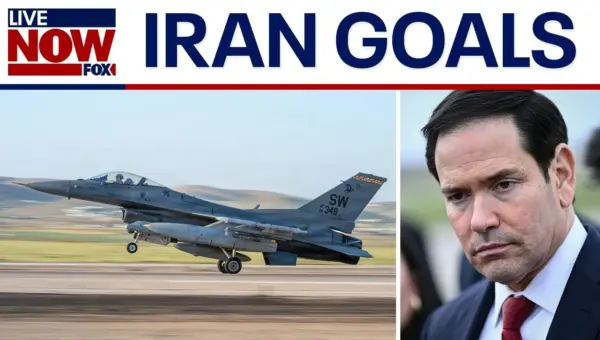
Rubio: US Can Achieve Iran War Goals Without Troops
Senator Marco Rubio outlined a strategy to counter Iran without deploying U.S. ground troops, focusing on weakening the regime and enhancing maritime security. He also criticized Cuba's economic system and expressed concerns about West Bank violence.


Israel Escalates Iran Strikes, Warns of Wider War
Israel has launched significant strikes inside Iran following continued missile fire, warning of further escalation. The conflict risks wider regional instability and economic disruption, especially concerning the Strait of Hormuz.