Stealth Bombers Strike Iran, Escalating Tensions and Unmasking Deception
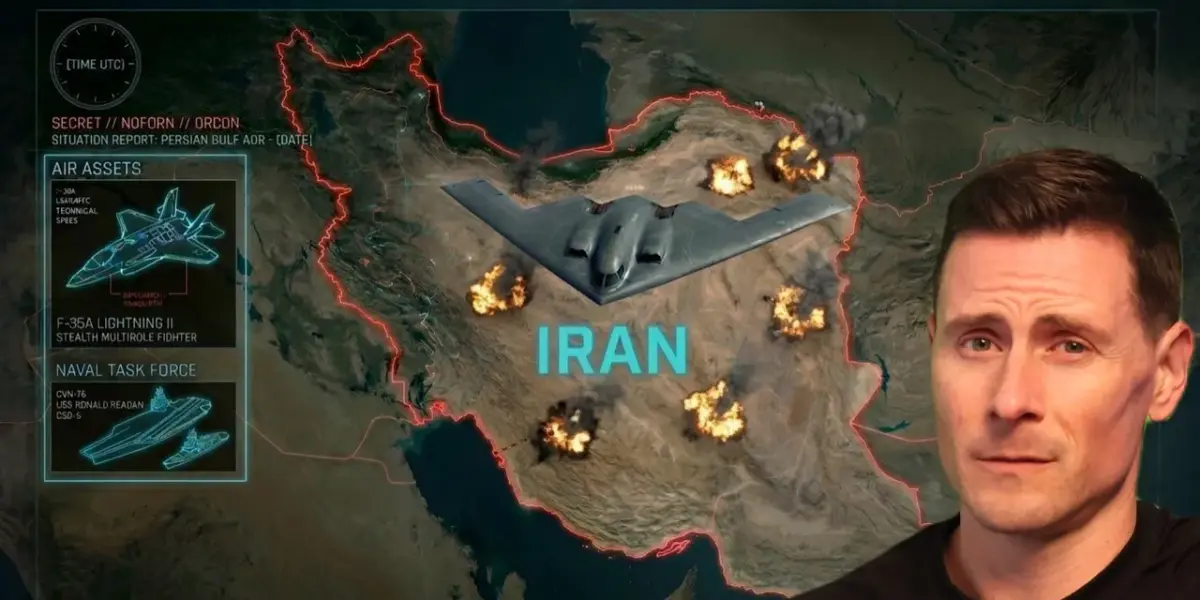
B-2 stealth bombers are striking Iran's hardened missile sites and subterranean facilities, aiming to neutralize threats and hinder nuclear ambitions. The U.S. military's presence in the Strait of Hormuz counters Iran's disruptive rhetoric, while efforts are underway to debunk propaganda and misinformation.

Stealth Bombers Strike Iran, Escalating Tensions and Unmasking Deception
In a significant escalation of regional conflict, B-2 Spirit stealth bombers have reportedly conducted a series of precision strikes against Iran’s hardened ballistic missile launchers and subterranean research and development facilities. These operations, occurring over a concentrated period, signal a strategic effort to neutralize Iran’s advanced weaponry and hinder its nuclear ambitions. The B-2s, flying from the continental United States, have demonstrated an unparalleled capability to penetrate deeply buried and fortified targets, including potential new uranium enrichment sites like the rumored ‘Picax Mountain’ facility, said to be buried hundreds of feet beneath solid granite in the Zagros Mountains.
A Campaign Against Fortified Threats
The core of this recent military campaign appears to be the systematic degradation of Iran’s ballistic missile infrastructure. Reports indicate the use of 2,000lb penetrator bombs, designed to breach hardened underground bunkers. The targeting of these sites, some of which were previously struck during ‘Operation Midnight Hammer,’ suggests Iran’s attempts to relocate or further fortify their nuclear reconstitution efforts. The B-2 bombers, with their stealth capabilities and heavy payload capacity, are uniquely suited for such missions. The transcript highlights the strategic advantage of striking these deep, hidden locations, noting that even if direct penetration of extreme depths like 300 feet at Picax Mountain isn’t immediately feasible, targeting access points like vent shafts and intakes is a plausible strategy.
Challenging Iranian Assertions on Oil Flow
Concurrent with the air strikes, the narrative addresses Iran’s aggressive rhetoric regarding the Strait of Hormuz. The Islamic Revolutionary Guard Corps (IRGC) has threatened to halt oil flow through the vital waterway. However, the analysis points to the resilience of global oil markets, attributing the continued flow to smart tactics employed by oil tankers – disabling transponders to evade rudimentary Iranian targeting systems – and the robust presence of the U.S. Navy. The presence of U.S. naval assets, including a third carrier strike group reportedly en route, serves as a strong deterrent against any IRGC attempts to disrupt shipping. The assertion that the IRGC controls oil flow is directly challenged, with the U.S. Navy credited for maintaining the passage.
Debunking Propaganda and Information Warfare
A significant portion of the analysis is dedicated to dissecting and debunking Iranian and Russian propaganda. Centcom’s efforts to counter false narratives are highlighted, particularly concerning an alleged incident where a U.S. Patriot missile mishapedly hit a neighborhood in Bahrain. The official account, supported by Bahrain’s government, states that an Iranian drone was responsible for the civilian casualties. The coordinated propaganda efforts of Russia and Iran are likened to isolated entities working in tandem, aiming to manipulate international perception. Furthermore, the transcript scrutinizes claims regarding a strike on a girls’ school in Iran, suggesting it could be a staged event by the Iranian regime to garner international sympathy. The timing of the alleged strike, coinciding with the start of hostilities, and the immediate availability of footage are presented as suspicious, aligning with a pattern of using civilian populations as human shields—a tactic attributed to the IRGC and derived from Hezbollah’s playbook.
The Strategic Chessboard: 4D Analysis
The military strategy employed is framed as ‘4D chess,’ focusing on multi-domain dominance. By degrading Iran’s ballistic missile launchers first, the objective is to neutralize its retaliatory capabilities and bring Tehran closer to negotiations. The analysis suggests that the IRGC, facing potential reckoning for past actions, may be opting for a defiant stance. President Trump’s statements are interpreted as a deliberate strategy to keep adversaries guessing, a tactic rooted in Sun Tzu’s ‘The Art of War.’ This approach, characterized by ambiguity in timelines and actions, aims to keep the enemy off-balance and prevent them from formulating effective countermeasures.
Historical Context and Future Outlook
The historical context provided includes Iran’s long-standing ballistic missile program and its alleged pursuit of nuclear capabilities. The repeated strikes on missile sites and suspected enrichment facilities underscore a persistent concern over regional stability. The mention of Iran’s potential to acquire advanced weaponry, coupled with its aggressive posturing, is seen as validating claims of its hegemonic aspirations in the Middle East. The potential for Iran to lash out by mining the Strait of Hormuz is presented as a desperate, albeit potentially self-destructive, move. Such an action would likely trigger a severe U.S. and allied response, targeting Iran’s energy infrastructure and leading to a prolonged air war. The future outlook suggests a period of intense pressure on the Iranian regime, forcing it to either de-escalate and face isolation or risk complete incapacitation of its military and economic capabilities.
Why This Matters
This situation is critical because it represents a direct confrontation with a state sponsor of terrorism that is actively pursuing nuclear weapons and threatening vital global energy routes. The effectiveness of advanced U.S. military technology, particularly the B-2 bomber, in neutralizing deeply buried threats is being tested and demonstrated. The ongoing information war, with Iran and its allies attempting to shape narratives, highlights the importance of discerning factual reporting from propaganda. The potential for miscalculation by any party could lead to a wider conflict with devastating consequences for the region and the global economy. The U.S. strategy appears focused on a decisive, swift degradation of Iran’s offensive capabilities, aiming to force a de-escalation without protracted ground operations.
Technological Prowess and Future Development
The B-2 Spirit, despite its age, remains a cornerstone of U.S. air power, capable of striking targets anywhere in the world undetected. Its continued relevance is underscored by the U.S. decision to order more B-2s, alongside the development of the next-generation B-21 Raider. These aircraft, with their advanced avionics and stealth profiles, are essential for projecting power against sophisticated adversaries. The ability to precisely strike hardened, subterranean targets represents a significant leap in aerial warfare capabilities, ensuring that no bunker is truly safe.
Conclusion
The recent strikes by B-2 bombers against Iran’s strategic assets, coupled with the U.S. military’s assertive stance in the Strait of Hormuz, signal a critical juncture in regional tensions. The campaign aims to dismantle Iran’s missile threat and impede its nuclear program, while simultaneously countering its disruptive rhetoric. The interplay of advanced military technology, strategic deception, and information warfare defines this complex geopolitical standoff, with the potential for either de-escalation or wider conflict looming.
Source: B-2 Bombers Newest Strikes Send Iran Into FULL BLOWN PANIC (YouTube)

Related Articles
G7 Allies Clash Over Iran War Strategy, Urge Focus on Russia
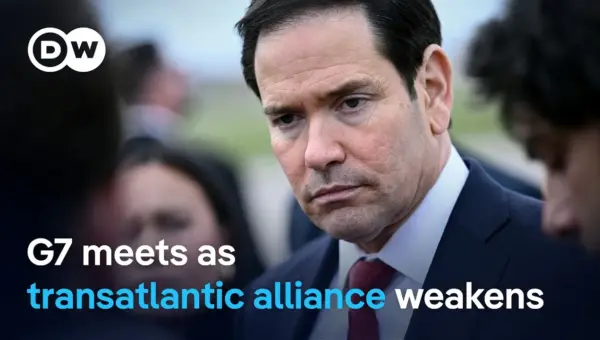
G7 foreign ministers met in Paris, revealing deep divisions over the U.S. war with Iran. European allies urged the U.S. to pressure Russia, linking its actions to the conflict and fearing support for Ukraine will wane.

Iran Blocks China Ships, Exposing Beijing’s Weak Grip
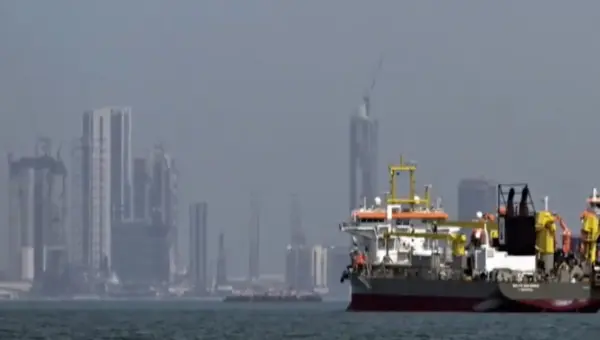
Iran's recent decision to block Chinese ships at the Strait of Hormuz is exposing the limits of Beijing's influence in the Middle East. This action is causing delays and cancellations for Chinese manufacturers, turning a perceived geopolitical win into an economic strain.
Rubio: US Can Achieve Iran War Goals Without Troops
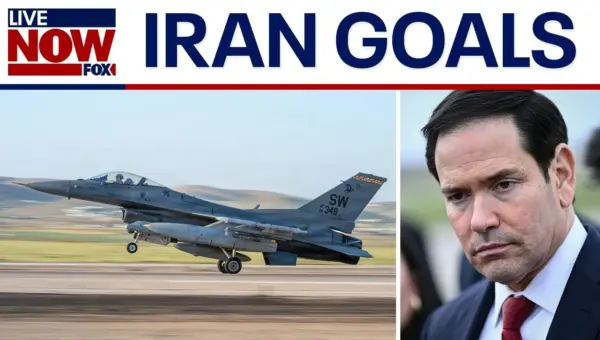
Senator Marco Rubio outlined a strategy to counter Iran without deploying U.S. ground troops, focusing on weakening the regime and enhancing maritime security. He also criticized Cuba's economic system and expressed concerns about West Bank violence.