State Supreme Courts Deliver Setbacks to Republican Redistricting Efforts Amidst ‘Full-Scale Panic’
State supreme courts in Utah and Virginia have recently rejected Republican attempts to redraw electoral maps in their favor, intensifying battles over gerrymandering. These state-level setbacks come amidst a broader Republican strategy to influence elections through legal challenges, fueled by what some observers describe as party-wide panic. The political landscape is further complicated by an upcoming U.S. Supreme Court decision on Section 2 of the Voting Rights Act, which could have catastrophic implications for minority voting rights and the future of American democracy.

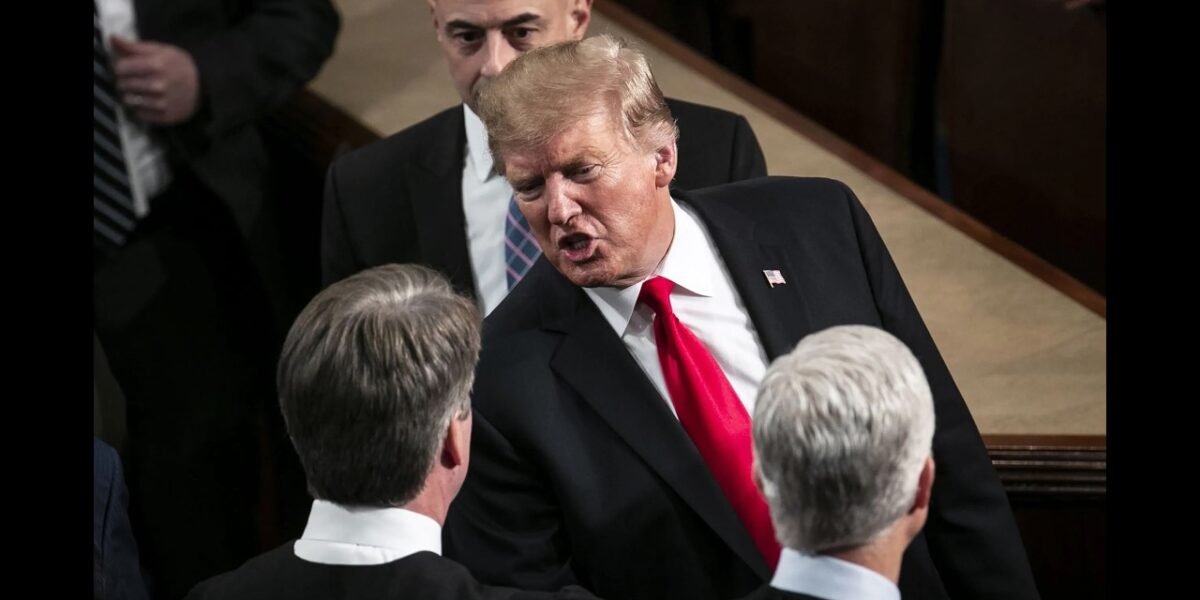
State Supreme Courts Deliver Setbacks to Republican Redistricting Efforts Amidst ‘Full-Scale Panic’
Recent rulings from state supreme courts in Utah and Virginia have dealt significant blows to Republican-led efforts to redraw electoral maps, sparking what some observers describe as “full-scale panic” within the party. These judicial decisions, alongside a crucial upcoming U.S. Supreme Court case concerning the Voting Rights Act, underscore the intensifying battle over electoral integrity and the future of American democracy.
The outcomes in Utah and Virginia highlight a broader pattern of legal challenges to partisan gerrymandering, with state judiciaries increasingly serving as critical arbiters. As the 2026 midterm elections loom, these state-level skirmishes, combined with the profound implications of potential federal court decisions, are setting the stage for a deeply contentious electoral landscape.
Utah: A Victory for Fair Maps, Despite Continued Republican Pushback
In Utah, the state’s highest court recently slammed the door on Republican attempts to overturn a lower court’s redistricting order. The controversy centered on the heavily Democratic-leaning Salt Lake City area, which Republicans had previously fragmented into four different congressional districts. This practice, known as ‘cracking,’ is a common gerrymandering tactic designed to dilute the voting power of a particular demographic or political group by spreading its voters across multiple districts, preventing them from forming a majority in any single one.
A state court had intervened, ruling that this fracturing was impermissible and mandating the creation of a Salt Lake City-centric district. Such a district would almost certainly elect a Democrat, a prospect that has evidently alarmed state Republicans. Rather than embrace the challenge of competing in a newly drawn district, the party pursued an aggressive legal strategy, appealing the decision multiple times up to the Utah Supreme Court. The state’s highest judicial body, however, upheld the lower court’s ruling, effectively ending the immediate state-level legal avenue for the Republican challenge.
Despite this setback, Republicans are reportedly not giving up. They are expected to pursue a separate federal court case, hoping to bring their challenge before the U.S. Supreme Court. Analysts, however, express skepticism about the likelihood of success at the federal level, particularly given the Supreme Court’s past precedents regarding state-level redistricting. Moreover, concerns have been raised about other tactics being employed in Utah, including efforts to pack the state Supreme Court – a move that would expand the number of justices, potentially allowing for the appointment of more ideologically aligned judges – and attempts to repeal state constitutional provisions that currently prevent such gerrymandering practices.
Adding another layer of complexity is a proposed ballot measure aiming to repeal the constitutional provision that safeguards against the kind of district fracturing seen in Salt Lake City. The petition effort for this measure has been marred by allegations of fraud, with reports suggesting a high percentage of invalid signatures in some counties and even purported involvement from high-profile political figures. The validity of these signatures remains under scrutiny, and whether the measure will even qualify for the ballot is still uncertain. Should it proceed, it would represent a significant test of public opinion regarding electoral fairness in the state.
Virginia: A Recurring Legal Battle Over Electoral Maps
Virginia presents a similar narrative of protracted legal battles over redistricting. Republicans in the state have repeatedly sought to block a ballot initiative aimed at redrawing the electoral map, a move projected to create an additional four districts favorable to Democrats. Their strategy has involved seeking preliminary relief from trial courts in conservative-leaning counties, most notably Tazwell County.
In a previous instance, Republicans secured a favorable ruling from a Tazwell County trial court, only to have it swiftly overturned by the Virginia Supreme Court, which affirmed its desire for the ballot initiative to proceed. Undeterred, the Republican National Committee (RNC) and the National Republican Congressional Campaign Committee (NRCC) have once again filed a similar lawsuit, again in Tazwell County, and have again secured preliminary relief from the local judge.
However, legal experts widely anticipate that this latest effort will meet the same fate as its predecessor. The Virginia Supreme Court has already demonstrated its stance on the matter, and observers predict it will once again uphold the integrity of the ballot initiative. This repeated attempt to leverage a sympathetic local court, despite prior rebukes from the state’s highest court, underscores the perceived desperation within Republican ranks to shape electoral outcomes through legal means.
A Broader Context of Republican Struggles and Strategic Litigation
These state-level redistricting battles are not isolated incidents but rather symptoms of a broader political struggle. Commentators suggest that these aggressive legal maneuvers stem from a deep-seated anxiety within the Republican Party regarding their electoral prospects. The argument posits that, lacking a broadly popular agenda to run on, and facing the perceived electoral drag of figures like Donald Trump, Republicans are increasingly resorting to “extrajudicial” methods to secure and maintain power.
The strategy appears to be a multi-pronged approach: suppress voter turnout, challenge ballot counting, and, crucially, manipulate electoral maps to engineer permanent majorities. This focus on legal and procedural tactics, rather than on competing for votes based on policy platforms, is seen by critics as an attempt to circumvent democratic processes and manufacture favorable outcomes.
The discussion also touched upon the financial aspect of these political battles, contrasting the substantial resources poured into legal challenges and high-profile political figures’ lavish spending with the rising cost of living for average Americans. This perceived disconnect further fuels public skepticism about the motivations behind these redistricting fights.
Moreover, the notion of “moderate Republicans” was critically examined, with the assertion that such figures often align with the broader MAGA agenda despite stylistic differences. This perspective suggests that the underlying ideological drive across the Republican spectrum remains consistent, particularly when it comes to electoral control.
The Looming Shadow of the U.S. Supreme Court: The *Klay* Case and Section 2 of the Voting Rights Act
While state supreme court decisions are shaping electoral maps, a potentially far more impactful ruling is anticipated from the U.S. Supreme Court in the coming weeks or months. The case, referred to as the *Klay* case, centers on Section 2 of the Voting Rights Act (VRA), a landmark piece of civil rights legislation.
Section 2 of the VRA prohibits voting practices or procedures that discriminate on the basis of race, color, or membership in a language minority group. It has been a critical tool in challenging discriminatory redistricting plans and other barriers to voting, particularly in states with histories of racial discrimination. The potential gutting or overturning of Section 2 would be, as described by experts, an “earthshatteringly big deal” and could have catastrophic consequences for democracy.
If the Supreme Court were to rule in favor of the Republicans in the *Klay* case, it could effectively allow states, particularly in the South and West, to redraw their electoral maps in ways that “obliterate minority voting rights.” This would open a new and aggressive round of redistricting and gerrymandering, potentially disenfranchising millions of minority voters and fundamentally altering the demographic and political composition of congressional and state legislative bodies.
The implications for the 2026 elections and beyond are immense. Such a decision would empower partisan actors to create districts that are even less representative of the population, further entrenching partisan control and making it more difficult for minority communities to elect candidates of their choice. Legal and civil rights organizations are preparing for an intense battle, both in the courts and in the court of public opinion, to counteract any attempts to diminish the protections afforded by the VRA.
The urgency of this issue is paramount, with calls for widespread public awareness and understanding. Critics argue that mainstream media often fail to adequately convey the gravity of such cases, leading to an uninformed populace. Therefore, it is crucial for citizens to arm themselves with accurate information to understand the potential ramifications and challenge narratives that downplay the significance of such judicial decisions.
The Battle for Democracy: Beyond 2026
The ongoing legal skirmishes in states like Utah and Virginia, coupled with the looming U.S. Supreme Court decision on the Voting Rights Act, underscore the volatile nature of election law in contemporary American politics. These battles are not merely about partisan advantage; they are fundamental contests over the principles of fair representation, equal access to the ballot, and the very structure of democratic governance.
The efforts to manipulate electoral maps and challenge voting rights are driven by a singular goal: to secure long-term political power. As the political landscape continues to polarize, the role of independent judiciaries and an informed citizenry becomes ever more critical in safeguarding the integrity of the electoral process. The outcomes of these cases will not only define the immediate future of American elections but will also cast a long shadow over the foundational principles of its democracy for decades to come.
Source: “Full scale panic!” Supreme Courts drop NIGHTMARE news for Trump (YouTube)

Related Articles

Utah Court Rejects GOP Redistricting; Midterm Impact Debated
A Utah court has blocked Republican attempts to gerrymander congressional districts, securing a map favorable to Democrats for the 2026 midterms. Legal experts warn of ongoing redistricting battles nationwide and potential impacts on the Voting Rights Act.
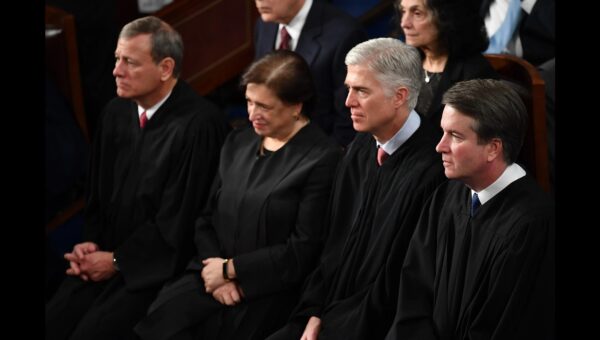
Supreme Court’s Looming Decision: A ‘Calamity’ for Voting Rights and American Democracy
A looming Supreme Court decision in the Cala v. Milligan case threatens to dismantle Section 2 of the Voting Rights Act, potentially leading to the redrawing of dozens of Black-held congressional districts. Legal experts warn this could be a “calamity for voting rights” and a significant blow to minority representation, necessitating a proactive, innovative approach to defending American democracy.

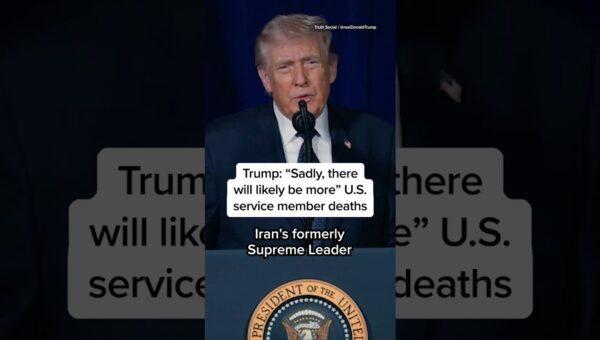
Trump Warns of More US Deaths in Escalating Conflict
Former President Donald Trump issued a somber warning on Truth Social, stating that further U.S. service member deaths are "likely" as geopolitical tensions escalate. He condemned Iran's former supreme leader, Ayatollah Ali Khamenei, and vowed retribution for fallen soldiers.