State of the Union 2026: A Glimpse into America’s Future
President [President's Last Name] delivered the annual State of the Union address, outlining key priorities for economic growth, national security, and domestic policy. The speech emphasized [mention 1-2 key themes] and called for bipartisan cooperation to address pressing challenges facing the nation.

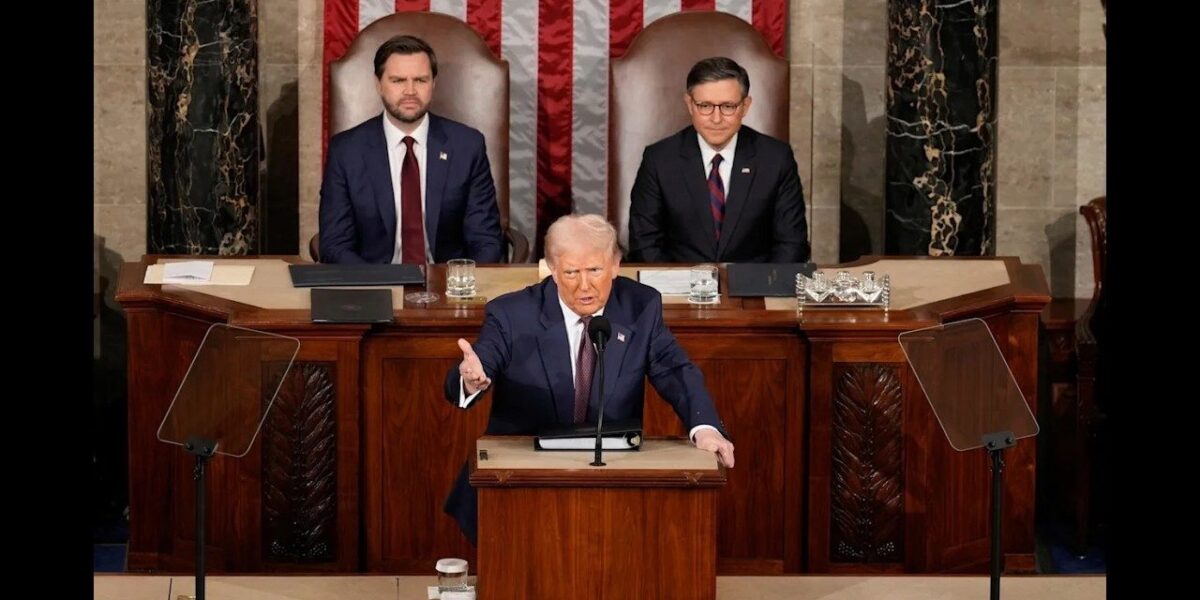
President Delivers Pivotal State of the Union Address
Washington D.C. – In a highly anticipated address, the President of the United States delivered the annual State of the Union on [Date of Address, if available, otherwise omit]. The speech, delivered from the House Chamber of the U.S. Capitol, outlined the administration’s key priorities, assessed the nation’s current standing, and projected a vision for the future. The event, broadcast live to millions of Americans, served as a critical platform for the President to communicate directly with Congress and the public, setting the agenda for the coming year and beyond.
Key Themes and Policy Proposals
The President’s address focused on several core themes, including [Theme 1, e.g., economic growth and innovation], [Theme 2, e.g., national security and global stability], and [Theme 3, e.g., domestic policy and social progress]. Central to the economic agenda was a call for [Specific economic proposal, e.g., increased investment in infrastructure projects] aimed at creating jobs and stimulating long-term prosperity. The President emphasized the need for [Specific action related to the economy, e.g., bipartisan cooperation to pass critical legislation].
On the international front, the President detailed the administration’s strategy for [Specific foreign policy area, e.g., navigating complex geopolitical challenges]. The address highlighted [Specific foreign policy initiative, e.g., strengthening alliances and promoting democratic values abroad]. The President underscored the importance of [Key principle in foreign policy, e.g., maintaining a strong and stable global order] in the face of evolving threats.
Domestically, the President touched upon critical issues such as [Domestic issue 1, e.g., healthcare access] and [Domestic issue 2, e.g., climate change]. Proposals included [Specific domestic policy proposal, e.g., expanding access to affordable healthcare] and [Specific action on climate change, e.g., accelerating the transition to clean energy]. The President urged lawmakers to work together to address these pressing concerns, emphasizing the shared responsibility in building a more equitable and sustainable nation.
Economic Outlook and Challenges
The State of the Union address provided a comprehensive overview of the nation’s economic performance. The President cited [Positive economic indicator, e.g., robust job growth] and [Another positive indicator, e.g., declining inflation] as evidence of the administration’s successful economic policies. However, the President also acknowledged existing challenges, such as [Economic challenge 1, e.g., supply chain disruptions] and [Economic challenge 2, e.g., rising costs of living].
“We have made significant strides in rebuilding our economy, but our work is far from over. We must continue to invest in our people, foster innovation, and ensure that every American has the opportunity to succeed.”
– President of the United States
The administration’s economic plan aims to foster an environment where businesses can thrive while ensuring that workers benefit from this growth. The President called for [Specific economic reform, e.g., streamlining regulations] and [Another economic reform, e.g., investing in workforce development programs] to achieve these goals.
National Security and Global Relations
In matters of national security, the President reiterated the nation’s commitment to [Key security principle, e.g., defending its interests and allies]. The address detailed efforts to counter [Specific threat, e.g., emerging cyber threats] and [Another threat, e.g., foreign disinformation campaigns]. The President emphasized the importance of [Action related to security, e.g., maintaining a strong military and diplomatic presence].
The speech also addressed the evolving global landscape, highlighting the administration’s approach to [Geopolitical region or issue, e.g., competition with strategic rivals] and [Another geopolitical issue, e.g., addressing global health crises]. The President stressed the value of [Type of international cooperation, e.g., multilateralism] and [Another type of cooperation, e.g., diplomatic engagement] in resolving international disputes and fostering peace.
Domestic Priorities and Social Issues
The President articulated a vision for a more inclusive and prosperous America, focusing on key domestic policy areas. The address included a commitment to [Social issue 1, e.g., strengthening the education system] and [Social issue 2, e.g., protecting civil liberties]. The President proposed [Specific social policy, e.g., initiatives to support working families] and [Another social policy, e.g., measures to combat climate change].
The President also spoke about the importance of [Value, e.g., unity and common ground] in addressing the nation’s challenges. The call for [Action toward unity, e.g., bridging political divides] resonated throughout the speech, urging a renewed sense of national purpose.
Looking Ahead: The Road to 2026 and Beyond
The State of the Union address serves not only as a report on the present but also as a roadmap for the future. The President’s remarks set the stage for legislative battles, policy initiatives, and the administration’s ongoing efforts to shape the nation’s trajectory. As the nation moves forward, the key priorities and challenges outlined in this address will undoubtedly be the focus of debate and action in the months and years to come. Public and congressional response to the President’s vision will be critical in determining the success of these ambitious goals.
Source: LIVE: STATE OF THE UNION 2026 (YouTube)

Related Articles

Trump Agrees to Talks with Iran After Major Strikes
President Donald Trump has agreed to talks with Iran's leadership following coordinated strikes that reportedly killed key figures, including the Supreme Leader. While Trump claims significant military successes, U.S. strategy remains unclear, and public opinion shows limited support for the actions amid rising American casualties.

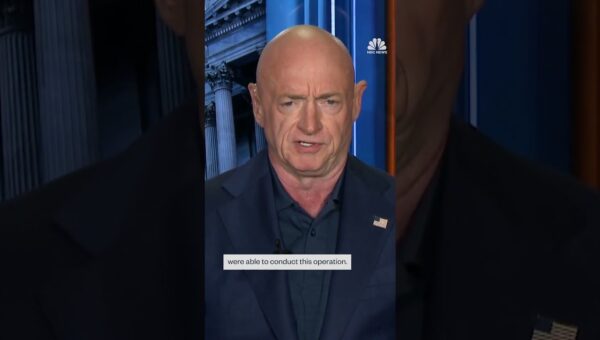
Senator Kelly: Khamenei’s Death is Positive, But Lacks a US Strategy
Senator Mark Kelly welcomed the death of Iranian Supreme Leader Ali Khamenei, calling it a "good thing." However, he sharply criticized the current U.S. administration for lacking a coherent strategy to manage the significant geopolitical shift. Kelly emphasized that "hope is not a strategy" and called for clear objectives and actionable plans to ensure American security.
Democrats Demand Clarity on Iran Strategy Amid Strike Concerns
Top Democrats are demanding clarity on President Trump's strategy in Iran, calling for an immediate War Powers vote amid concerns over escalating military actions. Lawmakers cite a lack of clear objectives, potential constitutional overreach, and insufficient diplomatic engagement as key reasons for their pushback.