Starship V3 Ignites: First Static Fire Tests Near
SpaceX's Starship Version 3 is gearing up for its first static fire tests, with Ship 39 undergoing rigorous cryogenic and actuation trials. Meanwhile, NASA's Artemis program reveals a revised lunar strategy and standardization of the SLS, aiming for a sustained presence on the Moon.


Starship V3 Ignites: First Static Fire Tests Near
The relentless pace of innovation at SpaceX is on full display this week as the company pushes forward with its next-generation Starship, Version 3. With the much-anticipated first static fire test of the Super Heavy booster on Pad 2 seemingly days away, and significant progress on Starship test articles, the dawn of a new era in spaceflight is palpable. This surge in activity is mirrored by crucial updates from NASA’s Artemis program, detailing a revised strategy for lunar exploration and the standardization of its Space Launch System (SLS).
Starship V3 Undergoes Rigorous Testing
SpaceX’s Starship development has entered a critical phase with the rollout of Ship 39 to the Massey’s facility for pre-flight testing. This Version 3 test article is undergoing a battery of tests designed to validate its new design features. Visuals from the site reveal the forward and aft flaps being rigged and connected to actuators, integral to the ship’s control surfaces. These tests are occurring within specialized squeeze hardware, designed to simulate the stresses the vehicle will endure.
The testing campaign has seen the return of cryogenic fluid flow to the static fire trench, a significant milestone since the previous test article, Ship 36, experienced an anomaly. Ship 39 has undergone multiple cryogenic tests, including a particularly revealing one where the flaps were observed to move even before propellant loading. This suggests a sophisticated system for flap actuation, potentially involving tensioning straps to mimic flight conditions. The tests also confirmed the functionality of new vents on the Version 3 design, including the reaction control system (RCS) located beneath the forward flaps. The RCS is crucial for precise maneuvering, especially as SpaceX gears up for future ship-to-ship docking capabilities.
Beyond Ship 39, progress continues on other Starship components. Ship 40, designated for the second Version 3 flight, has come together rapidly, with its complex aft section, housing six Raptor 3 engines, recently installed. This aft section features intriguing new pipework configurations designed to optimize engine bay access and potentially replace previous engine bleed pipes. Furthermore, SpaceX is demonstrating remarkable production line efficiency by staging hardware, such as raceways and aft flaps, for immediate installation on the center stand once a ship is lifted. This streamlined approach aims to reduce turnaround times and increase operational tempo.
The Super Heavy booster development is also advancing. The former booster aft test article test stand, known as the super crusher, is being reconfigured. The focus has shifted from simulating thrust to preparing for the testing of new Version 3 Super Heavy grid fins. This is particularly important as the B18.3 test article, initially expected to conduct these tests, was lost prematurely. The forward section of the failed test unit is undergoing extensive refurbishment, and it’s speculated that a replacement aft section may be prepared for stacking.
Artemis Program Evolves with New Lunar Strategy
NASA’s Artemis program is undergoing significant strategic adjustments, with a renewed emphasis on establishing a lunar presence as a stepping stone to Mars. This shift, revealed in recent infographics and updates, aims to maintain U.S. leadership in space exploration. The Artemis II mission, a crewed flyby of the Moon, has been rescheduled to April. The mission’s Space Launch System (SLS) rocket recently returned to the Vehicle Assembly Building for repairs to the Interim Cryogenic Propulsion Stage (ICPS). Engineers identified a dislodged seal in the helium quick disconnect as the cause of the issue. While addressing this, they also performed system refreshes, including new batteries for the flight termination system and other crucial components, and replaced a seal on the core stage’s liquid oxygen line. A wet dress rehearsal is anticipated later this month, with a launch targeted for April.
Looking further ahead, NASA is standardizing the SLS configuration and increasing the number of missions. Artemis III is now framed as a demonstration mission to test commercial lunar landers from both SpaceX and Blue Origin. This mission will involve launching a crew on Orion via SLS, followed by a rendezvous and docking with a private lunar spacecraft. The readiness of these landers will determine which provider will ferry astronauts to the lunar surface and back.
A significant change for Artemis IV, slated for early 2028, involves a potential departure from the original plan. NASA is exploring alternative second stages for the SLS, moving away from the limited ICPS and canceling development of the Exploration Upper Stage and Mobile Launcher 2 due to significant delays. This includes hints of utilizing a Centaur upper stage. The cancellation of Mobile Launcher 2, a significant investment, raises questions about the future launch infrastructure for the SLS, especially concerning the need for rapid turnaround and repair of launch facilities to increase flight cadence. The resilience of the existing Mobile Launcher 1 following the Artemis II mission will be a critical factor in NASA’s ability to meet its ambitious launch schedules.
The Artemis V mission, targeting a lunar landing by late 2028 using the standardized SLS, is intended to be the first of a series of annual missions aimed at gradually constructing a permanent lunar base. However, concerns remain regarding NASA’s current budget levels and the potential need for increased funding, possibly through defense allocations, to accelerate these ambitious plans.
Falcon 9 Continues Its Busy Schedule
SpaceX’s workhorse, the Falcon 9 rocket, continues to support its Starlink constellation with regular launches. This past week saw multiple Starlink deployments, including a batch of 25 satellites from Vandenberg Space Force Base and two additional missions from Florida carrying 29 satellites each. These launches are crucial for expanding Starlink’s global internet coverage and enabling new services like Starlink Mobile, which promises 5G-like speeds from space. The new V2 satellites are designed with significantly higher data density, enabling seamless streaming, browsing, and voice calls, akin to terrestrial networks.
The Falcon 9’s reliability was further demonstrated with multiple successful booster landings, including booster 1082’s 20th landing and booster 1078’s 26th. Despite the high cadence, the week’s three Falcon 9 launches were described as a “quiet week” for the company, highlighting their operational tempo.
International Launches and Anomalies
Beyond SpaceX’s activities, other space endeavors faced challenges. Space One’s third attempt to launch its Kairos rocket from Japan ended in failure shortly after liftoff, with the rocket experiencing an apparent explosive event and rapid disassembly. This follows two previous launch failures in March and December 2024, underscoring the difficulties in developing new launch vehicles. Rocket Lab, however, achieved a successful launch of its Electron rocket for a classified payload, deploying a BlackSky Generation-3 satellite to orbit. The mission, named ‘Insight At Speed Is A Friend Indeed’, proceeded smoothly through staging and kick stage separation, with fairing separation views withheld at the customer’s request.
Looking Ahead
The coming days promise significant developments. The imminent static fire of the Super Heavy booster on Pad 2, coupled with the ongoing testing of Starship V3, signals a crucial period for SpaceX’s Starship program. Simultaneously, NASA’s Artemis missions are charting a new course for lunar exploration, with ambitious goals for establishing a sustained human presence on the Moon. The interplay between these major space initiatives will undoubtedly shape the future of space exploration for years to come.
Source: Starship Version 3 Is Finally About To Light Up! (YouTube)

Related Articles


SpaceX Eyes AI Data Centers in Orbit: A Leap for Civilization?
Elon Musk's SpaceX is exploring the ambitious deployment of AI data centers in orbit and on the Moon. Despite initial skepticism, experts suggest SpaceX's launch capabilities and the economics of AI compute could make this venture viable, potentially accelerating humanity's expansion into the solar system.
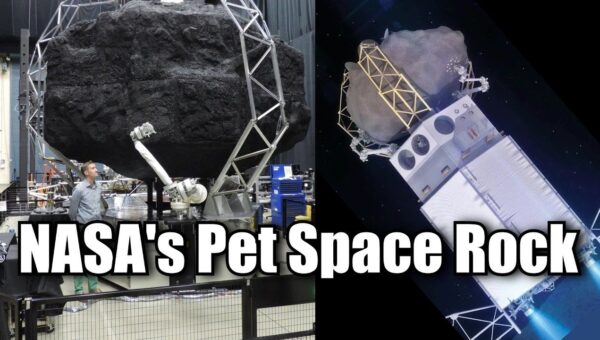
NASA’s Asteroid Mission: From Mars Dream to Lunar Gateway
NASA's ambitious Asteroid Redirect Mission (ARM), designed as a stepping stone to Mars, aimed to capture a small asteroid boulder and tow it to lunar orbit for astronaut testing. Though cancelled, its advanced propulsion and robotic technologies live on in NASA's Lunar Gateway and future deep space exploration plans.

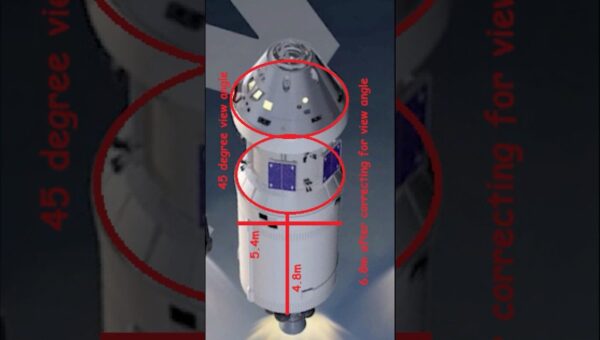
NASA’s Evolving SLS Rocket Hints at New Upper Stage
NASA's Artemis program may be adopting a new upper stage for its Space Launch System (SLS) rocket, potentially utilizing the commercially available Centaur V. An updated infographic reveals design changes and hints at evolving mission strategies, including advanced lunar lander operations.