Starship Pivots: SpaceX Eyes Lunar Base Over Mars
SpaceX has dramatically shifted its Starship strategy, prioritizing the establishment of a lunar base over an immediate Mars mission. This pivot leverages the Moon's accessibility and resources as a stepping stone for future deep space ambitions, while Starship development continues with V3 testing and infrastructure upgrades at Starbase.

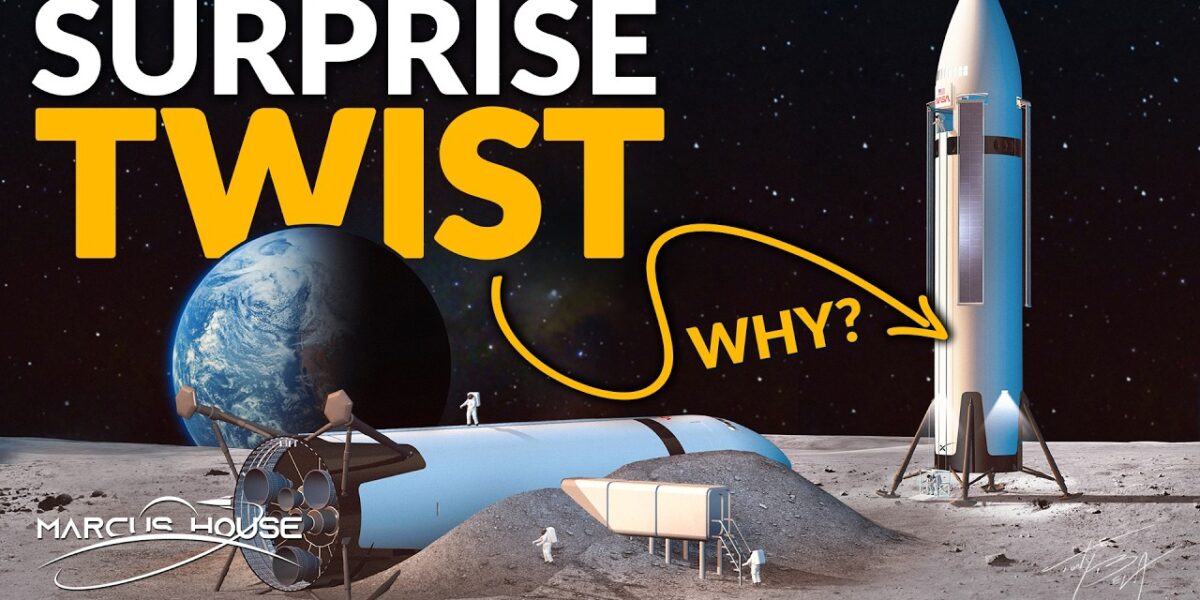
Starship Pivots: SpaceX Eyes Lunar Base Over Mars
SpaceX has dramatically shifted its long-term strategy for its colossal Starship vehicle, pivoting from an initial focus on Mars to prioritizing the establishment of a lunar base. This significant change in direction, revealed through recent development updates and strategic realignments, signals a new era for lunar exploration and utilization, leveraging Starship’s immense capabilities for a more immediate extraterrestrial foothold.
Starship V3 Testing Intensifies
At SpaceX’s Starbase facility, preparations for the first flight of Starship Version 3 are in full swing. Recent cryogenic proof testing of Super Heavy Booster 19 has been a major focus. This fourth cryo test involved a full propellant load, with all valves functioning optimally to manage excess pressure. The testing culminated in a visually striking display as the integrated hot staging system, a critical new feature, caused the dome of the Starship upper stage to frost over—a phenomenon never before observed in such detail.
The hot staging system, along with a redesigned aft engine plate and complex plumbing for the Raptor Version 3 engines, represents a significant upgrade. The new near-Falcon 9-sized transfer tube is a key component of these advancements. Following the successful structural integrity tests, Booster 19 has been returned to the build site for checks and the anticipated installation of its 33 Raptor Version 3 engines. Enhanced steel plates on the forward dome are visible, designed to protect the vehicle during the intense hot staging separation.
Pad 2 and Future Flights
The upcoming Flight 12, eagerly anticipated after a longer-than-expected wait, is on a tight schedule, with a target flight by mid-March. Super Heavy Booster 19 has been moved to Megabay 1 for final preparations. A critical aspect of this phase is the static fire test campaign at the brand new Pad 2. This will not only test the booster and its 33 Raptor engines together for the first time but also validate the new deluge system, flame trench, and propellant systems—essentially testing the entire launch infrastructure.
Meanwhile, preparations for Flight 13 are also advancing. Booster 20 is receiving two new ring sections, bringing the total to four sections for the liquid oxygen tank. Ship 40, expected to fly on Mission 13, has also received its common dome section. The Gigafactory construction continues, with the third level nearing completion, providing enhanced structural support and access as the facility grows taller.
Starbase Expansion and Infrastructure Upgrades
The Starbase launch site itself is undergoing significant expansion, effectively doubling the available work area with new perimeter fencing. Plans include on-site methane production, similar to the Air Separation Unit concept, which aims to drastically reduce off-site deliveries and increase launch frequency. Existing structures are being cleared, and new roads, including a D5 road serving as a new entrance, are being constructed.
At Pad 1, upgrades are underway, including the manual opening of the tower arms to allow for drilling operations below. Sheet piles are being delivered and installed, suggesting progress on the foundational work. The tank farm expansion is also nearing completion, with four new large tanks in place, expected to replace older, smaller methane tanks. At Pad 2, an LR11000 crane is being prepared to install a new 180-meter tower roof, with workers already reinforcing the structure.
Test Article Updates and Strategic Shift
Testing and analysis of Starship prototypes continue. The bottom half of the B18.3 test article, after being removed from the can crusher, is likely to be scrapped on-site, although its transfer tube section has been salvaged. The other half of B18.3 is still being worked on in the Starfactory, with indications that some parts may be reused. In contrast, the more successful B18.1 test tank, having completed 17 cryogenic proof and stress tests, is being freed from its testing cage.
The most significant announcement this week is SpaceX’s strategic pivot away from an immediate Mars focus towards establishing a lunar base. While Starship’s methane-oxygen propulsion system was initially optimized for Mars due to the potential for in-situ resource utilization (ISRU) from the Martian atmosphere, the company now sees the Moon as a more practical and achievable near-term goal. The initial target of sending a demo Starship to Mars by late 2026 has been canceled, with the Mars plan pushed back by five to seven years. This marks a departure from earlier visions of the Interplanetary Transport System, BFR, and Starship, which were heavily Mars-centric.
The Lunar Advantage
The new focus is on transporting large amounts of cargo and infrastructure to the Moon to build a sustainable base. This lunar base could eventually host a factory capable of producing satellites, which would then be launched into space using a lunar mass driver. The rationale behind this shift is that unlocking lunar resources will make SpaceX’s broader goals more attainable. Launching mass, whether satellites, raw materials, or supplies, from the Moon requires significantly less energy than from Earth, due to the Moon’s lower gravity and lack of atmosphere.
The Moon’s abundant stores of hydrogen, oxygen, silicon, and iron further enhance its appeal as a resource hub. Unlike the 26-month launch windows and six-month journey to Mars, lunar missions can launch multiple times a month and take only two days, making it a far more accessible stepping stone for deep space ambitions.
Falcon 9 Operations and Crew Missions
Falcon 9 continues its busy flight schedule. Following a second-stage anomaly on the Starlink Group 17-32 flight, SpaceX returned to flight swiftly. Booster 1088 successfully launched Starlink Group 17-33, marking its 13th landing. Booster 1100 then launched Group 17-34. The second-stage issue was attributed to a gas bubble in the transfer tube, and SpaceX has refined its engine chill and deorbit procedures. The company’s success rate in deorbiting upper stages is remarkable, with only a small fraction remaining in orbit, and those are tracked meticulously.
The Crew Access Arm at Pad 39A has been removed for maintenance and to clear the way for Falcon Heavy and Starship launches. While it may not return for routine crewed flights, it will be stored for potential emergency use. NASA’s Crew-12 mission successfully launched aboard a Falcon 9 from SLC-40, carrying astronauts Jessica Meir, Jack Hathaway, Sophie Adenot, and Andrey Fedyaev to the International Space Station. The mission’s Crew Dragon Freedom landed at the new Landing Zone 40, adjacent to the launch pad.
Vulcan’s Challenging Flight and Blue Origin’s Lunar Ambitions
United Launch Alliance’s Vulcan rocket experienced an anomaly during the USSF-87 mission. Approximately 20 seconds into flight, one of the four solid rocket boosters (SRBs) encountered an issue with its nozzle extension, shedding debris. Despite the visibly concerning event and a resulting roll, the mission proceeded successfully, delivering its classified payload to geosynchronous orbit. An investigation into the anomaly is expected, which may lead to further delays for the Vulcan program.
Meanwhile, Blue Origin is making strides towards its own lunar ambitions. Its Blue Moon Mk-1 lander is undergoing thermal vacuum chamber testing at NASA’s Johnson Space Center. Internally, Blue Origin is reportedly pursuing an alternative strategy for the Artemis III mission, aiming for a lunar lander solution that bypasses the need for in-orbit refueling. This would involve four New Glenn rocket launches to deliver transfer stages and the crewed lander, culminating in a direct landing on the lunar surface.
New Glenn and Amazon’s Satellite Constellation
Blue Origin is also preparing for the upcoming New Glenn launch, which will feature its first-ever reusable first stage. The company is exploring the possibility of reusing New Glenn’s second stage, evidenced by a job posting for a Director of Reusable Upper Stage Development. Given the second stage’s cost and complexity, reusability could offer significant economic benefits.
Amazon’s Project Kuiper is also progressing, with Amazon’s first mission using Arianespace’s Ariane 6 rocket successfully launching 32 satellites. This marks the largest batch of satellites deployed to date for the Kuiper constellation. Amazon has an extensive launch agreement with Arianespace and plans to begin offering services in 2026. The FCC has also cleared Amazon’s second-generation LEO system, which includes over 7,000 satellites and aims for global coverage, including polar regions.
Relativity Space’s Terran R Progress
Relativity Space provided an update on its Terran R heavy-lift launch vehicle. The Stage 2 tank is undergoing cryogenic COPV installation, and the Stage 1 tank is in the integration phase. Work is progressing on the thrust structure, fire ceiling, and avionics tray, as well as the interstage forward barrel. The company is also testing its Aeon R engines at NASA’s Stennis Space Center and developing the Aeon V engine. Site construction at Launch Complex 16 is also advancing rapidly, with the company aiming for a first flight later this year.
The Future of Space Exploration
SpaceX’s strategic shift towards a lunar base underscores the evolving priorities in space exploration. While the dream of Mars remains, the Moon offers a more accessible and resource-rich stepping stone for humanity’s expansion into the solar system. The coming years promise a thrilling race to the Moon between SpaceX and Blue Origin, alongside continued advancements in satellite deployment and heavy-lift capabilities from various players in the space industry.
Source: SpaceX’s Starship Strategy Just Changed… Big Time! (YouTube)

Related Articles

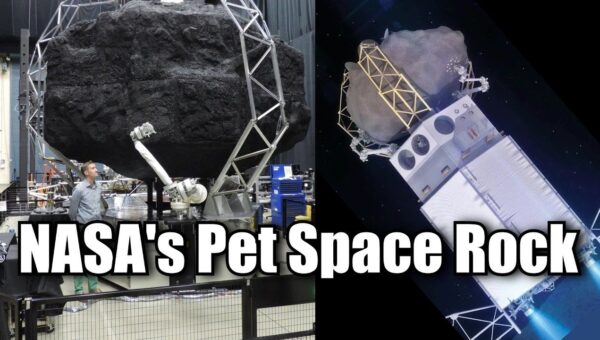
NASA’s Asteroid Mission: From Mars Dream to Lunar Gateway
NASA's ambitious Asteroid Redirect Mission (ARM), designed as a stepping stone to Mars, aimed to capture a small asteroid boulder and tow it to lunar orbit for astronaut testing. Though cancelled, its advanced propulsion and robotic technologies live on in NASA's Lunar Gateway and future deep space exploration plans.

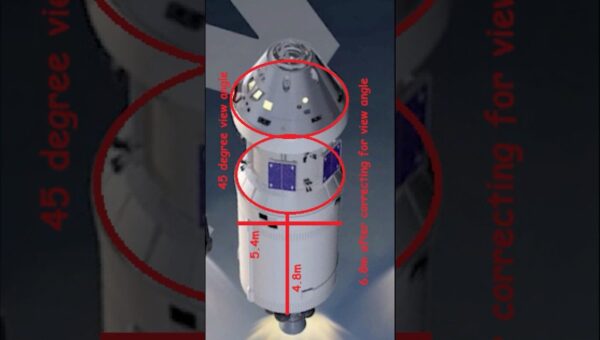
NASA’s Evolving SLS Rocket Hints at New Upper Stage
NASA's Artemis program may be adopting a new upper stage for its Space Launch System (SLS) rocket, potentially utilizing the commercially available Centaur V. An updated infographic reveals design changes and hints at evolving mission strategies, including advanced lunar lander operations.


SpaceX Starship V3 Nears First Flight Amidst Major Artemis Shakeup
SpaceX eyes March for Starship V3's maiden flight as new testing reveals design improvements. Meanwhile, NASA's Artemis program faces delays and strategic shifts, with Artemis III repurposed as a LEO test mission.