Starship Construction Accelerates, Starlink Reconfigures Orbit
SpaceX's Starbase facility is buzzing with activity, featuring major upgrades to the Starship launch tower and accelerated production of the Starship vehicles. Concurrently, the Starlink constellation is undergoing a significant orbital reconfiguration to enhance performance and safety.


Starship Construction Accelerates, Starlink Reconfigures Orbit
Starbase Buzzes with Activity as Starship Nears Next Phase
The dawn of the new year has ignited a furious pace of development at SpaceX’s Starbase facility in Boca Chica, Texas. Far from slowing down for the holidays, the site has been a hive of intense activity, with particular focus on the evolving launch infrastructure and the construction of the next generation of Starship vehicles. Recent updates reveal significant upgrades to the orbital launch mount’s catch system, advancements in Starship production, and a strategic reconfiguration of the Starlink satellite constellation.
Towering Upgrades: The Catch System Evolves
The gargantuan launch tower, designed to be Starship’s launch and landing platform, is undergoing critical enhancements. The tower’s powerful robotic arms, responsible for catching the Super Heavy booster and Starship during ascent and descent, have seen major component replacements. The tower arm actuators, massive hydraulic cylinders that drive the arm’s movements, have been replaced with new, significantly larger units. While the exact specifications of the new actuators and their associated hydraulic accumulators are not fully disclosed, the increased size suggests a potential for greater force or finer control. Engineers are carefully assessing whether these upgrades will translate to increased speed or enhanced accuracy in the catch system’s operation. Furthermore, structural supports are being added to the ends of these arms, potentially to reinforce them or to extend their reach, improving landing margins. Preparations are also well underway for the integration of the Ship Quick Disconnect arm, a crucial component for propellant transfer, with cryogenic swivel joints already being installed.
Starship Production Surges Forward
On the production front, progress is equally rapid. While the highly anticipated rollout of Ship 39 has been delayed due to extensive work on its heat shield, other Starship components are making significant strides. A new adapter section, incorporating a ship engine skirt and a novel can crusher cap interface, has been rolled out. This section is undergoing rigorous testing, including being mated with a Booster 18.3 test tank. The can crusher cap is designed to compress the hot stage truss to pressures exceeding those experienced during flight, validating the structural integrity of the Version 3 design. Strain gauges on the ship aft adapter are providing crucial data on structural loads, and tests are planned for new stage separation clamps. Meanwhile, the Gigabay facility is rapidly progressing, with walkways installed and tower cranes extending to facilitate the construction of higher levels. The self-stacking crane technology, which allows cranes to climb to new levels without being lowered, is proving to be a significant time-saver.
Infrastructure Overhaul at Starbase
The transformation extends to the launch pads themselves. Pad 1, which experienced significant ablation during previous tests, is being reconfigured. Excavation is underway to uncover previously installed sheet piles, and a massive pile cap of rebar and concrete is being dismantled. The old deluge system, responsible for managing the intense heat and sound of launches, has been completely gutted. Its large storage tanks and high-pressure manifolds have been removed, signaling a shift towards a new deluge system, likely incorporating a water-cooled top deck to offer superior protection.
Starlink’s Orbital Dance: A Strategic Descent
In a significant strategic move, SpaceX is initiating a large-scale reconfiguration of its Starlink satellite constellation. Over the course of 2026, approximately 4,400 satellites orbiting at an altitude of 550 kilometers will be gradually lowered to 480 kilometers. This maneuver is a proactive response to the approaching solar minimum, an 11-year cycle characterized by reduced solar activity. Lower solar activity leads to a decrease in atmospheric density, reducing drag on satellites in low Earth orbit. By lowering the satellites, SpaceX is effectively reintroducing a controlled level of drag to compensate for this effect, ensuring the satellites maintain their operational lifespan. This orbital adjustment also brings significant safety and performance benefits. At the lower altitude, the density of space debris and other satellite constellations is considerably lower, drastically reducing the risk of collisions. Furthermore, the reduced altitude will lead to slightly lower latency, enabling faster internet connection speeds. A critical advantage is that a smaller beam diameter can be achieved for a given antenna size, allowing Starlink to serve a higher density of customers on the ground. This move also improves the deorbiting process for any satellites that may fail, as increased drag will cause them to re-enter the atmosphere and burn up more quickly.
Testing and Verification: Ensuring Reliability
The rigorous testing of Starship components remains paramount. A new facility has been established with multiple bays equipped with hoses to test up to 16 Composite Overwrapped Pressure Vessels (COPVs) simultaneously. This increased testing capacity comes in the wake of ground testing failures observed with Ship 36 and Booster 18. COPVs are critical for storing propellants and other gases, and their failure can be catastrophic. SpaceX is meticulously scrutinizing these vessels, which must operate within a temperature range of -40 to 65 degrees Celsius and withstand rapid temperature changes, cryogenic conditions, and the extreme heat of reentry. There is speculation that a batch of COPVs from Ship 39 may have been replaced due to concerns about a potentially faulty batch, with all new COPVs undergoing stringent verification.
Economic Impact and Future Growth
SpaceX’s impact extends far beyond its launch capabilities. The company’s quarterly impact reports reveal a staggering contribution to the local economy. An estimated $13 billion has been injected into the Starbase and Rio Grande Valley area since 2024. This economic boom is projected to accelerate with the expansion of facilities like the Starfactory and Gigabay. Furthermore, SpaceX anticipates doubling its current workforce from 4,000 to 8,000 by the end of 2026, a growth that is being supported by new housing developments and a large apartment and garage complex near the Starbase site.
Looking Ahead: The Road to Orbit and Beyond
With the foundational work progressing rapidly, the coming year promises critical milestones for Starship. The first flight test of a Version 3 Starship, powered by its new Raptor engines, will be a highly anticipated event, contingent on successful cryogenic testing. The ongoing development and testing at Starbase underscore SpaceX’s relentless pursuit of rapid iteration and technological advancement. The company’s ambitious goals, from lunar missions to Mars colonization, hinge on the successful development and operation of Starship. The strategic recalibration of the Starlink constellation also highlights SpaceX’s commitment to optimizing its global internet service for greater efficiency, reliability, and accessibility. As SpaceX continues to push the boundaries of space exploration and technology, its influence on both the cosmos and terrestrial economies is set to grow exponentially.
Source: SpaceX’s Starship Is Creating Massive Value! (YouTube)

Related Articles
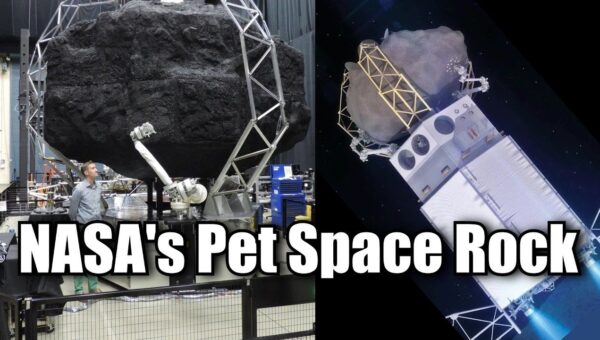
NASA’s Asteroid Mission: From Mars Dream to Lunar Gateway
NASA's ambitious Asteroid Redirect Mission (ARM), designed as a stepping stone to Mars, aimed to capture a small asteroid boulder and tow it to lunar orbit for astronaut testing. Though cancelled, its advanced propulsion and robotic technologies live on in NASA's Lunar Gateway and future deep space exploration plans.

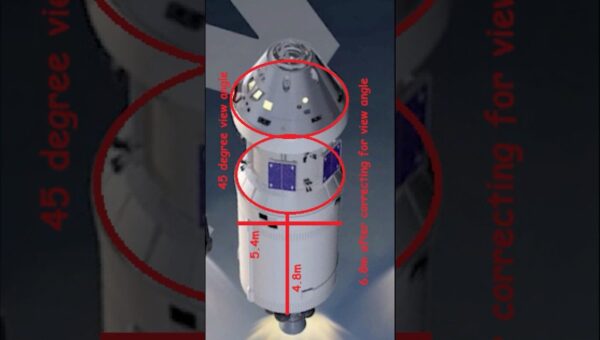
NASA’s Evolving SLS Rocket Hints at New Upper Stage
NASA's Artemis program may be adopting a new upper stage for its Space Launch System (SLS) rocket, potentially utilizing the commercially available Centaur V. An updated infographic reveals design changes and hints at evolving mission strategies, including advanced lunar lander operations.


SpaceX Starship V3 Nears First Flight Amidst Major Artemis Shakeup
SpaceX eyes March for Starship V3's maiden flight as new testing reveals design improvements. Meanwhile, NASA's Artemis program faces delays and strategic shifts, with Artemis III repurposed as a LEO test mission.