Starship Construction Accelerates Amidst Lunar Mission Buzz
SpaceX's Starbase facility is undergoing a massive expansion and transformation, with significant progress on launch pad infrastructure and new hardware installations. Meanwhile, NASA's Artemis II mission is advancing towards its historic lunar voyage, with the SLS rocket now at the launch pad.

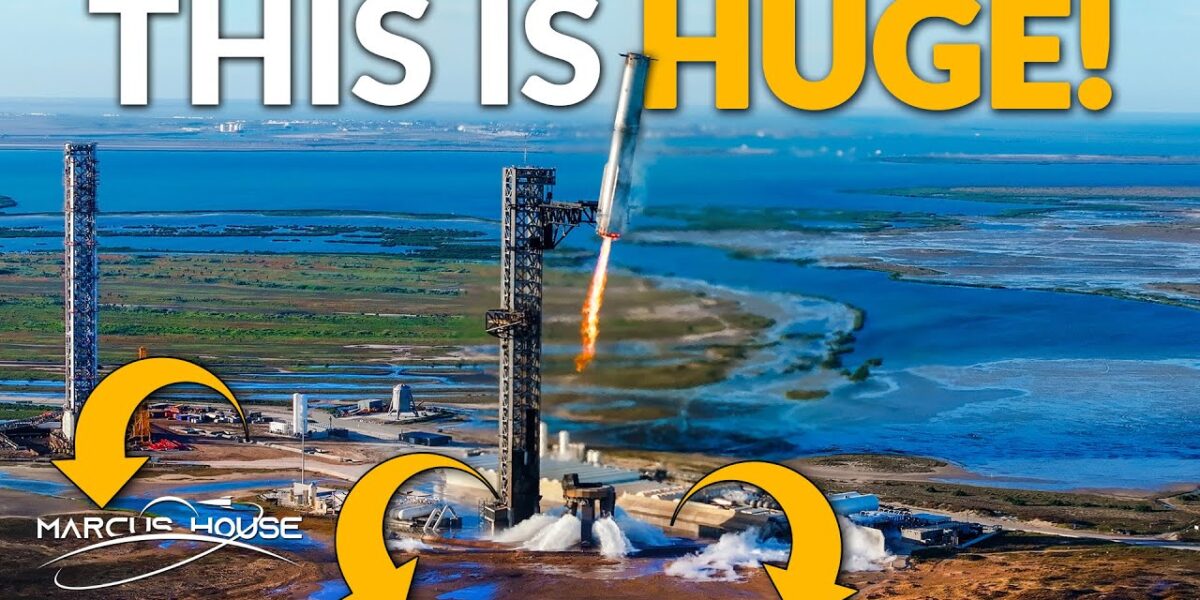
Starbase Undergoes Major Transformation as Starship Development Surges
The dawn of 2026 is proving to be a period of intense activity and ambitious expansion across SpaceX’s Starship development sites. At the heart of this surge is Starbase, where the launch pad area is undergoing a staggering transformation. The Pad 1 site, once familiar, now appears remarkably bare. The platforms that previously supported deluge tanks have been removed, making way for the installation of new rebar cages, signaling the early stages of a revamped flame trench designed to match the advanced systems at Pad 2.
Flame Trench Construction Begins at Pad 1
The pile driller, previously engaged in constructing foundations for new methane tanks at the tank farm, has been redeployed to Pad 1. This move signifies the commencement of construction on the flame trench, a critical component for managing the immense forces generated during Starship launches. Initial efforts faced challenges, with rebar cages proving difficult to insert into pre-drilled holes. After several attempts and adjustments, including shortening a cage, the process began to yield success, with multiple cages installed efficiently by the end of the week.
Upgrades to Cryogenic Lines and Infrastructure
Within the launch tower itself, visible sparks indicate significant upgrades to the main cryogenic lines. These lines are being enlarged to match the larger diameter vacuum-jacketed pipes now being integrated into the new tower structure. This ensures that the entire system can handle the increased flow rates and pressures required for the Super Heavy booster and Starship.
Air Separation Unit Equipment Arrives
The week also saw the crucial transportation of two large storage tanks for the air separation unit (ASU) from the Port of Brownsville to the launch site. These tanks, essential for producing liquid oxygen and liquid nitrogen, were carefully maneuvered through site gates and temporarily stored near the ‘Megabunker’ before their permanent foundations are completed. The ASU is vital for the continuous supply of propellants needed for Starship’s operations.
Geogrid Use and Potential Site Expansion
A significant amount of geogrid, a material used for stabilizing soil and foundations, has been observed. While not immediately apparent at Pad 1’s flame trench area, its presence suggests preparation for heavy equipment or significant structural foundations. This observation, coupled with the marking of new boundary lines in the mudflats, hints at a potential, significant expansion of the Starbase facility, which could nearly double its usable land space.
Pad 2 Nears Completion and Offload Pond Work
Meanwhile, Pad 2, slated for the first launch of a Starship V3, is rapidly being finalized. Work on the offload pond has progressed, with newly installed piping now encased in concrete. Within the trench, metal frames are being installed to house pumps that will manage excess water, likely to be filtered and reused. The air separation unit area has also seen rapid assembly of a large LR11000 crane and a smaller LR1500 crane, facilitating the unloading and installation of new hardware, including two recently delivered and installed tanks.
Transport Stands and Ship 39 Progress
At the Sanchez area, components for a third transport stand have been sighted, indicating its eventual construction. The first transport stand appears close to completion, awaiting final plate installations. The second stand is progressing but still requires clamps. In the Megabay 2, construction is nearing completion for Ship 39, with aft flaps being installed. Temporary access bridges and new elevators, similar to those in the launch towers, are being added to improve worker mobility within the Gigafactory.
Masseys Site: Testing and a Setback
The Masseys site has been active with testing. Ship 39.1 underwent two successful cryogenic tests, pushing its thrust puck to simulate flight conditions. Following this, the cryo stand was moved back to the launch site. However, a setback occurred during testing of the B18.3 test tank, designed to test a new interstage design. The tank ruptured during its first compression test, evident by a cloud of ice. While the exact cause is under investigation, it’s noted that the hot stage truss, a critical component, did not fail. SpaceX may repair the unit or construct a new one for further testing.
Florida Developments: Gigafactory and Launch Complexes
In Florida, the Gigafactory is now four levels high, surpassing the height of its Texas counterpart, though it lacks the numerous side entrances, as a Starfactory is not present at this location. At Space Launch Complex 37, nine tower sections await installation, while work continues on outfitting lower sections with walkways and utility lines. The Ship Quick Disconnect arm for Launch Complex 39A’s tower is still undergoing hardware integration. At Launch Complex 39A itself, the actuator for the Ship Quick Disconnect is installed, and work on the Orbital Launch Mount, including clamp arms, is progressing. The associated propellant farm is also nearing completion, with most utility lines installed.
Artemis II Mission Preparations Intensify
Meanwhile, NASA’s Artemis II mission is making significant strides. The crawler-transporter successfully transported the Artemis II Space Launch System (SLS) from the Vehicle Assembly Building to Launch Pad 39B. This journey, spanning approximately 4 miles and taking 12 hours, marks a critical step towards the mission’s objective of sending astronauts around the Moon for the first time in over 53 years. The crew, including Reid Wiseman, Victor Glover, Christina Koch, and Jeremy Hansen, will conduct extensive tests of the spacecraft’s life support, communication, and navigation systems during their approximately 10-day mission. The SLS, featuring large solid rocket boosters and a core stage powered by RS-25 engines, is designed to propel the Orion capsule into a lunar trajectory. The mission includes crucial proximity operations tests with the Interim Cryogenic Propulsion Stage (ICPS) to prepare for future docking maneuvers, such as those required for Artemis III. The Orion capsule will experience extreme temperatures during its atmospheric re-entry, protected by heat shields and a series of parachutes for a splashdown landing.
Blue Origin’s Lunar Lander ‘Endurance’
Blue Origin’s Blue Moon Mk1 lunar lander, now officially named ‘Endurance’ in honor of Ernest Shackleton’s ship, has been shipped to Houston for further preparation. This lander is intended for lunar south pole operations.
Falcon 9 Launches and Rocket Lab’s Year Start
SpaceX has maintained a rapid launch cadence with several Falcon 9 missions, including the deployment of a classified payload for NROL-105 and multiple Starlink satellite launches. Falcon 9 Booster 1100 successfully landed at Landing Zone 4, marking Falcon 9’s 600th mission. Rocket Lab has also begun its 2026 campaign with the successful launch of two satellites for Open Cosmos via its Electron rocket.
Vast’s Haven-1 Space Station Progress
Vast’s Haven-1 space station mission, originally hoped for this year, is now targeting the first quarter of 2027. The primary flight structure has passed acceptance tests and is undergoing integration of various systems in a clean room. Following environmental testing at NASA’s Armstrong facility, the station will be ready for launch.
Source: Major Starship Expansion Underway at Starbase! (YouTube)

Related Articles
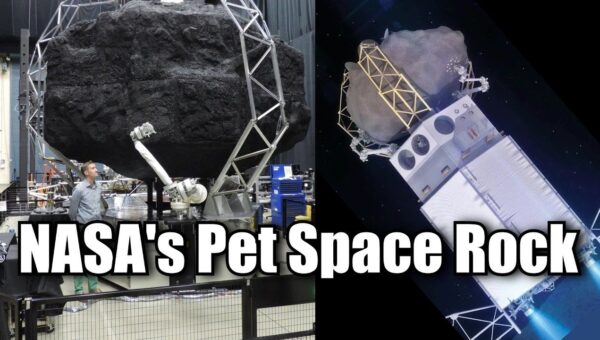
NASA’s Asteroid Mission: From Mars Dream to Lunar Gateway
NASA's ambitious Asteroid Redirect Mission (ARM), designed as a stepping stone to Mars, aimed to capture a small asteroid boulder and tow it to lunar orbit for astronaut testing. Though cancelled, its advanced propulsion and robotic technologies live on in NASA's Lunar Gateway and future deep space exploration plans.
NASA’s Evolving SLS Rocket Hints at New Upper Stage
NASA's Artemis program may be adopting a new upper stage for its Space Launch System (SLS) rocket, potentially utilizing the commercially available Centaur V. An updated infographic reveals design changes and hints at evolving mission strategies, including advanced lunar lander operations.


SpaceX Starship V3 Nears First Flight Amidst Major Artemis Shakeup
SpaceX eyes March for Starship V3's maiden flight as new testing reveals design improvements. Meanwhile, NASA's Artemis program faces delays and strategic shifts, with Artemis III repurposed as a LEO test mission.