Stars Slam “Wigger” Trend: “Just Be You!”
Black celebrities are speaking out against the trend of white people adopting Black slang and mannerisms, often referred to as "wigger" behavior. Stars emphasize authenticity and urge individuals to embrace their own identities rather than imitating others. The discussion also covered the problematic use of the n-word and the importance of cultural respect.


Black Celebs Blast “Wigger” Trend: “Just Be You!”
A new trend, where white people imitate Black culture and slang, is raising eyebrows and sparking debate among Black celebrities. The term “wigger” – a derogatory slang word for a white person who adopts Black mannerisms and speech – is at the center of this discussion. Celebrities are urging people to embrace their own identities instead of trying to fit into someone else’s.
Embrace Your Own Identity
One star shared, “I just think people should be be who you are. When you become friends, you accept that person for who they are.” This sentiment highlights a growing frustration with the performative nature of some white individuals trying to appear “down” with Black culture. The idea that one needs to speak a certain way or adopt specific slang to be accepted is seen as unnecessary and inauthentic.
“They feel like I got to show him that I’m down, that I’m cool, that Nah, bro. That’s it’s unnecessary,” one celebrity explained, capturing the feeling that this behavior is often driven by a desire for validation rather than genuine connection.
Political Figures Under Fire
The conversation also touched on public figures who have faced criticism for seemingly trying too hard to connect with certain groups. “But I mean, look at Gavin Newsom. He’s in hot water right now for Do you see that whole thing?” one person asked, referencing a situation where the governor’s comments were perceived as an attempt to relate to voters by claiming he couldn’t read well. “Or Hillary Clinton with the hot sauce. It’s all as a honky. It’s all very embarrassing.” These examples show how attempts to appear relatable can backfire spectacularly when they feel forced or insincere.
The N-Word Debate
The use of the n-word by non-Black individuals was also a major point of discussion. The general consensus was that it’s never okay. “Do you think there is ever a situation where it’s okay for someone of the opposite race to use that word?” was posed, leading to a reflective pause. While acknowledging that some Black friends in childhood might have jokingly pressured white friends to say it, the overall feeling was discomfort and a strong aversion to using the word.
“There’s so much venom in that word, you know. So, uh, obviously the songs are a little tricky, you know, in every rap song we all love, you want to go, but uh nah, I just I don’t I don’t partake,” one star stated, emphasizing the word’s painful history and the decision to steer clear of it.
Authenticity Over Imitation
A powerful analogy was used to explain why adopting language and behaviors from another group can be problematic. “Just because some, I mean, you might call hey, hey baby, call your wife, hey baby, hey honey, how sugar plums. But if another man call your wife that, you gonna have you gonna feel some type of way.” This comparison highlights how words and terms can have different meanings and implications depending on who is using them and in what context. What’s affectionate within a relationship or group can feel disrespectful or aggressive when used by an outsider.
“You know him, honey. So why he calling you baby? Why he calling you sugar?” the analogy continued, driving home the point about boundaries and ownership of language within specific communities. The core message is clear: authenticity is key, and attempts to imitate or adopt the cultural markers of another group often miss the mark and can even be offensive.
Understanding Group Communication
The discussion concluded with the understanding that every group has its own unique ways of communicating within its own circles. This “code” is often deeply ingrained and specific to the shared experiences and history of that group. Trying to replicate it without that lived experience is seen as inauthentic. The stars involved in this conversation are sending a clear message: be true to yourself, and respect the cultural nuances of others.
“I just think people should be be who you are. When you become friends, you accept that person for who they are.”
The debate is expected to continue as the line between cultural appreciation and appropriation remains a sensitive topic. For now, the advice from these stars is simple: authenticity always wins.
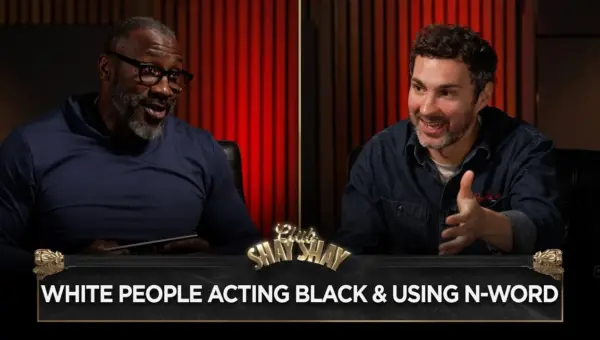
Source: White People Acting Black & Using N-Word I CLUB SHAY SHAY (YouTube)

Related Articles


Musicians’ Pride Comes Before a Fall: Top 10 Humbled Stars
From award show interruptions to public scandals, some of music's biggest names have faced moments that humbled them. This list counts down ten times arrogant musicians were brought back down to Earth by their own actions or public backlash. Discover the shocking incidents that defined these artists' careers.
Comedian Mark Normand on Code-Switching and the N-Word
Comedian Mark Normand joined Club Shay Shay to discuss code-switching and the complexities surrounding the N-word. He shared his personal views on authenticity and drew analogies to explain why certain language is specific to particular groups. Normand also praised Dave Chappelle's unique talent and recounted some of his own past experiences with danger in New York City.


Stars Face Terrors: Celebs’ Scariest Encounters Revealed!
Celebrities often face terrifying real-life situations, from obsessive stalkers to ghostly encounters. This article reveals some of the scariest and most unsettling experiences faced by stars like Eminem, Taylor Swift, and Jodie Foster.