Speaker Johnson Evades War Powers, Congress Abdicates Oversight
Speaker Mike Johnson's evasive press conference on military actions in Iran has ignited debate over Congress's constitutional role in war powers and oversight. Critics argue this abdication of duty, coupled with an unclear strategy, risks repeating historical failures.

Speaker Johnson Evades War Powers, Congress Abdicates Oversight
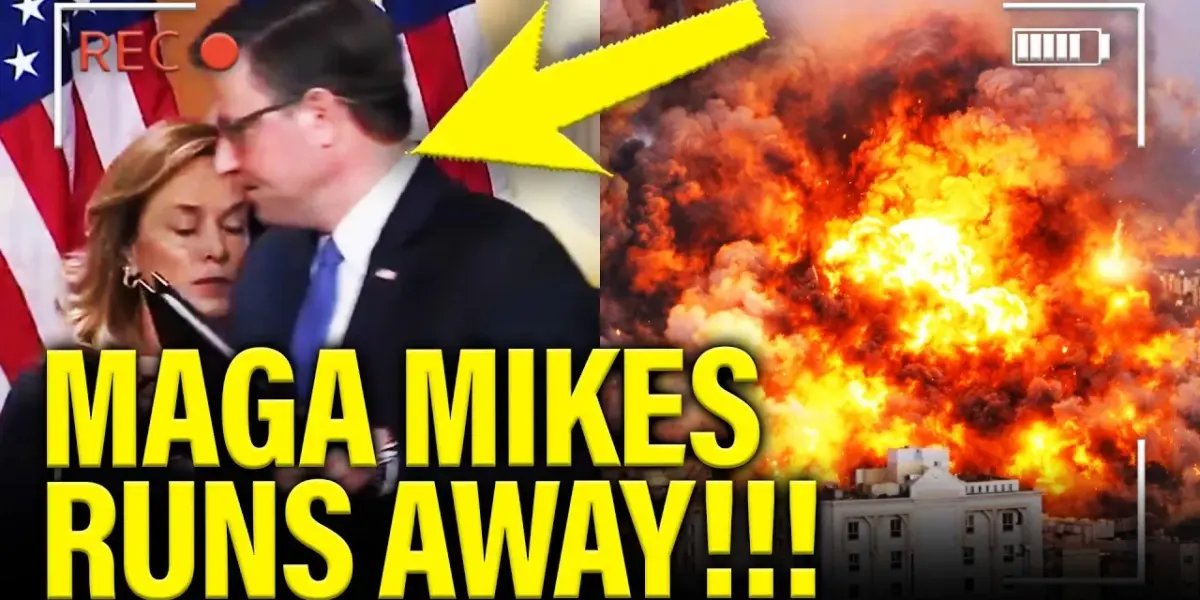
In a moment that has drawn sharp criticism and highlighted deep fissures in Washington’s approach to foreign conflict, Speaker of the House Mike Johnson, often referred to as “MAGA Mike,” appeared to evade direct questions regarding military action and funding during a recent press conference. The exchange, captured in a video that has since gone viral, shows Johnson attempting to cut short a press availability when pressed about the necessity of a defense supplemental and the nation’s dwindling munitions supply, particularly in the context of escalating tensions in Iran.
A Presser Cut Short: The Specter of War Powers
The core of the controversy lies in Johnson’s response to questions about the ongoing military operations and the potential need for additional funding. When asked about a defense supplemental and whether the Pentagon had requested one, the Speaker opted to disengage, stating, “We’re focused on right now. Thank you so much.” This abrupt departure from the press conference fueled accusations that he was avoiding a substantive discussion on critical national security issues and Congress’s constitutional role.
Adding to the scrutiny, Johnson’s justification for the military actions was characterized as a “defensive operation.” He explained, “The regime says this is defensive in nature… a barrage of missiles at our people, our troops, our assets, our citizens in the region and our and our installations. We we’re taking that out. We had to it’s a defensive uh operation.” He further elaborated on the necessity of neutralizing enemy naval capabilities, stating, “we had to take their navy down.” This framing, however, was met with skepticism, with critics likening it to a high school student “winging the book report,” suggesting a lack of robust strategic explanation.
Constitutional Quandaries and Historical Echoes
The situation brings into sharp relief the ongoing debate surrounding Congress’s constitutional authority, particularly concerning the War Powers Resolution of 1973. This resolution, intended to limit the president’s ability to commit U.S. forces to armed conflict without congressional consent, seems to be at the forefront of this discussion. Critics argue that by avoiding a debate on military action and funding, leaders like Speaker Johnson are sidestepping their “oversight authority” and their duty to the Constitution.
Johnson himself addressed these concerns, stating, “In my estimation, this course of action was necessary, lawful, and effective. and reversing it now would weaken America.” He acknowledged Congress’s right to “exercise its oversight authority,” but countered that “we also have a duty and obligation not to undercut our own national security.” He further argued that passing a War Powers resolution at this juncture would be “a terrible, dangerous idea,” asserting it would “empower our enemies” and “kneecap our own forces.” This perspective places the onus on the executive branch to manage national security, potentially at the expense of legislative checks and balances.
The rhetoric employed by some figures, including the invocation of “misguided religion,” “holy war,” and comparisons to “the Crusades,” further complicates the narrative. These characterizations risk framing the conflict in overly simplistic, potentially inflammatory, and historically fraught terms, moving away from a clear articulation of strategic objectives and towards ideological pronouncements. This approach, critics argue, mirrors the justifications used in past conflicts, such as the Iraq War, where initial rationales were later found to be flawed or incomplete.
A “No-Win Situation” and Incoherent Strategy
Perhaps one of the most striking admissions from Speaker Johnson was his characterization of the situation as a “no-win situation.” This statement, delivered with an almost resigned tone, has been interpreted as a tacit acknowledgment of the inherent difficulties and potential for prolonged engagement, a sentiment echoed by other administration officials who have spoken of timelines stretching to “eight weeks or more.” This ambiguity regarding the duration and ultimate objective of the military engagement has raised significant alarm bells.
Democratic Congresswoman Sarah Jacobs, representing a district with a large military population, expressed profound disappointment with Speaker Johnson’s stance. She emphasized the constitutional mandate for Congress to debate and vote on matters of war, stating, “It is so disrespectful the idea that not only should Congress not debate, not vote, that this administration doesn’t even have to put out a coherent rationale or theory or strategy.” Jacobs highlighted the direct impact on her constituents, the military families who bear the “price for this war,” and noted that the rationale and strategy presented in classified briefings were as “incoherent as what Speaker Johnson said in public.” She pointed to the immediate consequences, including service member casualties, civilian deaths, and rising gas prices, as evidence of the lack of a clear plan.
Jacobs further elaborated on the concerns raised by military families, who are worried about the safety and well-being of their loved ones and are angered by the lack of debate or strategy. The swift escalation, from military buildup to open conflict, without significant public or congressional discourse, has been described as “unprecedented.” The reliance on social media posts rather than formal addresses by former President Trump has also been noted as a departure from established norms.
The Specter of Regime Change and Unintended Consequences
The discussion also delved into the potential for regime change in Iran and the alarming lack of planning for the aftermath. In classified briefings, when asked about preventing a failed state or managing post-conflict stability, officials reportedly dismissed such concerns. This echoes historical precedents like the “mission accomplished” declaration in Iraq, which was followed by years of instability and conflict. The potential for unintended consequences, even within a stated timeframe of “eight weeks,” is immense, with reverberations expected to last far beyond any initial projection.
Furthermore, the reported best-case scenario, which involves installing a sympathetic figure from within the existing Iranian regime, has been criticized for undermining any potential for genuine democratic reform or freedom for the Iranian people. This approach, it is argued, could alienate those who might otherwise support a transition, leading to a cycle of instability and betrayal. There is also concern that the administration may be funding militia groups within Iran and considering figures responsible for brutal crackdowns on protesters, suggesting a focus on strategic alignment rather than human rights or democratic aspirations.
Why This Matters
This episode underscores a critical juncture in the relationship between the executive and legislative branches regarding the use of military force. The apparent reluctance of congressional leadership to engage in robust oversight and debate, coupled with an executive branch that may be perceived as operating with a lack of clear strategy or long-term vision, poses significant risks. It raises fundamental questions about accountability, transparency, and the very principles of democratic governance when it comes to committing the nation to conflict.
Implications, Trends, and Future Outlook
The trend towards executive-led military action, with Congress playing a diminished role, is a concerning development. The normalization of undeclared, prolonged engagements, justified by broad national security concerns, can erode public understanding and support for military interventions. The lack of clear objectives, exit strategies, and post-conflict planning, as suggested by the discussions surrounding Iran, points to a potential for repeating historical mistakes. The future outlook suggests a continued struggle to balance the need for swift action in perceived crises with the constitutional imperative for congressional deliberation and oversight. Without a renewed commitment to these checks and balances, the U.S. risks becoming entangled in protracted conflicts with unclear objectives and devastating consequences.
Historical Context and Background
The War Powers Resolution of 1973 was enacted in the shadow of the Vietnam War, a conflict that profoundly divided the nation and highlighted the dangers of unchecked presidential power in initiating and sustaining military engagements. Congress’s role in authorizing the use of force has been a cornerstone of American democracy, intended to ensure that such grave decisions are made with broad deliberation and public accountability. However, in recent decades, presidents have increasingly relied on their authority as commander-in-chief to deploy troops without formal declarations of war or explicit congressional authorizations, leading to a gradual shift in power away from the legislature. This current situation in Iran appears to be another chapter in this ongoing tension between executive prerogative and legislative responsibility.
Source: OMG! MAGA Mike RUNS AWAY from PRESSER over WAR POWERS! (YouTube)

Related Articles

White House Defenses Crumble Amidst Conflicting Iran War Narratives
Conflicting narratives and evasive responses plague the Trump administration's defense of its actions in Iran. From aggressive rhetoric to accusations of 'fake news,' officials struggle to present a cohesive justification for the escalating conflict, raising serious questions about transparency and strategic planning.
Congress’s War Powers: A Looming Battle Over Military Authority
A looming war powers vote in Congress is set to reignite the debate over legislative authority in military action. Analyzing Pentagon narratives and Speaker Johnson's stance, this piece explores the historical context and critical implications of Congress asserting its role in decisions of war.

US Claims Decisive Victory in Operation Epic Fury Against Iran
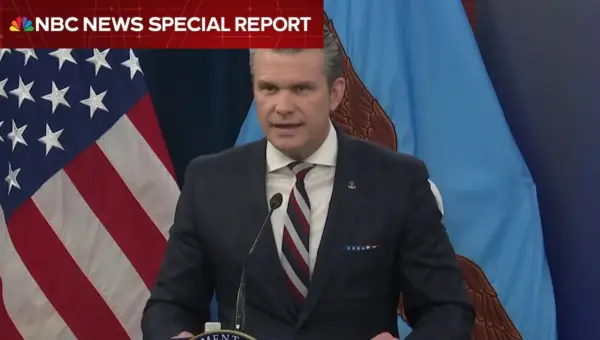
Defense Secretary Pete Hegseth announced a decisive victory in "Operation Epic Fury" against Iran, claiming overwhelming success in dominating airspace and crippling naval capabilities within days. The operation was reportedly triggered by intelligence following a call between President Trump and Israeli Prime Minister Netanyahu.