Spain Defies Trump: Sanchez Stands Firm Against Iran War
Spain, under Prime Minister Pedro Sanchez, has taken a firm stance against a potential war with Iran, diverging from both the US and some European allies. This position is influenced by historical echoes of the Iraq War and strategic domestic political calculations, raising questions about Spain's evolving role in international affairs.

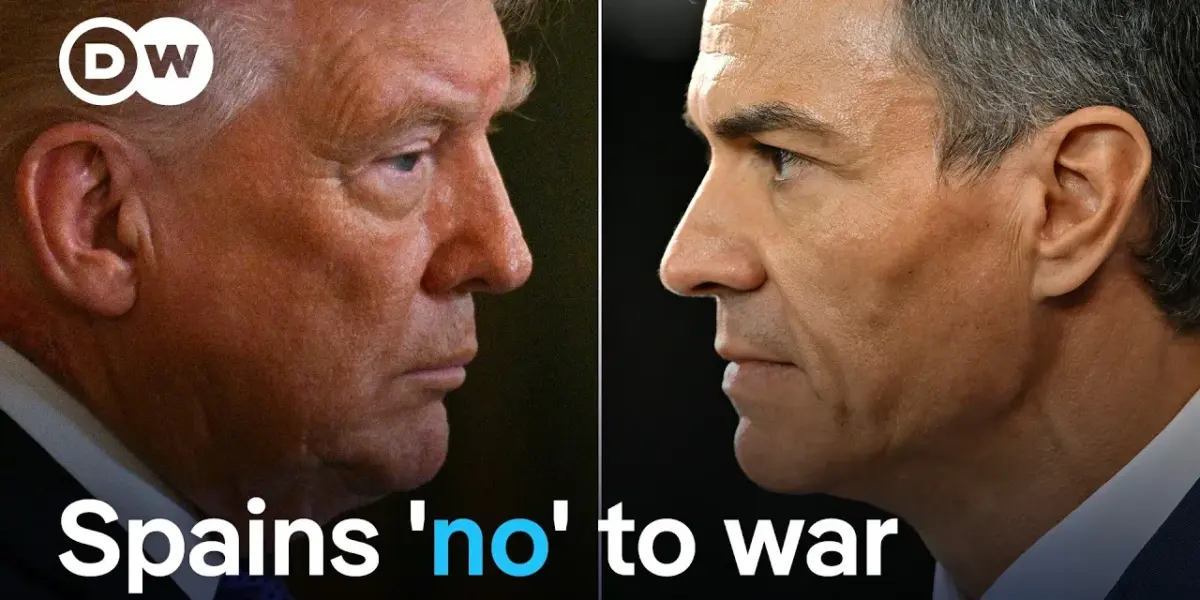
Spain Takes Bold Stance Against Iran Conflict, Clashing with US
Madrid, Spain – In a clear departure from traditional alliances, Spain, under the leadership of Prime Minister Pedro Sanchez, has positioned itself as a prominent voice in Europe firmly rejecting involvement in a potential war with Iran. This stance has not only placed Spain at odds with the United States but also with some of its European partners, highlighting a significant shift in the nation’s foreign policy identity.
Prime Minister Sanchez articulated the government’s rationale in a series of clear statements, emphasizing a commitment to international law and a rejection of conflict as the primary means of problem-solving. “No to war,” he declared, summing up his government’s position. This firm opposition came after President Donald Trump publicly criticized Spain for refusing to allow the U.S. to use bases on Spanish territory for potential strikes against Iran. Trump’s remarks included threats of trade repercussions, stating, “We’re going to cut off all trade with Spain. We don’t want anything to do with Spain.”
Echoes of the Past: The Iraq War’s Lingering Shadow
A key factor shaping Spain’s current position is the memory of the 2003 Iraq War. The decision by the then-Spanish government to support the U.S.-led invasion was deeply unpopular and led to widespread protests, galvanizing both the left and the right of the political spectrum. Professor David Himemenne Torres of Complutensa University in Madrid noted the deliberate invocation of this historical event by Prime Minister Sanchez.
“It was absolutely no accident that Pedro Sanchez self-consciously referred back to the Iraq war and Spain’s support of the US-led uh invasion,” Torres explained. “This is something that was very unpopular at the time. Uh also among uh conservative voters that was in a way one of the most uh noteworthy aspects of mobilization against uh Spanish support for the Iraq war.”
While Sanchez’s appeal to historical lessons resonates, polling data suggests that public sentiment on intervention in Iran may differ from 2003. While opposition to the Iraq war was broadly bipartisan, a recent poll indicates that conservative voters are more inclined to view an intervention in Iran favorably compared to the 2003 invasion of Iraq.
Domestic Politics and Evolving Foreign Policy
Beyond international principles, domestic political considerations are playing a crucial role in Spain’s assertive foreign policy. Professor Torres suggests that Sanchez’s firm stance against Trump and potential military action in Iran is a strategic move to energize his base, which has seen declining engagement in recent years.
“I do think that the Spanish position in this uh conflict, whatever its merits on its own are, is driven by that interest on the part of Pedro Sanchez because he knows that um opposing Donald Trump and opposing the attack against Iran is something that plays very well with his base, his base which has become rather demobilized over the past uh couple of years,” Torres stated. “So there is the international dimension of course, but domestic politics are also very important in this context.”
Sanchez’s government has also been a vocal critic of the Israeli government, a position that has sometimes created friction with other European nations. This consistency in his foreign policy outlook, while potentially aligning with his domestic agenda, also underscores a broader effort to define Spain’s independent role on the international stage.
Navigating Tensions: Substance vs. Strategy
Spain’s approach appears to be a carefully calibrated strategy of rhetorical opposition to the Trump administration, while seeking to avoid triggering significant retaliatory actions. The government has emphasized its continued view of the United States as an ally and has no desire to sever relations or interfere with U.S. military bases on Spanish soil. Instead, the focus is on the specific uses of these bases.
The Spanish government has expressed confidence that it will not face punitive measures, such as new tariffs or a trade war, as a result of its posture on Iran. This calculated approach suggests a belief that it is possible to challenge Trump rhetorically without provoking severe economic consequences.
Furthermore, Spain appears to be leveraging its membership in the European Union as a buffer against potential U.S. backlash. The “umbrella” of the EU is seen as providing a degree of protection, allowing Spain to maintain its critical stance while assuring its population that economic repercussions will be mitigated. However, the article acknowledges that even with EU backing, the U.S. could still take actions to harm Spanish economic interests, particularly concerning Spanish companies operating in the United States. This makes Spain’s gamble a perilous one, albeit one the government seems prepared to take.
NATO Spending and European Divisions
Another significant point of contention has been Spain’s refusal to increase defense spending to meet the Trump administration’s demands for NATO members. This, according to Professor Torres, is part of a deliberate strategy by Sanchez to differentiate Spain and position it as a voice of dissent within the alliance.
“It’s also important to stress that Sant has in a way been looking for some type of public confrontation with Donald Trump for a while now,” Torres observed. “Um and uh one good example is was Spain’s quite public um reticence towards increasing its uh in spending on defense uh within the context of the wider uh NATO uh alliance.”
This stance on defense spending, coupled with its position on Iran, raises questions about Spain’s role within the broader European security architecture. While Spain may be distancing itself from U.S. demands, there’s a risk of being sidelined from key decision-making processes within the EU, particularly concerning continental security challenges like the threat posed by Russia. The article notes that Spain’s geographical distance from Russia may contribute to a different perception of threat among its population compared to other European nations.
A Divergent Path for Spanish Foreign Policy?
The current moment is significant, marking a departure from Spain’s post-dictatorship foreign policy, which has largely been characterized by staunch support for international institutions and strong pro-European integration. The government’s conscious effort to distinguish itself from major European players like France, Germany, and the UK is a notable development.
Professor Torres suggests that the long-term implications of this divergence remain to be seen. The key question is whether Spain’s independent stance will contribute to a more cohesive European foreign policy or exacerbate existing divisions within the EU. The article concludes by pondering whether Spain will revert to a more conventional alignment with France and Germany on continental matters if the immediate crisis in Iran subsides.
Source: Why is Spain's Pedro Sanchez standing up to Trump? | DW News (YouTube)

Related Articles
CPAC Crowd Cheers Impeachment, Stuns Trump Allies
At the recent CPAC conference in Texas, attendees surprised many by cheering for impeachment hearings, signaling potential divisions within the conservative base. The event also highlighted voter frustration over issues like ongoing wars and affordability, with some considering not voting.
Protesters Challenge Presidential Power, Ignite Debate
Millions are protesting nationwide under the "No Kings" banner, challenging presidential authority and policies they deem unconstitutional. Organizers emphasize First Amendment rights while debating foreign policy, immigration, and the balance of power.
Polls Spell Doom: Republicans Face Voter Backlash
New polling data reveals a sharp decline in public confidence regarding the economic impact of Republican policies, particularly under Donald Trump. A significant majority now feel financially worse off, a trend that is especially pronounced among independent voters. This economic discontent poses a major challenge for the Republican party heading into future elections.