SpaceX Starship V3 Nears First Flight Amidst Major Artemis Shakeup
SpaceX eyes March for Starship V3's maiden flight as new testing reveals design improvements. Meanwhile, NASA's Artemis program faces delays and strategic shifts, with Artemis III repurposed as a LEO test mission.

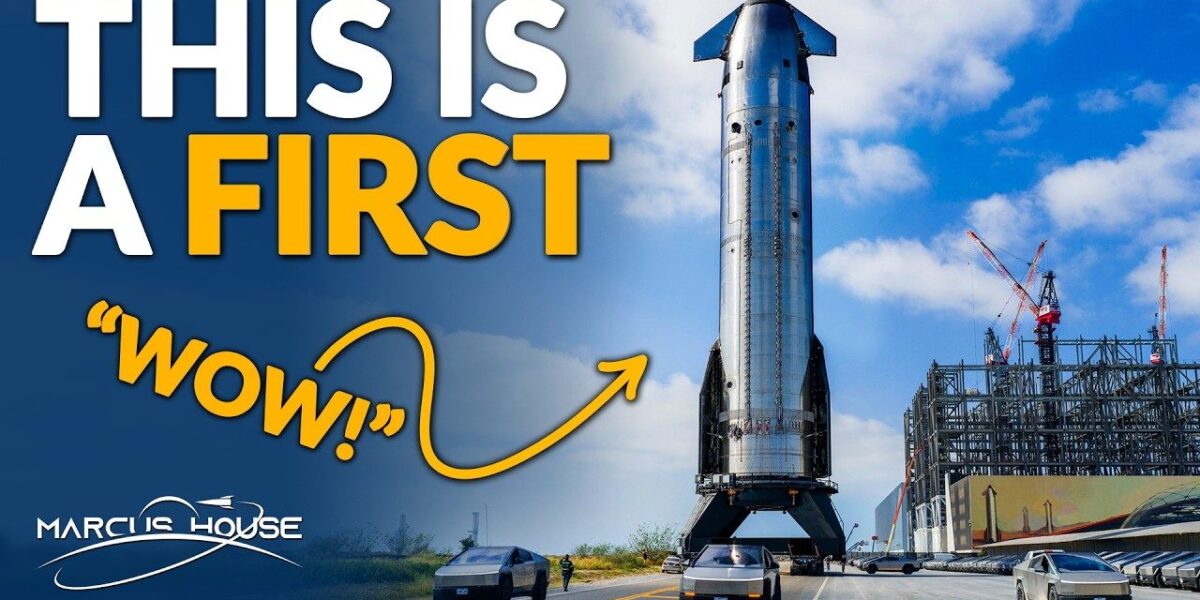
Starship V3 Inches Closer to Launch as SpaceX Advances Testing
The relentless pace of space exploration continues as SpaceX gears up for the maiden flight of its Starship Version 3 (V3). With the calendar turning to March, the prospect of seeing this next-generation spacecraft ascend the launchpad in the coming weeks is a tangible reality. Starbase, Texas, has become a hive of activity, with new hardware appearing at the launch site and on the vehicles themselves, reminiscent of the excitement surrounding Starship’s initial test flights.
Ship 39 Rolls Out for Critical Testing
At the heart of this progress is Ship 39, the first V3 Starship upper stage. After patiently waiting within Megabay 2, it has finally moved to the forefront. The static fire stand, recently refurbished with a fresh coat of paint and equipped with its operational platform, was positioned in the ringyard. Onlookers, equipped with the latest aerial photography and live camera feeds, witnessed Ship 39 being carefully maneuvered into the stand. Following an internal lift, the ship is now poised for its initial pre-flight testing, marking a significant milestone in its journey towards orbit.
Innovations in Heat Shielding and Flap Design
A keen eye on Ship 39 reveals notable design enhancements. The leading edge of its aft flaps now sports a different tile pattern, featuring smaller, pinned tiles similar to those found on the forward flaps and other sections of the heat shield. This contrasts with the tiled arrangement on the previous Ship 38. This updated tiling approach is expected to improve serviceability, reduce the need for custom-shaped tiles, and minimize the amount of adhesive required, representing an evolutionary step in thermal protection systems for re-entry.
Advanced Testing Rig Simulates Flight Loads
Ship 39’s rollout to the static fire stand, even before cryogenic testing, hints at a more integrated testing approach. SpaceX has constructed a massive new testing structure at Masseys, designed to subject the ship to simulated flight loads. New tabs installed on the forward and aft flaps are believed to be connection points for a system of pulleys and actuators. This sophisticated setup will likely twist and pull on the flaps, mimicking the immense forces experienced during re-entry maneuvers and simulating the stresses on flap hinges and motors.
Payload Bay Reinforcement Testing
Adding to the extensive testing regime, new hardware has been deployed to simulate the forces exerted by the launch tower arms on the payload bay’s catch points. This process, similar to that used for booster catch testing, is crucial for the upper stage. Unlike the pressurized core stage, the Starship’s payload bay is unpressurized, making it more susceptible to deformation. This testing ensures the payload bay area is sufficiently reinforced to withstand the forces applied during potential catch operations without damage.
Starship Flight 12 Payload and Altitude Records
An FCC filing has shed light on potential payloads for Starship’s Flight 12, tentatively scheduled between April 7 and June. The filing indicates the possibility of launching up to 10 Starlink mass simulators equipped with “Space Station” capability. While the exact nature of “Space Station” functionality remains unclear, it is speculated to involve cameras or advanced communication modules that could interact with the Starlink constellation. These flights are expected to reach a peak altitude of 350 kilometers, potentially setting a new altitude record for Starship, surpassing the 234 kilometers achieved during Flight 3. Such an ascent profile suggests the most intense Starship re-entry to date.
Starship Production and Infrastructure Expansion
The production line for future Starship vehicles continues to accelerate. Ship 40 is nearing completion, with its liquid oxygen tank ring section and methane tank transfer tube jib now in place. It requires only the engine section to be fully stacked. Simultaneously, the Gigafactory structure is expanding vertically, with level four now rising. The painting of white beams on the first level of the Starbase Gigafactory mirrors the aesthetic of the Florida facility, though the latter utilized pre-painted beams.
Gigafactory Enhancements and Launch Site Preparations
The Gigafactory is being equipped with large front-facing doors designed for direct egress onto Highway 4. Adjacent land has been cleared and concreted to facilitate transporter movement, incorporating a rainwater storage pit to manage runoff from the vast roof area. Meanwhile, at the launch site, rapid leveling of the expanded area is underway, with substantial progress on Pad 1’s new flame trench. Sheet piling and jet grouting are progressing, crucial steps to stabilize the trench below sea level and prevent ground collapse during excavation. Pad 2 is also undergoing extensive preparations for the upcoming V3 Starship flight, with the roof structure nearing completion and significant reinforcements being added to the tower, anticipating a high frequency of Super Heavy and Starship catch operations.
Artemis Program Faces Delays and Strategic Shifts
The Artemis program has encountered significant setbacks. The Artemis II mission, initially slated for a March launch window, has been delayed due to issues with helium flow in the Interim Cryogenic Propulsion Stage (ICPS). The problem, discovered after a wet dress rehearsal, necessitates the Space Launch System (SLS) rocket’s return to the Vehicle Assembly Building (VAB) for diagnosis and repair. This delay pushes the launch into the April window, requiring the crew to be released from quarantine until preparations resume. A subsequent wet dress rehearsal will be necessary before the crew can launch on their historic mission, which aims to send humans further from Earth than ever before.
Artemis III Reimagined as LEO Test Mission
In a surprising announcement, NASA has redefined the objectives for Artemis III. The mission, originally planned as the first lunar landing since Apollo, is now slated as a Low Earth Orbit (LEO) test mission in 2027. This shift allows for exercises between the Orion spacecraft and a Starship Human Landing System (HLS) or a Blue Origin Blue Moon lander, akin to an Apollo 9-style mission. This re-envisioning adds a crucial testing phase before subsequent lunar landing attempts in 2028, which would require a more rapid turnaround for the SLS. The long-term plans for Artemis IV, V, and VI also hint at complex orbital operations involving Starship, Blue Moon landers, and potentially a Centaur upper stage.
International Space Station and Hypersonic Flight Updates
The International Space Station (ISS) has seen the departure of the Cargo Dragon from the CRS 33 mission, notable for being the first Dragon spacecraft equipped with a reboost kit. This kit enabled six orbital reboosts, crucial for maintaining the station’s altitude. In a personal note, astronaut Mike Fincke revealed himself as the crew member who experienced a medical issue weeks ago, necessitating an early return to Earth for advanced medical imaging not available on the ISS. Meanwhile, Rocket Lab successfully launched its “That’s not a knife!” mission, carrying a scramjet-powered hypersonic vehicle for the U.S. military. Despite the successful launch and suborbital trajectory, post-separation data was not publicly available.
Dream Chaser Prepares for Orbital Debut
Sierra Space has released new footage of its Dream Chaser spaceplane, showcasing its ability to receive telemetry and commands via NASA’s Tracking and Data Relay Satellite System. This testing is vital for ensuring real-time communication during its upcoming missions. Despite previous indications of a late 2024 launch, further acoustic testing is pending. However, Sierra Space has indicated an update is imminent, with the demonstration mission under the CRS2 contract still on track for a fourth-quarter launch, culminating in a runway landing at Vandenberg Space Force Base.
Falcon 9 Continues Record-Breaking Flights
Amidst the Starship developments, SpaceX’s Falcon 9 rocket continues its impressive flight cadence. Booster 1067 achieved its record 33rd launch, carrying 28 Starlink satellites. This milestone highlights SpaceX’s drive to certify boosters for up to 40 flights. The booster successfully landed on the droneship ‘A Shortfall of Gravitas,’ extending its own landing record. The past week has seen a flurry of Falcon 9 launches, predominantly for Starlink missions, underscoring the reliability and operational tempo of this workhorse rocket.
Source: The Starship Version 3 Flight Is Closer Than You Think (YouTube)

Related Articles

NASA’s Evolving SLS Rocket Hints at New Upper Stage
NASA's Artemis program may be adopting a new upper stage for its Space Launch System (SLS) rocket, potentially utilizing the commercially available Centaur V. An updated infographic reveals design changes and hints at evolving mission strategies, including advanced lunar lander operations.


NASA Revises Artemis Moon Landing Goal to 2028
NASA is revising its Artemis program, targeting a 2028 lunar landing amidst a new space race with China. The plan includes preparatory missions in 2027 and focuses on exploring lunar poles for resources. International collaboration remains key, though funding questions persist.


Vera C. Rubin Observatory Begins Sky Survey
The Vera C. Rubin Observatory has officially begun its 10-year sky survey, promising to generate millions of astronomical alerts nightly. Meanwhile, new Webb images reveal Uranus in unprecedented detail, and the Artemis program faces timeline adjustments.