SpaceX Starship Launch Approval Skyrockets
SpaceX has received a major boost with approval for 76 Starship launches from Florida's SLC-37, significantly increasing its launch capacity. Meanwhile, development continues at Starbase with upgrades and new hardware, while the ISS reaches full capacity and celebrates 25 years of continuous human presence.


SpaceX Secures Landmark Launch Approval for Starship Program
The pace of development for SpaceX’s ambitious Starship program has reached a new crescendo with a significant regulatory milestone. The U.S. Space Force, in conjunction with several other federal agencies, has granted approval for an astonishing 76 Starship launches from a new, dedicated launch complex at Space Launch Complex 37 in Florida. This decision dramatically increases the program’s launch cadence, more than tripling the current allowance at the Starbase facility in Texas, and signals a bold leap forward for humanity’s aspirations of becoming a multi-planetary species.
Florida Facility Poised for High-Volume Operations
The newly approved launch site at Space Launch Complex 37 is designed for high-frequency operations, mirroring the infrastructure being developed at Starbase. Plans include two launch towers, strategically separated for safety, each equipped with advanced water deluge systems to manage the immense energy of Starship launches. A shared cryogenic storage facility, pump farm, and other essential support infrastructure will be integrated, optimizing efficiency. Notably, the site also includes provisions for natural gas lines and a methane liquefier, coupled with a large Air Separation Unit. This suggests a potential for the Florida facility to become largely self-sufficient in propellant production, a crucial step for sustained, high-volume launch operations.
The approval for 76 launches per year, encompassing both the Super Heavy booster and the Starship upper stage, along with the necessary static fire tests for each flight, marks a pivotal moment. This authorization allows SpaceX to accelerate construction and development at the Florida site with full confidence. The previous launch pads at SLC-37, which once supported the Delta IV Heavy, have been cleared of all extraneous hardware and ramps, making way for the cutting-edge Starship infrastructure.
Starbase Continues Rapid Evolution
Meanwhile, back at Starbase, Texas, development continues at a breakneck pace. The transformation of the original launch pad (Pad 1) is nearing completion, with demolition of the deluge plate and its supporting foundation underway. The water deluge farm is also being dismantled, with concrete blocks and piping being removed for potential recycling. Upgrades to the launch tower arms are also in progress, with accumulator banks being removed, possibly indicating a transition to a more streamlined or efficient hydraulic system. The catch rails, initially thought to be modified, now appear to be completely scrapped, suggesting a decision to replace them entirely.
Pad 2 is also seeing significant activity. The Ship Quick Disconnect Arm has been fully installed and is being fitted with commodity lines, including those for cryogenic propellants, high-pressure gas, electrical, and data connections. The first connections between the launch tower and the quick disconnect arm have already been made. The removal of accumulator banks and main actuators from Pad 2’s arms also points towards potential upgrades or the integration of a new, more reliable control system.
Further down the production line, the assembly of a second next-generation Ship Transport Stand is underway. Booster 19 is rapidly taking shape, with multiple sections being stacked, reaching a significant height. The suspected landing tank, a critical component for stabilizing propellant during reentry, has been installed. The Gigafactory continues its impressive expansion, with the main skeleton for the first level nearing completion and flooring panels being installed for access platforms. The second level is also rising quickly, providing an early indication of the impressive scale of the facility.
Booster 18 Deconstruction and Future Prospects
At the Masseys facility, the deconstruction of Booster 18 is providing valuable insights into its internal architecture. The vehicle has been cut open, revealing its intricate plumbing, including the side-mounted liquid oxygen landing tank and the substantial support struts. The central methane transfer tube, complete with internal steps for crew access, is also visible. Sections of Booster 18’s outer tank and methane transfer tube have been removed, with the top of the liquid oxygen landing tank now exposed. The forward dome and aft sections of Booster 18 have been transported back to the build site, potentially for further inspection or salvage of usable components.
The construction of a second Ship static fire stand is also progressing, with key components being delivered. The presence of footings for a static fire stand at Pad 2 suggests a flexible operational strategy: static fire testing at Masseys, followed by potential modifications and payload integration at the production site, before transport to the launch site for stacking with a Super Heavy booster.
Starship Component Testing and Other Space News
The S39.1 Ship aft structure test article has undergone cryo testing, initially with liquid nitrogen for a partial fill, followed by a full-duration test filling it to the top. This testing is crucial for validating the structural integrity of the Starship upper stage under extreme cryogenic conditions.
In other space news, SpaceX successfully launched the Starlink Group 6-86 mission from Launch Complex 39A on December 1st, utilizing Booster 1095 for its fourth flight. Later that evening, Booster 1081 launched the Group 15-10 mission from the West Coast, carrying 27 satellites, an optimization that allows for more satellites per launch due to improved performance. Another Starlink mission, Group 6-95, launched from Florida on Tuesday, with Booster 1077 providing a spectacular landing view from the drone ship ‘A Shortfall of Gravitas.’ The Group 11-25 mission from Vandenberg also launched, carrying 28 Starlink satellites, slightly fewer than typical due to orbital inclination requirements.
China’s LandSpace made a significant attempt with the Zhuque-3 rocket’s maiden flight, demonstrating successful stage separation and engine burns. While the first stage booster experienced an anomaly during its landing burn, resulting in a hard landing, the mission showcased impressive performance and represents a crucial step towards China potentially fielding the third reusable orbital booster globally.
Arianespace’s Vega-C successfully launched the Kompsat-7 satellite for the Korea Aerospace Research Institute from French Guiana. This advanced ultra-high-resolution optical satellite is designed for Earth observation.
International Space Station Reaches Full Capacity
The International Space Station (ISS) is currently at its maximum capacity, with all eight spacecraft ports occupied. This includes two SpaceX Dragons, Northrop Grumman’s Cygnus, JAXA’s HTV-X1, two Soyuz spacecraft, and two Progress cargo ships. The recent Soyuz MS-28 mission delivered three crew members, bringing the total on board to 10. The Cygnus cargo vehicle, after facilitating the Soyuz docking, was reattached to the Harmony module and is slated to depart in March, carrying approximately 11,000 pounds of trash back to Earth for atmospheric burn-up.
The Expedition 73 crew is preparing for their return to Earth aboard Soyuz MS-27. In a notable development, cosmonaut Oleg Artemyev has reportedly been removed from the upcoming SpaceX Crew-12 mission due to alleged violations of U.S. national security regulations, specifically related to the unauthorized photographing of Falcon engines and SpaceX documents.
Celebrating 25 Years of Continuous Human Presence
This period of intense activity coincides with the celebration of 25 years of continuous human presence aboard the ISS, a milestone that began with Expedition 1 in November 2000. This unbroken chain of human habitation has transformed the ISS into a vital global laboratory for scientific research, engineering, and exploration. Over the decades, astronauts have conducted over 270 spacewalks for upgrades and repairs, collected microbial samples, and tested technologies crucial for future missions to the Moon and Mars. The ISS serves as a testament to international cooperation and has laid the groundwork for future commercial space stations and deep space endeavors.
Source: SpaceX Just Got a HUGE Starship Launch Approval Update! (YouTube)

Related Articles
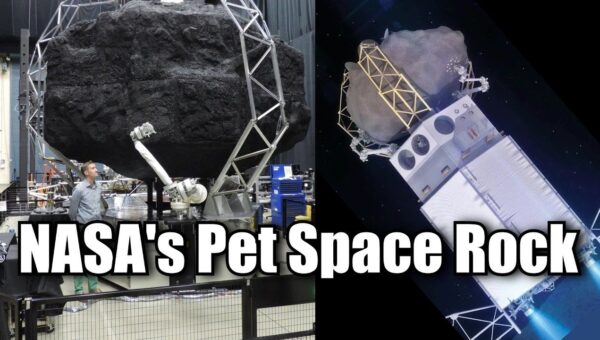
NASA’s Asteroid Mission: From Mars Dream to Lunar Gateway
NASA's ambitious Asteroid Redirect Mission (ARM), designed as a stepping stone to Mars, aimed to capture a small asteroid boulder and tow it to lunar orbit for astronaut testing. Though cancelled, its advanced propulsion and robotic technologies live on in NASA's Lunar Gateway and future deep space exploration plans.
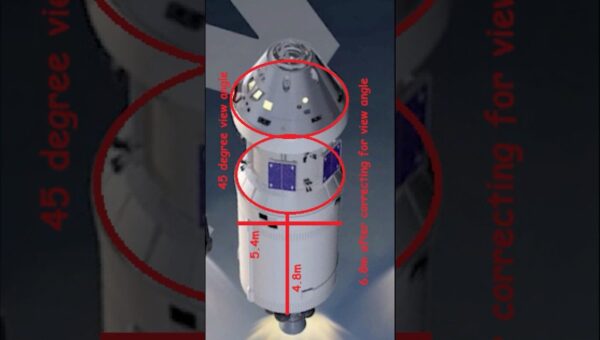
NASA’s Evolving SLS Rocket Hints at New Upper Stage
NASA's Artemis program may be adopting a new upper stage for its Space Launch System (SLS) rocket, potentially utilizing the commercially available Centaur V. An updated infographic reveals design changes and hints at evolving mission strategies, including advanced lunar lander operations.


SpaceX Starship V3 Nears First Flight Amidst Major Artemis Shakeup
SpaceX eyes March for Starship V3's maiden flight as new testing reveals design improvements. Meanwhile, NASA's Artemis program faces delays and strategic shifts, with Artemis III repurposed as a LEO test mission.