Space Fires: The Hidden Dangers and How We Fight Them
Discover the unique physics of fire in microgravity, the lessons learned from the Mir space station fire, and the advanced technologies and strategies employed to keep astronauts safe from this hidden danger.

The Silent Threat: Understanding and Combating Fires in Zero Gravity
Humanity’s reach into the cosmos has been marked by incredible ingenuity and daring exploration. Yet, beneath the spectacle of rocket launches and breathtaking vistas lies a persistent, insidious threat: fire. While the dangers of fire in a confined, oxygen-rich environment were tragically highlighted by the Apollo 1 disaster, the unique challenges of fire in microgravity present a different, equally perilous set of hazards. Understanding how fire behaves without gravity, and developing effective countermeasures, is paramount to the safety of astronauts and the success of future space missions.
The Physics of Fire: Earth vs. Space
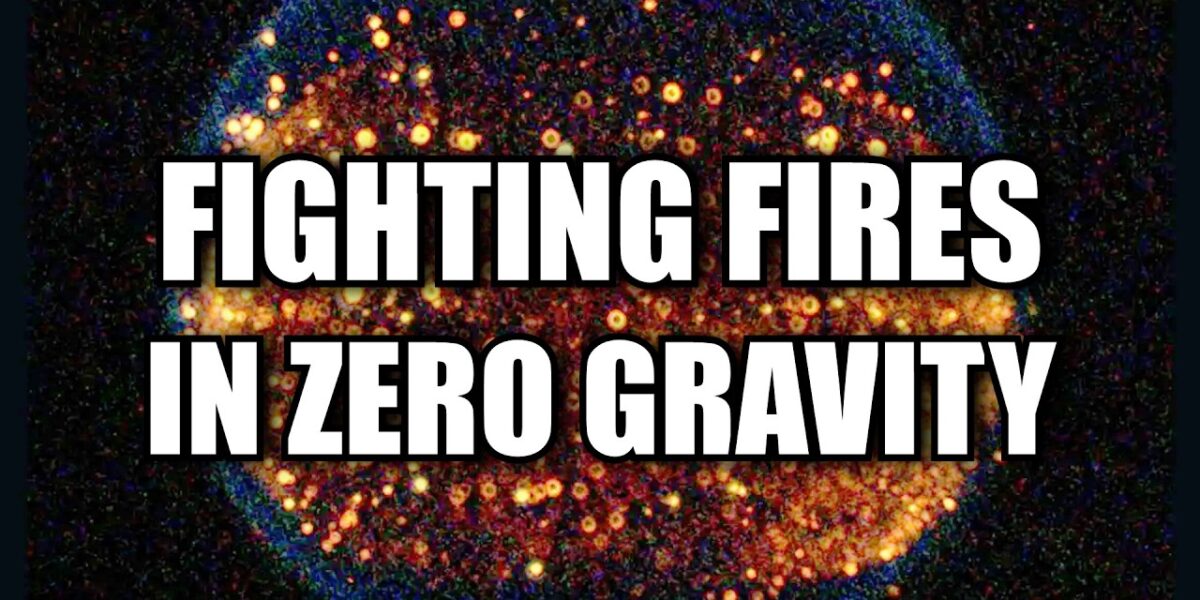
On Earth, fire behaves in a predictable manner largely dictated by buoyancy. Hot gases, being less dense than the surrounding air, rise. This upward movement of hot gases creates a convection current, drawing fresh, oxygen-rich air from below to feed the flames. This is why terrestrial fires typically form a characteristic pointed shape, burning hot and fast. In the microgravity environment of space, however, this fundamental process is absent. Without buoyancy, hot gases do not rise. Instead, flames tend to form a more spherical shape around the heat source, or a gentle dome over a surface. Oxygen reaches the fuel much more slowly, primarily through diffusion – a random molecular process. This results in flames that burn slower and cooler than their Earth-bound counterparts. Curiously, this reduced oxygen requirement means that fires can often sustain themselves in zero gravity at much lower oxygen concentrations than would be possible on Earth.
Experiments Illuminating Zero-G Combustion
To unravel these complexities, NASA has conducted numerous experiments. Projects like the Flame Extinguishment Experiment (FLEX-2) on the International Space Station (ISS) have ignited tiny fuel droplets, observing the resulting spherical flames that can pulse like jellyfish or even exhibit ‘cool flames’ – dim, almost invisible afterglows that indicate combustion is still occurring long after the visible flame has subsided. Other experiments, such as the Advanced Combustion via Microgravity Experiments (ACME) and Solid Fuel Ignition and Extinction (SoFi), have studied the behavior of flames on real materials like fabrics, plastics, and wiring. These have revealed unsettling phenomena, such as flames creeping along surfaces against the direction of forced ventilation, a behavior driven by diffusion rather than convection. More recently, the Spacecraft Fire Safety Experiment (SFFI), also known as Sapphire, took these investigations to a larger scale. Conducted on a Cygnus cargo spacecraft after it had detached from the ISS and was on its way to disposal, these experiments allowed for the study of larger flame propagation without endangering the station or its crew.
The Sneaky Dangers: Smoke and Toxins
While slower and cooler, zero-gravity fires pose unique dangers. Without gravity to help vent combustion products like carbon dioxide and water vapor, these gases can accumulate around the flame, potentially smothering it. However, if the spacecraft’s ventilation system continues to supply oxygen, the fire can persist. A smoldering wire behind a panel, for instance, could go unnoticed for hours before erupting into flames. Furthermore, the incomplete combustion in microgravity produces more soot and a wider array of toxic molecules than on Earth. The primary danger to astronauts is not the heat or flames, but the smoke and toxic chemicals that rapidly contaminate the atmosphere. Unlike on Earth, smoke in space does not rise or layer; it spreads evenly throughout the module, following ventilation pathways and lingering for extended periods. This smoke can contain dangerous substances like carbon monoxide, which impairs the blood’s ability to carry oxygen, leading to confusion and hypoxia. Hydrogen cyanide, a potent neurotoxin, can be released from burning plastics, causing rapid unconsciousness. Acidic gases like hydrogen chloride and hydrogen fluoride can form on contact with moisture, damaging skin and poisoning the system. Particulates like soot and metal residues from batteries can lodge deep in the lungs, causing long-term respiratory damage. In a closed-loop system like a spacecraft, these toxins can build up, overwhelming life support systems.
The Mir Fire: A Real-World Ordeal
The most significant real-world fire in space occurred on February 23, 1997, aboard the aging Mir space station. During a routine operation to replace a solid fuel oxygen generator candle – a device used to replenish the station’s oxygen supply – the canister experienced a runaway exothermic reaction. The prevailing theory suggests a piece of latex glove from the manufacturing process was trapped inside, causing the aluminum casing to melt and ignite. A 3-foot jet of flame, spewing molten sparks, erupted from the canister, melting cables and scorching walls. The fire generated its own oxygen, making it unlike the diffusion-limited fires studied in experiments. It burned intensely, like a blowtorch, and produced thick, acrid smoke laden with hydrogen chloride. Visibility dropped dramatically, and crucially, the fire blocked access to one of the Soyuz escape vehicles, cutting off half the crew from their emergency exit. Astronaut Jerry Liniger famously struggled to find a working oxygen mask in the smoke-filled module. Station commander Valeri Korzhenevski battled the blaze with water foam extinguishers, but the foam proved ineffective. They resorted to using the water mode, with other crew members bracing him against the thrust of the extinguisher. Three extinguishers were used, and the fire continued to burn for at least 15 minutes. Korzhenevski sustained burns to his hands and chest from molten metal. The incident highlighted the extreme difficulty of fighting fires in space and the critical importance of accessible escape routes and reliable equipment.
Evolution of Firefighting in Space
Early space missions had limited firefighting capabilities. Apollo spacecraft had a water dispenser, but its effectiveness in space was questionable. The Apollo program did develop a Freon-based foam extinguisher demonstrated on Skylab, but it was never tested against a real fire. The Space Shuttle employed Halon fire extinguishers, similar to those used on jet aircraft, with specialized ports for injecting suppressant into panels. However, Halon’s reaction products were difficult for the Shuttle’s environmental control system to handle, necessitating emergency landings if used. For space stations, where immediate landing is impossible, Halon was not a viable option. Modern stations like the ISS feature advanced detection systems, including laser-based detectors that identify soot particles. Alarms trigger automatic shutdowns of ventilation and power in affected modules, with mission control able to intervene remotely. Astronauts don the portable breathing apparatus, donning full-face masks with their own oxygen supply, before attempting to suppress fires with portable extinguishers. Initially, the ISS used CO2 extinguishers, chosen for their effectiveness against electrical fires and because CO2 can be handled by the life support system. However, CO2 itself is not ideal for astronauts. More recently, fine water mist extinguishers have become the preferred method. These emit micron-sized water droplets that evaporate, cooling the fire and displacing oxygen without forming large globules. Water mist is more effective at cooling and less detrimental to human respiration than CO2, making it suitable for various fire types, including lithium-ion battery fires.
Prevention: The First Line of Defense
Ultimately, the most effective strategy against space fires is prevention. This involves rigorous material testing and validation on the ground to ensure that components sent to space are fire-resistant. Materials are tested in atmospheres with higher oxygen concentrations than typically found on the ISS to simulate worst-case scenarios. Even common items like Velcro, which was a factor in the Apollo 1 fire, are now used in fire-retardant versions and limited in size. Flammable trash bags have been replaced with fireresistant materials. However, the use of materials like Teflon, while offering stability, can release dangerous hydrogen fluoride when burned. The focus on non-flammable materials is crucial, as evidenced by the 25-year history of the ISS, which has seen no significant fires escape equipment racks.
The Future of Fire Safety in Space
As humanity looks towards returning to the Moon and venturing to Mars, fire safety engineers must account for environments with gravity as well as microgravity. This will require adapting fire detection and suppression systems. For missions to distant worlds like Titan, where the atmosphere itself contains potentially combustible hydrocarbons, entirely new approaches to fire safety will be necessary. The ongoing study of fire in space, from microgravity experiments to analyzing real-world incidents, continues to be a vital endeavor, ensuring that our expansion into the cosmos is as safe as it is ambitious.
Source: Why Fires In Space Are So Dangerous (YouTube)

Related Articles

Voyager Probes Endure, Dyson Sphere Dreams Begin
Voyager probes continue their interstellar journey, while the concept of Dyson spheres evolves into a gradual, satellite-based energy harvesting strategy. The Extremely Large Telescope promises groundbreaking discoveries, and the challenges of lunar missions are being addressed through robotic precursors. Life aboard the ISS reveals the unromantic realities of maintaining a space habitat.

SpaceX Starship Launch Approval Skyrockets
SpaceX has received a major boost with approval for 76 Starship launches from Florida's SLC-37, significantly increasing its launch capacity. Meanwhile, development continues at Starbase with upgrades and new hardware, while the ISS reaches full capacity and celebrates 25 years of continuous human presence.

Starship Tower Catches Upgrades for Next-Gen Tests
SpaceX is rapidly advancing Starship's capabilities with significant upgrades to its Version 3 launch tower, including the installation of the crucial Ship Quick Disconnect arm and enhanced bumper systems. This progress is set against a backdrop of other space news, including an ISS medical evacuation and NASA's revised budget.